Through workshops, public talks, exhibits, and student pitches, CMKL University connected its expertise in AI and engineering with practical needs
in education, business, online safety, and environmental sustainability.
A teacher developing a classroom activity, a business owner looking to reduce waste, and a family learning to recognise an online scam face
different challenges. Each needs access to knowledge they can understand, assess, and put into practice.
At Sustainability Expo 2026 (SX2026), CMKL University brought these everyday needs into the conversation about artificial intelligence.
Held from 6–15 November 2026 at the Queen Sirikit National Convention Center, the expo provided a setting for the university’s faculty,
researchers, students, and staff to share their work with the wider public.
Across ten days, CMKL contributed workshops, talks, exhibits, and opportunities for young people to present ideas.
Together, these activities reflected a shared purpose: helping people connect technology with problems that matter
in the communities where they live, learn, and work.
The university’s immediate contribution was practical. Teachers developed resources for their classrooms.
Participants learned ways to check suspicious online requests. Businesses and social enterprises explored approaches
to reducing waste and understanding their impact. Young innovators gained a platform to propose responses to water challenges.
These exchanges created starting points for learning and action beyond the expo. Supporting Teachers,
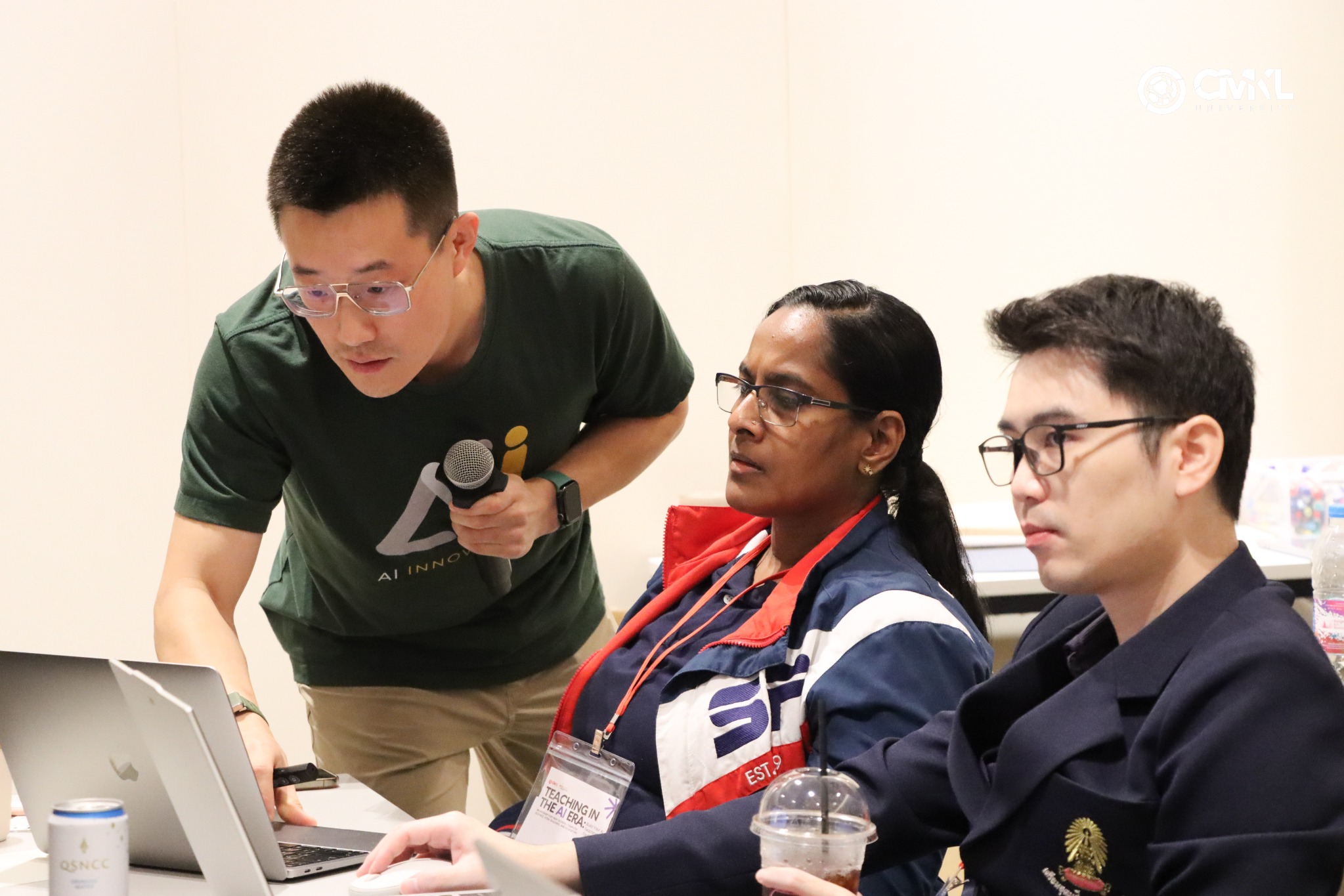
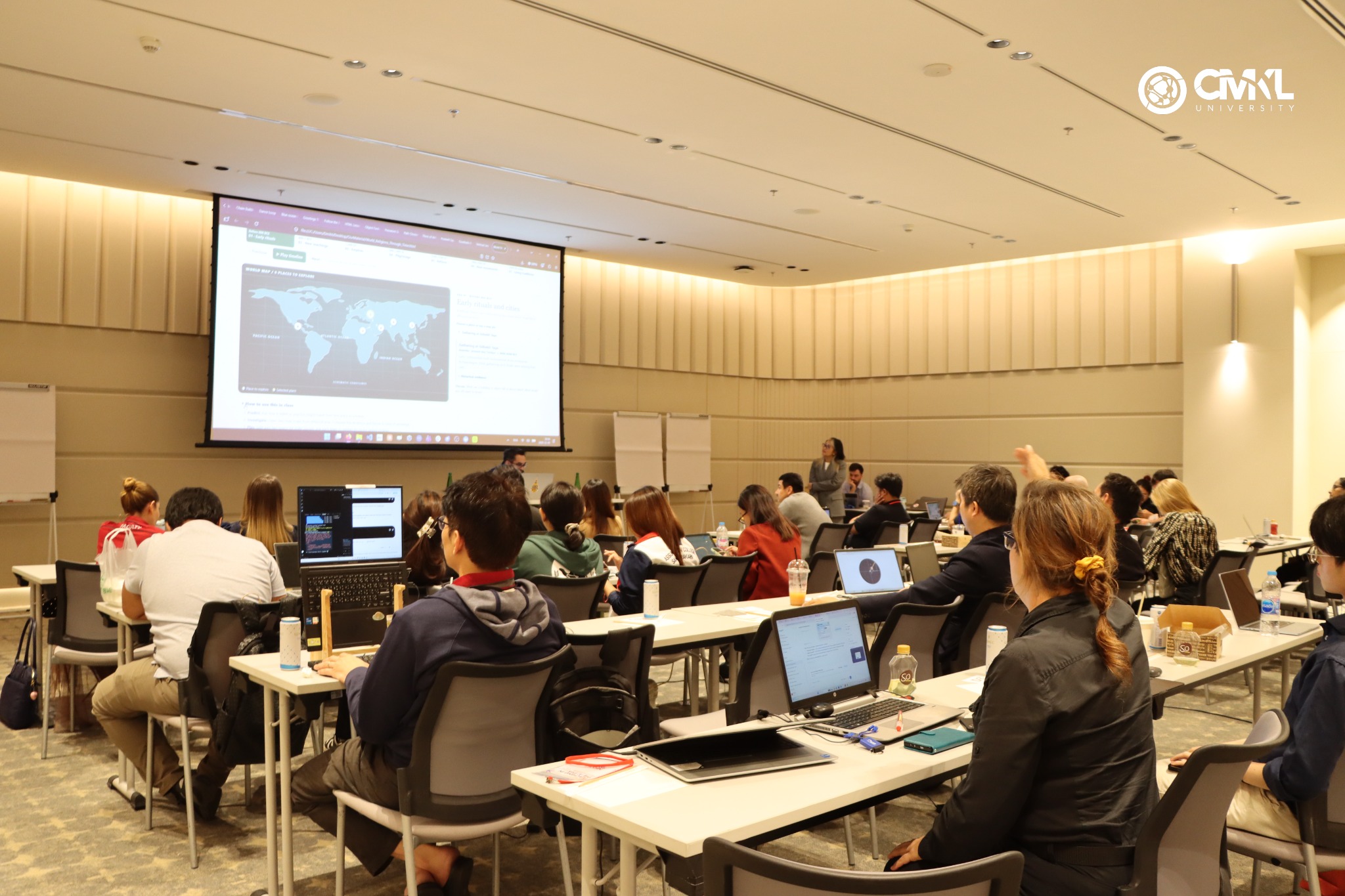
Reaching Students Education was a central part of CMKL’s programme. Teaching in the AI Era: Build Your AI Teaching Toolkit gave educators
opportunities to work with AI in the context of their own lessons and teaching goals.
Participants explored how to create and adapt lesson materials, build interactive learning activities, and develop assessment questions,
grading rubrics, and feedback. By connecting demonstrations with guided practice, the workshop helped teachers move from an introduction
to AI tools towards resources they could review and develop further.
The work also addressed a question that extends beyond lesson preparation: how can teachers understand what students have learned
when AI can help produce their assignments?
Participants considered assessment approaches that make students’ thinking more visible. This placed educational judgment at the centre of the discussion,
encouraging teachers to examine how a resource or assignment supports learning and what evidence reveals a student’s understanding.
The potential community benefit begins with the teacher and extends to the classroom. Resources developed during a workshop can become the basis
for further experimentation, adaptation, and discussion with colleagues. Their value depends on how teachers use them to meet their students’ needs.
For CMKL, supporting educators in this process is one way university expertise can contribute to learning beyond its own campus.
Connecting Business Decisions with Resource Use
For businesses, sustainability often involves decisions about what to order, how much to stock, and when to respond to changing demand.
These choices affect both operating costs and the resources used across an organisation.
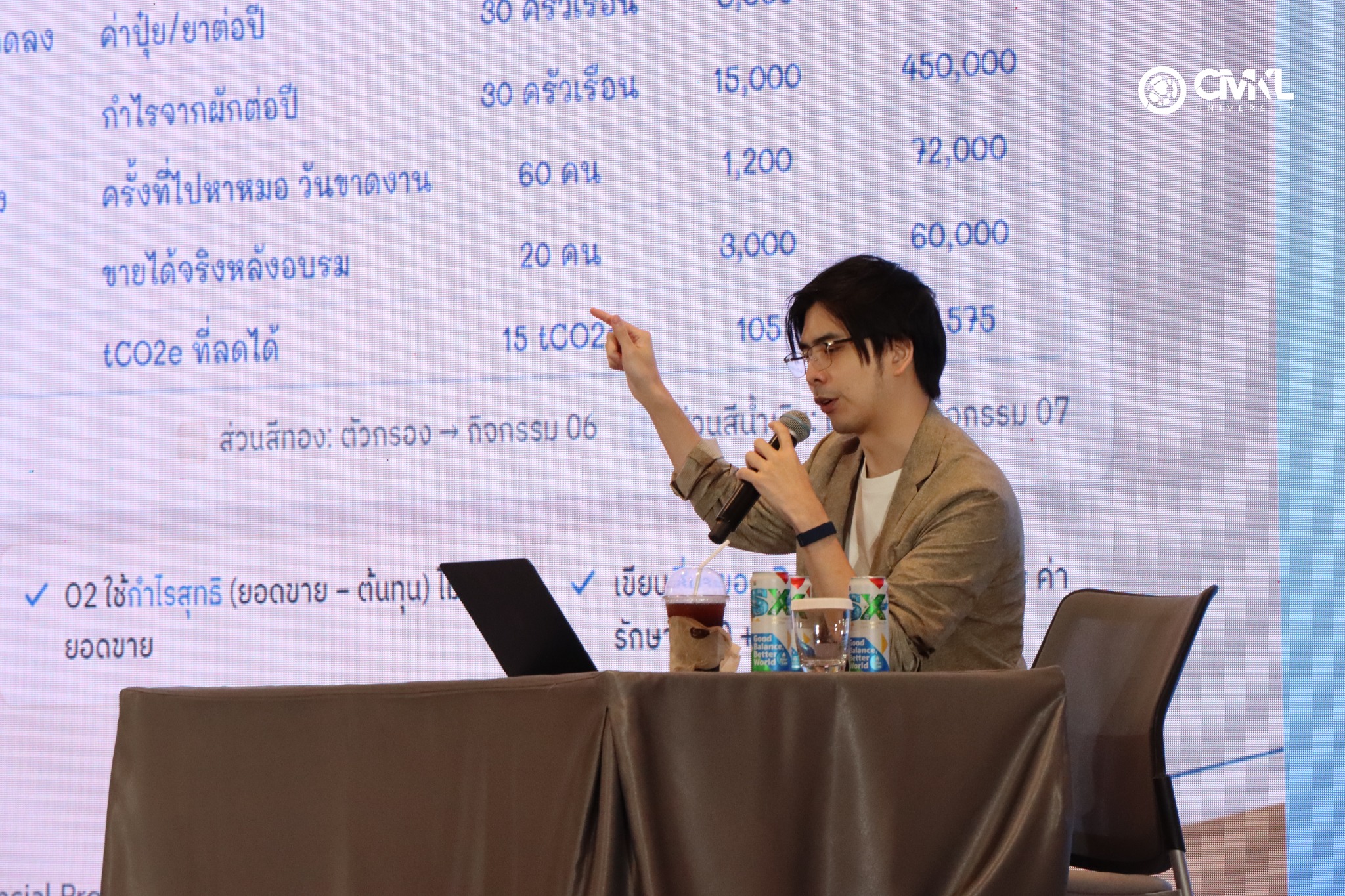
AI for Sustainable Enterprise: From Intelligence to Impact explored how demand forecasting
and smarter inventory management can help businesses reduce waste.
The session connected AI with a clear operational purpose. Better information about likely demand can support more informed planning,
giving businesses an opportunity to reduce excess stock and use resources more carefully.
This approach also offered a practical way to think about adopting AI: begin with a specific problem, then consider how data
and technology could help address it. For participants, the discussion provided a basis for examining where AI might be useful within their own operations.
By bringing these applications into a public learning setting, CMKL helped connect technical knowledge with decisions that influence
how resources are used in the wider economy. Helping Social Enterprises Understand Their Impact Organisations working for social benefit need to
understand how their activities affect the people and communities they serve.
That understanding can guide improvements, support decisions about resources, and help explain the value of their work.
The Impact to Value workshop explored how social enterprises can measure their social impact.
Participants were invited to consider the relationship between what an organisation does and the changes that follow.
This means asking who benefits, what changes for them, and what evidence can help an organisation understand those outcomes.
For community-focused organisations, impact measurement can support an ongoing process of learning.
A clearer picture of results can help teams identify where their approach is working, where it needs adjustment, and what they should investigate further.
Including this workshop in CMKL’s SX2026 contribution broadened the discussion of sustainability to encompass how organisations assess
and strengthen their service to society. Sharing Knowledge That Can Help Families Stay Safer Online Public confidence in technology
depends partly on understanding its risks. As AI-generated images, videos, and voices become
part of the information people encounter, recognising suspicious requests and knowing how to verify them are increasingly relevant everyday skills.
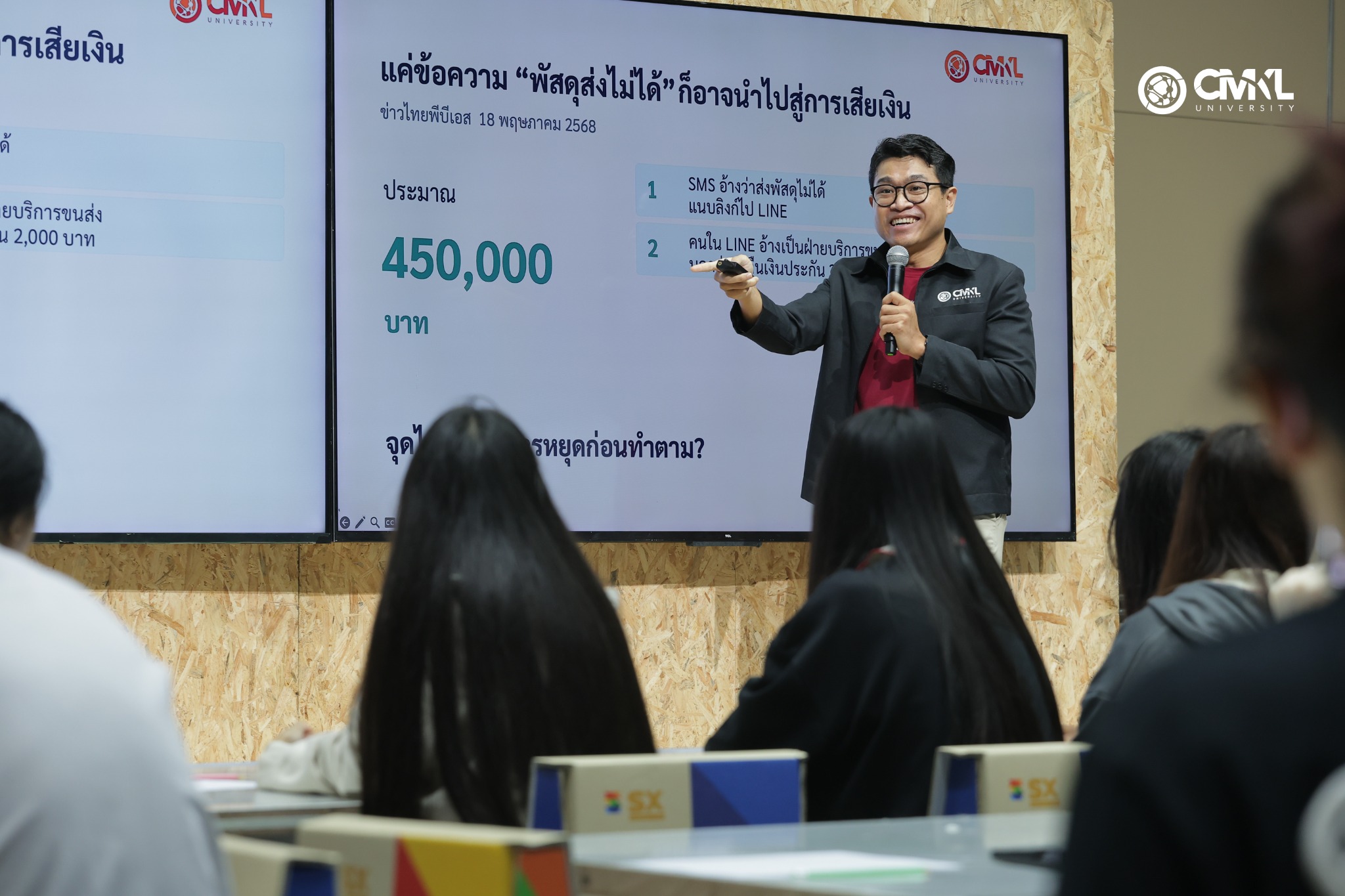
Stay Ahead of AI Scams: Protect Yourself from Deepfakes and Online Fraud addressed these concerns through practical public education.
The workshop introduced warning signs associated with deepfakes and online fraud, including attempts to impersonate someone a person
knows or trusts. Participants learned about checking suspicious requests before sharing personal information or sending money.
The relevance of this knowledge extends beyond the workshop room. Participants can share what they learned with parents, friends, colleagues,
and neighbours, helping others understand why a familiar voice or convincing image should still be verified when a request seems unusual.
This is an important dimension of CMKL’s community engagement. Alongside helping people explore AI’s applications,
the university can make technical knowledge accessible in ways that support safer, better-informed decisions.
Examining the Environmental Demands Behind AI
The relationship between AI and sustainability also requires attention to the infrastructure supporting the technology.
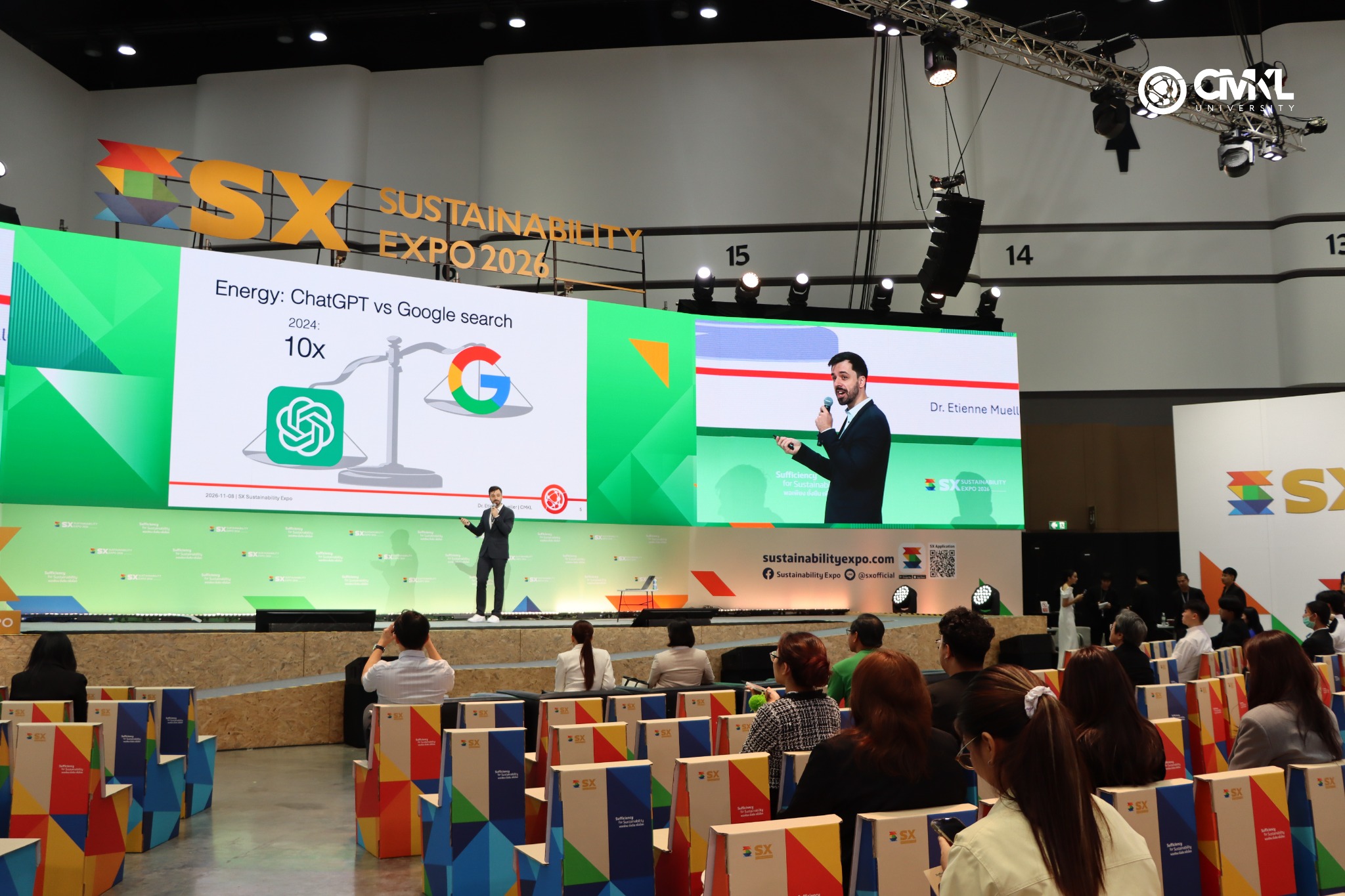
In his keynote, AI for Sustainability & Green Data Center, Dr. Etienne Mueller examined the energy demands behind AI
and the importance of developing infrastructure responsibly.
The session connected the expanding use of AI with questions about the resources needed to sustain it. It encouraged audiences to consider
environmental responsibility as part of technological development, including how computing infrastructure is planned and operated.
Bringing this perspective to SX2026 helped place AI within the expo’s broader sustainability conversation. The benefits of an application
and the resources required to deliver it are both relevant when considering its role in society.
For CMKL, sharing this perspective is part of preparing people to engage with AI thoughtfully, with an understanding of the systems
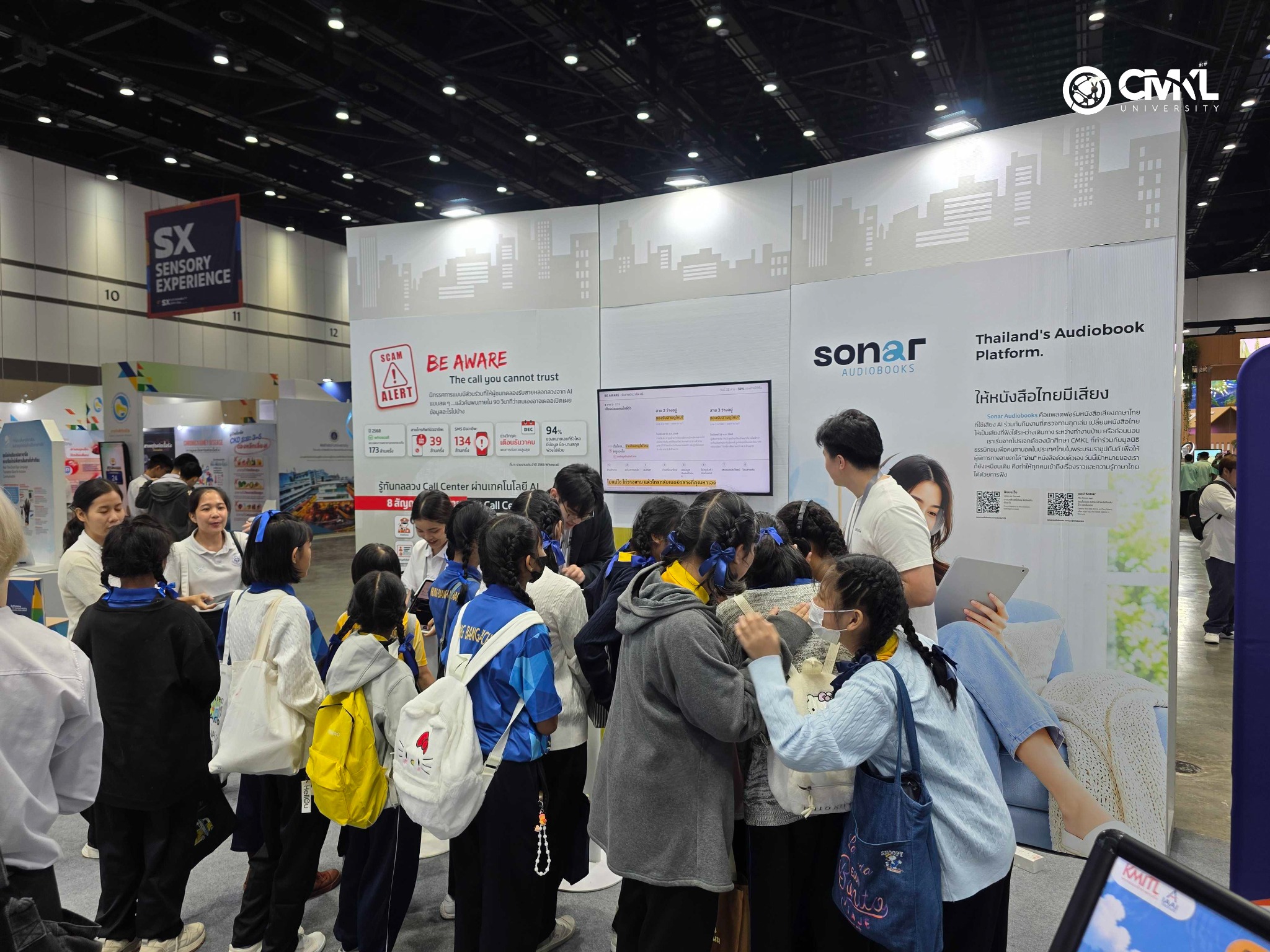
and decisions behind the tools they use. Opening University Work to Public Discussion On the expo floor, visitors had opportunities
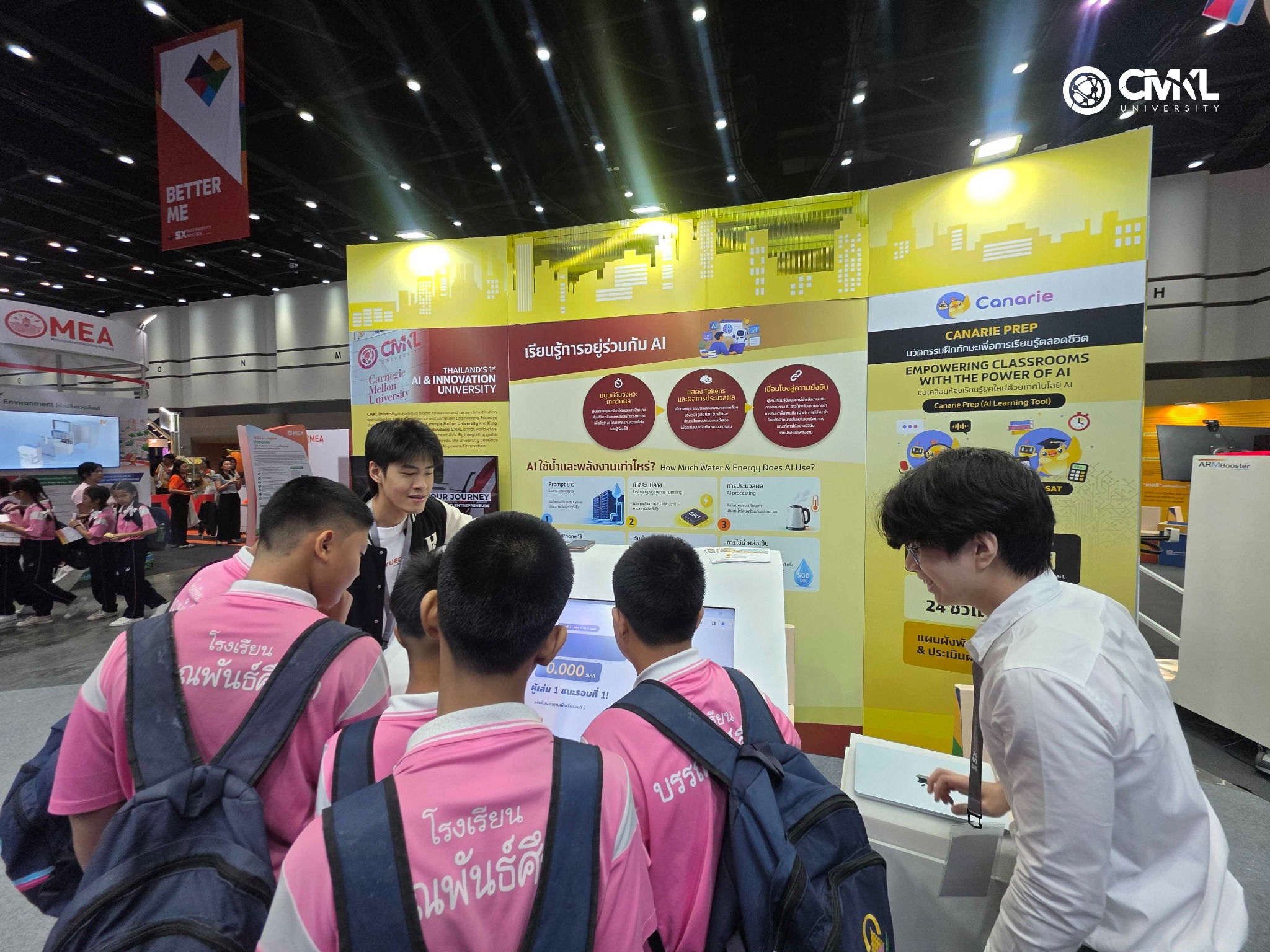
to learn about Green Data Center, Canarie, and Sonar’s “Be Aware.”
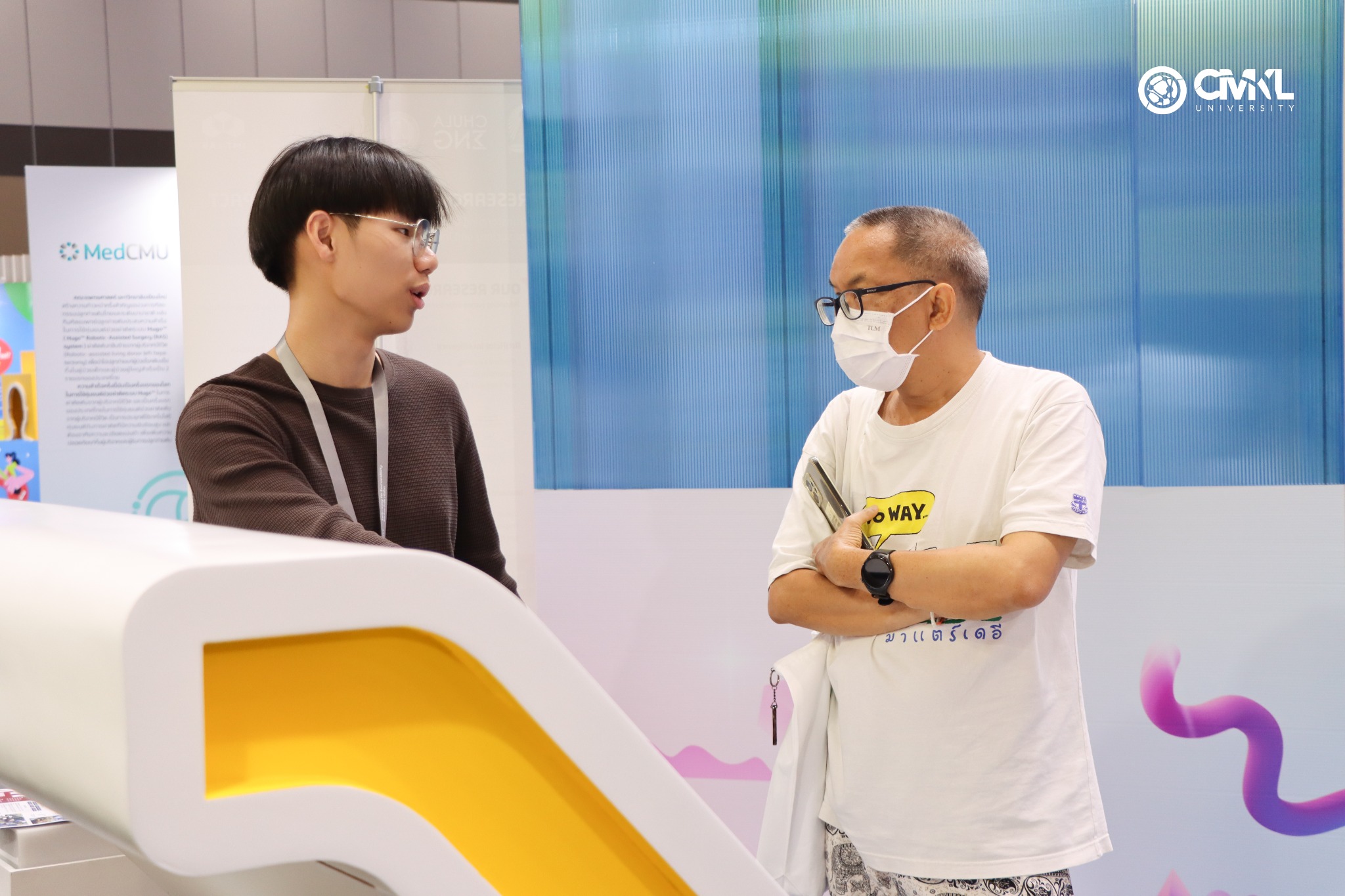
The exhibits complemented the workshops and talks by giving visitors a closer look at work from the CMKL community. They also created opportunities to ask questions and discuss ideas with the people involved.
Such exchanges are valuable for both visitors and university teams. Members of the public bring different experiences, expectations,
and concerns to a discussion about technology. Listening to those perspectives helps connect academic and technical work
with the contexts in which people may encounter or use it.
For visitors, the exhibits offered an accessible entry point into conversations that might otherwise feel distant from everyday life.
For CMKL, they provided another way to share knowledge and engage with the communities around the university.
Giving Young People a Platform to Address Water Challenges
Young people contributed their own perspectives through the AI Innovator Award 2026: Flow for Life – Presented by Vitamilk.
High-school students pitched ideas addressing water challenges and explored how AI could help develop their proposed solutions. The competition connected technical curiosity with a resource central to community well-being, sustainable development, and equitable access.
Preparing and presenting an idea requires students to think about the problem they want to address, the people affected, and the role technology might play. It also asks them to communicate their reasoning clearly to others.
The proposals will require further development and testing before their effectiveness can be established. The opportunity to participate, however, is an important part of the learning process. It gives students experience in approaching a social or environmental challenge and explaining how they hope to contribute.
By providing this platform, CMKL supported young people in seeing themselves as participants in conversations about their communities’ future.
Building Connections Between University Knowledge and Community Needs
Across its SX2026 activities, CMKL engaged people with different levels of technical experience and different reasons for learning about AI.
Teachers needed tools connected to learning goals. Businesses explored applications relevant to their operations. Social enterprises examined evidence of their contributions. Members of the public sought practical ways to recognise fraud, while students brought ideas for responding to water challenges.
Meeting these needs required translating specialist knowledge into activities and explanations people could use. It also required making room for questions, experimentation, and perspectives from outside the university.
CMKL’s contribution at SX2026 created these opportunities. Its longer-term value will depend on what participants do next: how a teacher adapts a resource, how a business investigates an application, how a family shares advice about suspicious messages, or how a student continues developing an idea.
This is how community engagement can connect with the university’s teaching and research. Knowledge becomes a resource that people can examine, adapt, and build upon in their own settings.
CMKL University thanks the organisers of Sustainability Expo 2026, its partners, participants, faculty, researchers, students, and staff for making these exchanges possible. The university looks forward to building on the connections formed at SX2026 and continuing to share its expertise with the communities where we live and work.
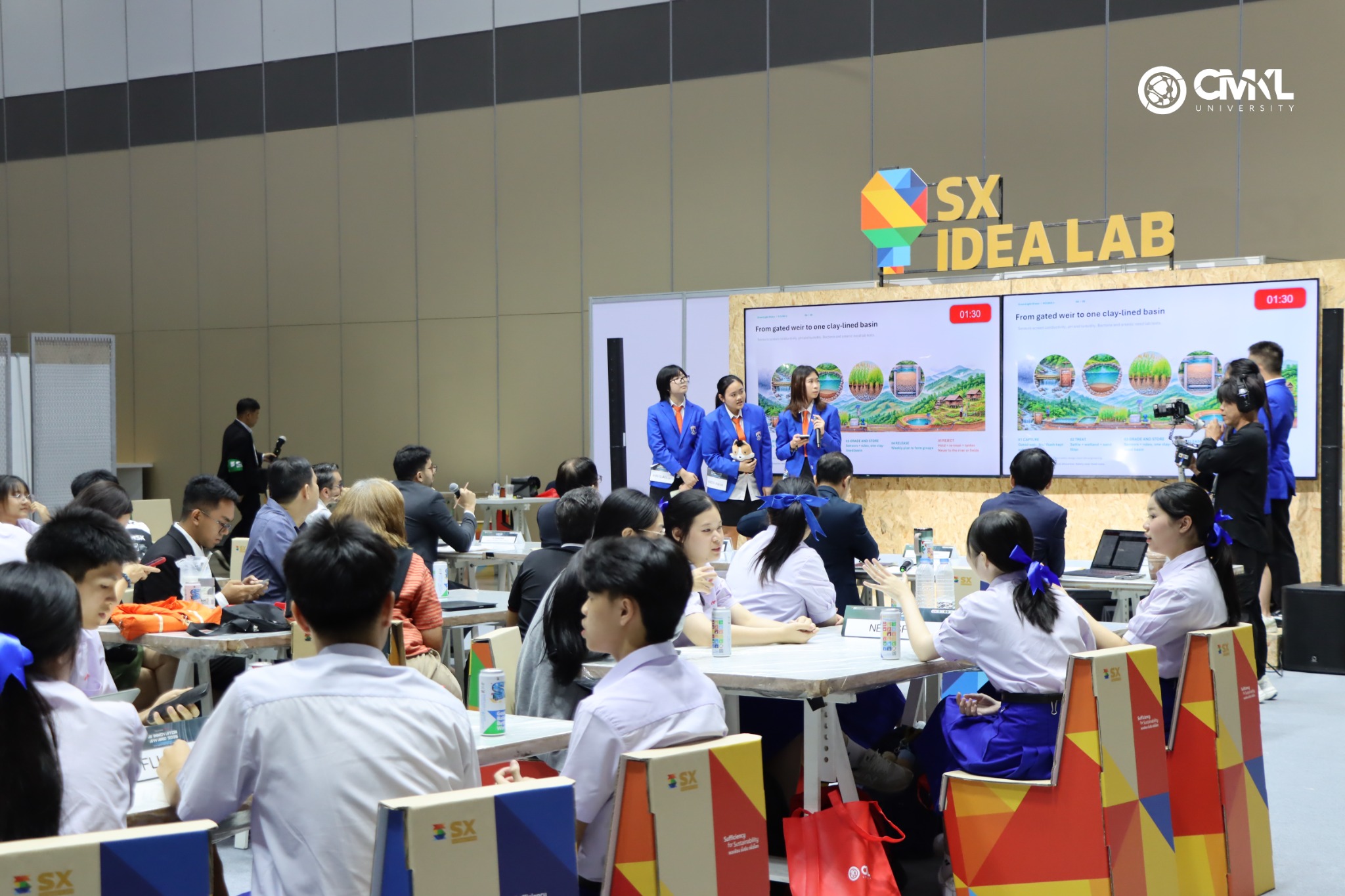


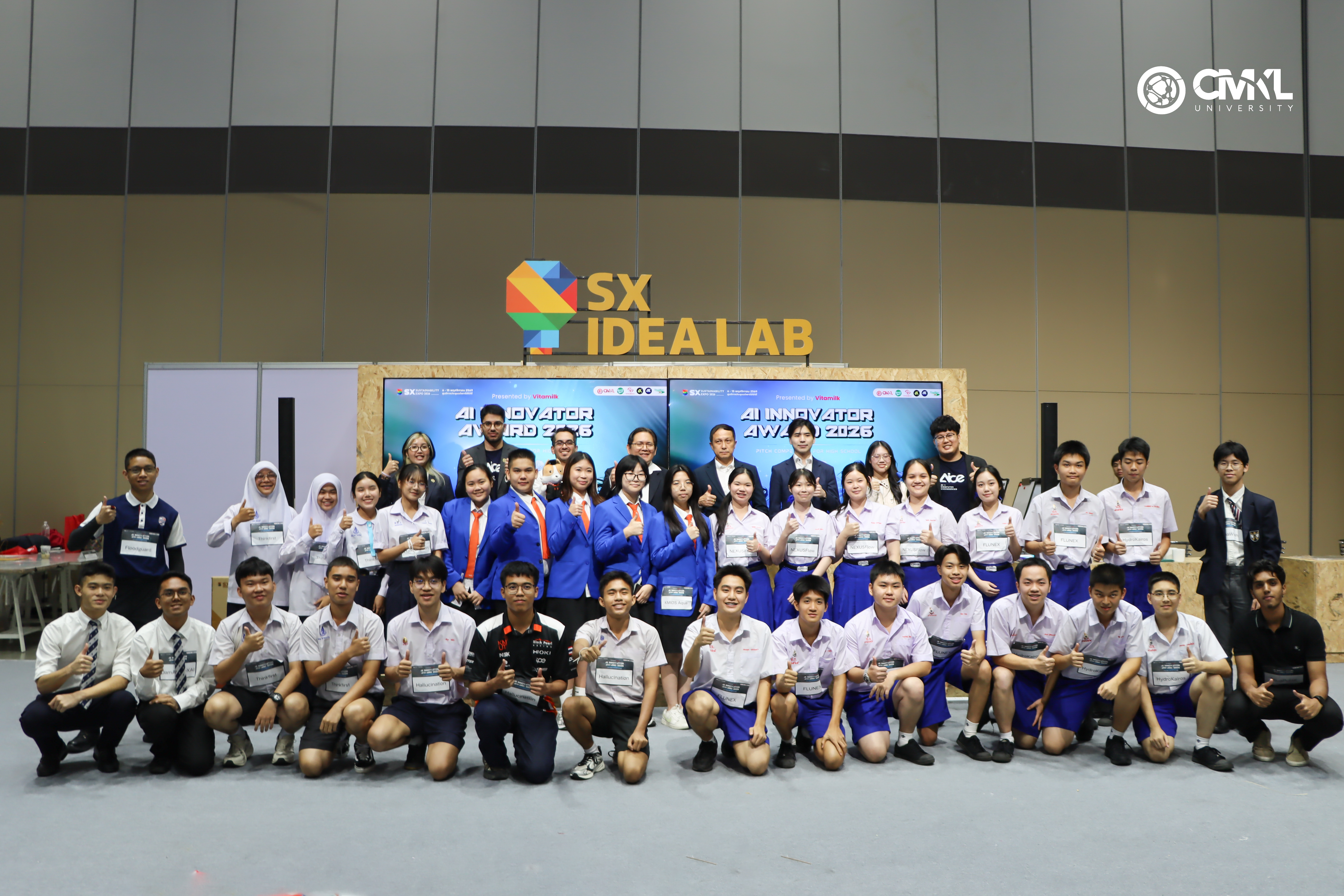
High school students from different regions of Thailand brought their own perspectives on the country’s water challenges to Sustainability Expo 2026 (SX 2026). On Saturday, November 14, 2026, they took the stage for the pitching round of CMKL University’s AI Innovator Award. The problems they chose showed how differently water issues can affect everyday life from one community to another.
Read more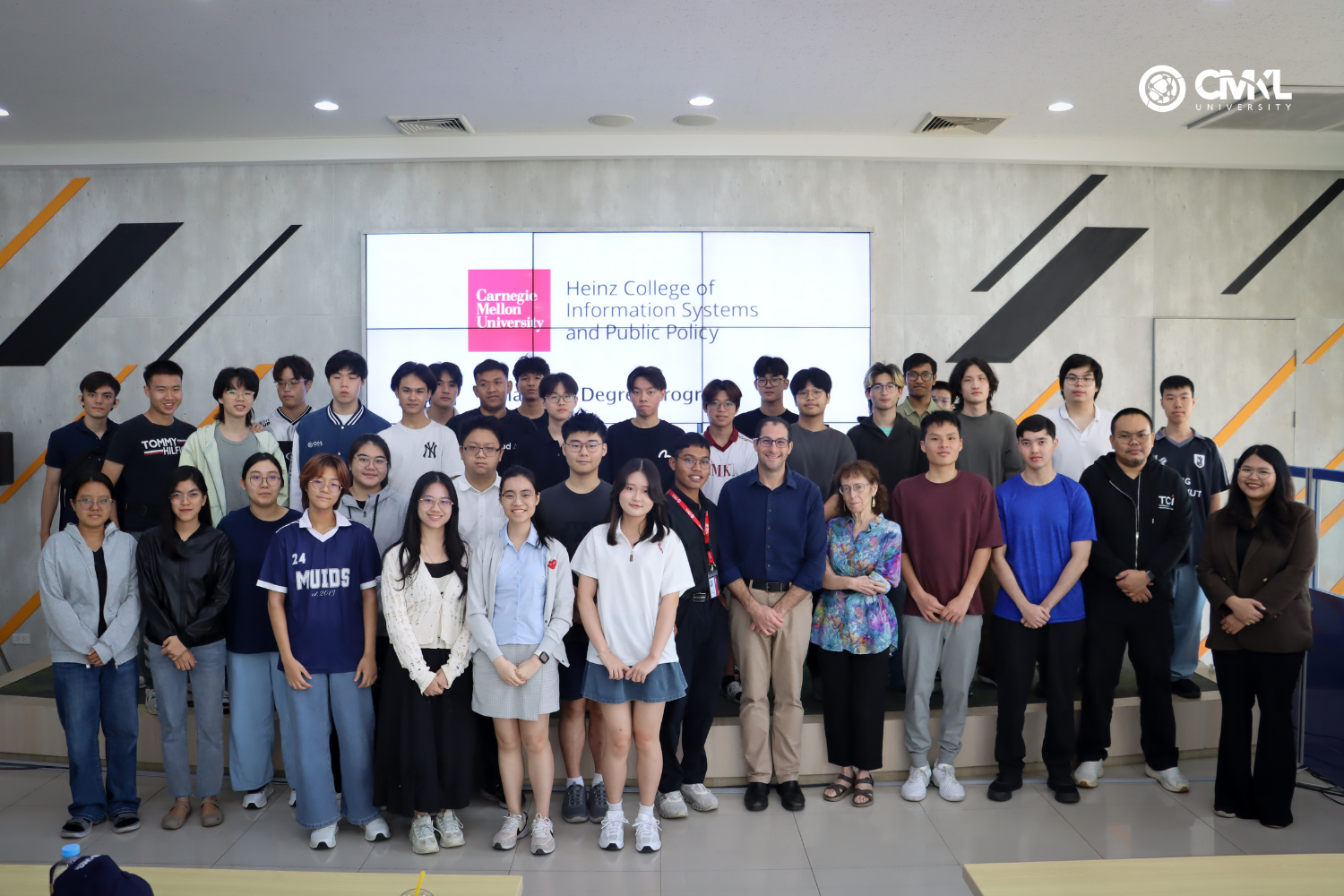
CMKL University welcomed David Danenberg, Director, Admissions & Financial Aid at Carnegie Mellon University’s Heinz College, for the CMU Knowledge Sharing Session. The event introduced prospective applicants to graduate study options at Heinz College and featured insights from a CMKL alumnus currently studying there.
Read more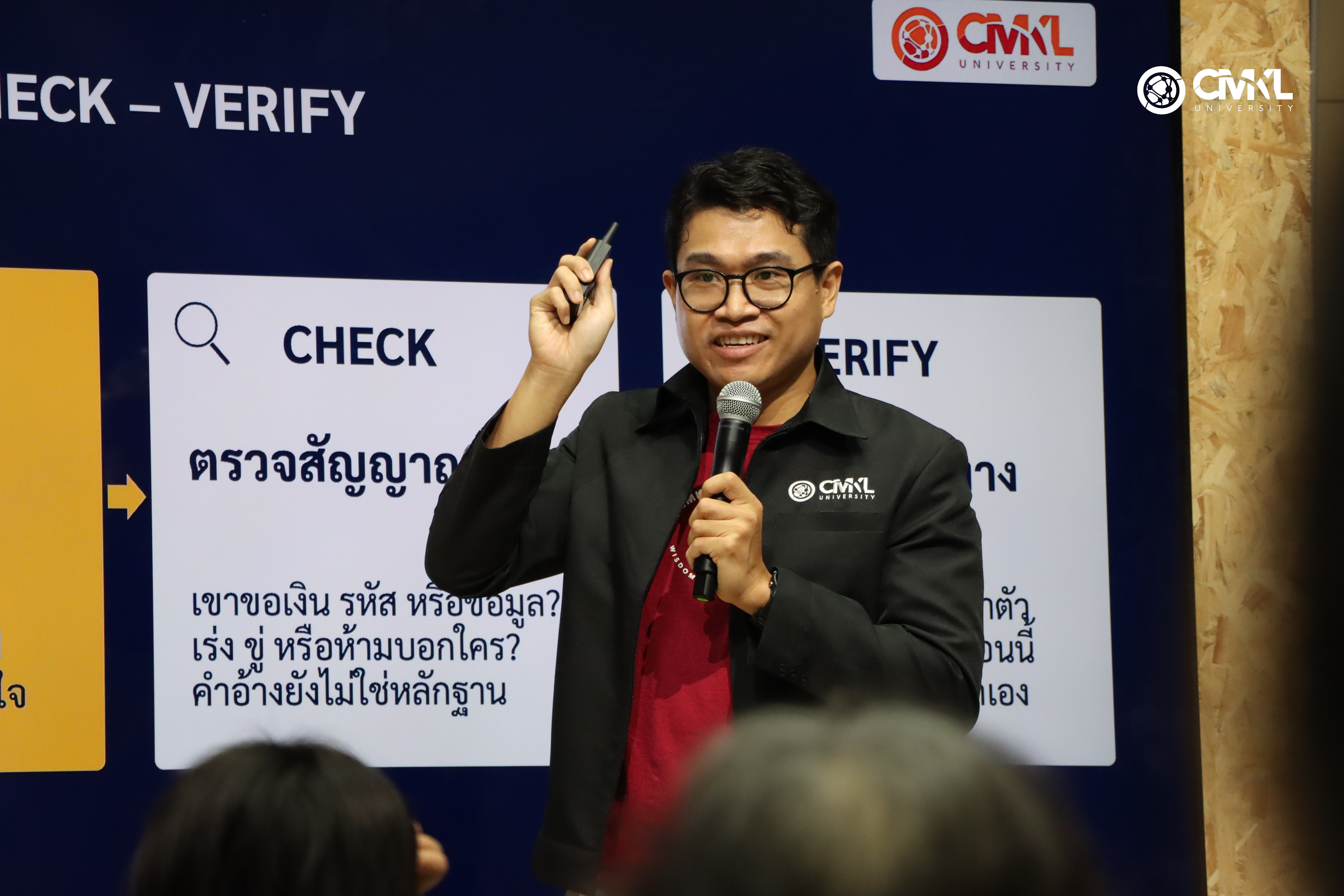
Would you recognize a scam if the voice sounded like someone you know?
Read more