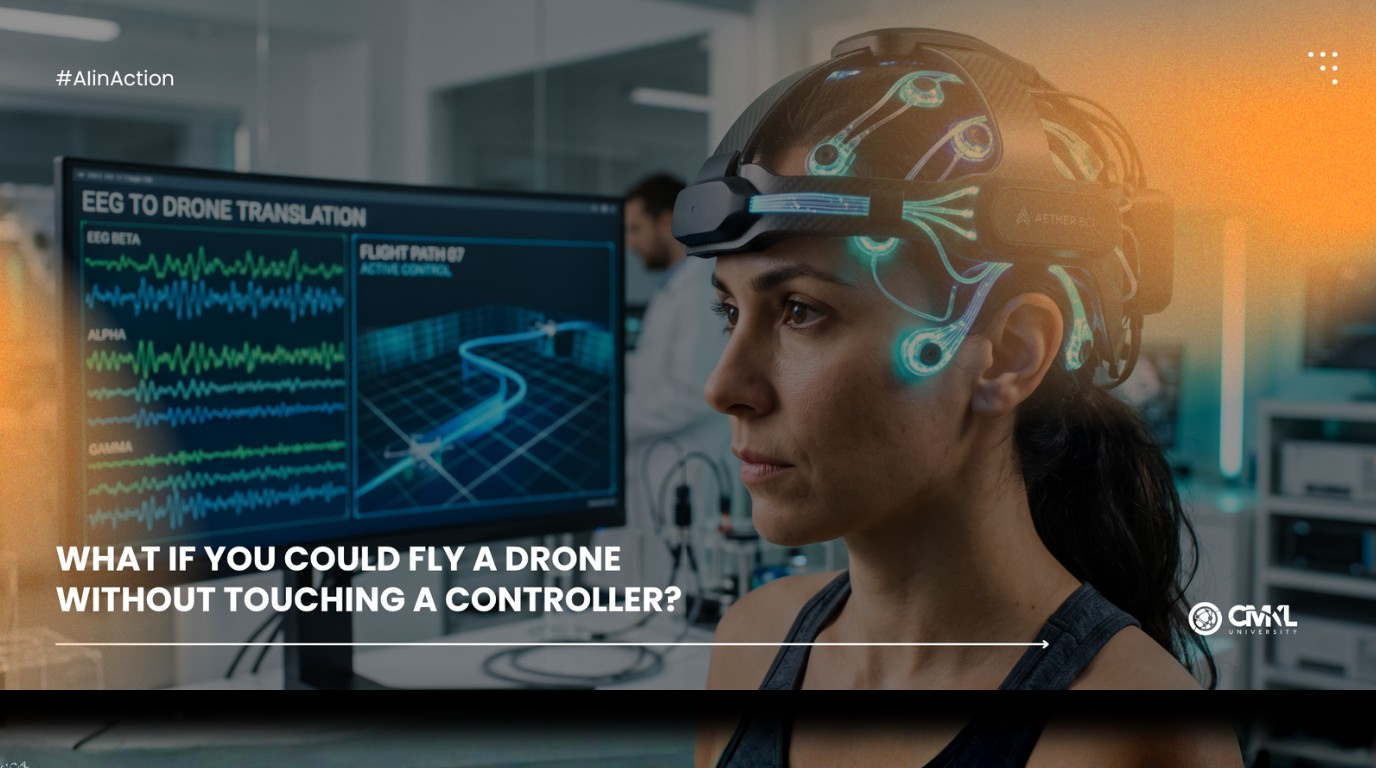
Fly a Virtual Drone with Your Mind: A Brain-Computer Interface for Hands-Free Control
Brain-computer interfaces are opening new possibilities for how people interact with machines. By translating neural signals into digital commands, BCI systems can enable hands-free control of devices, virtual environments, and assistive technologies.
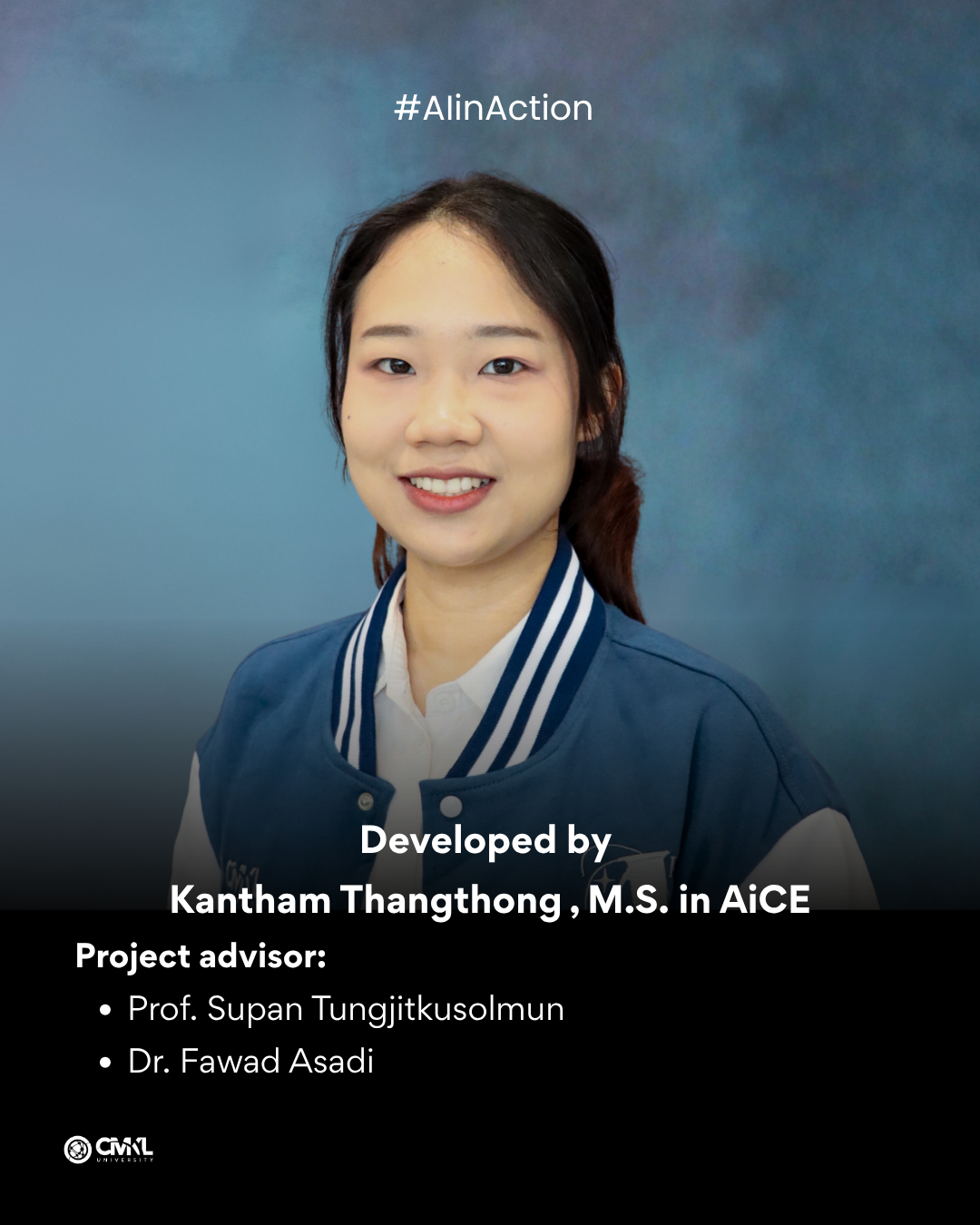
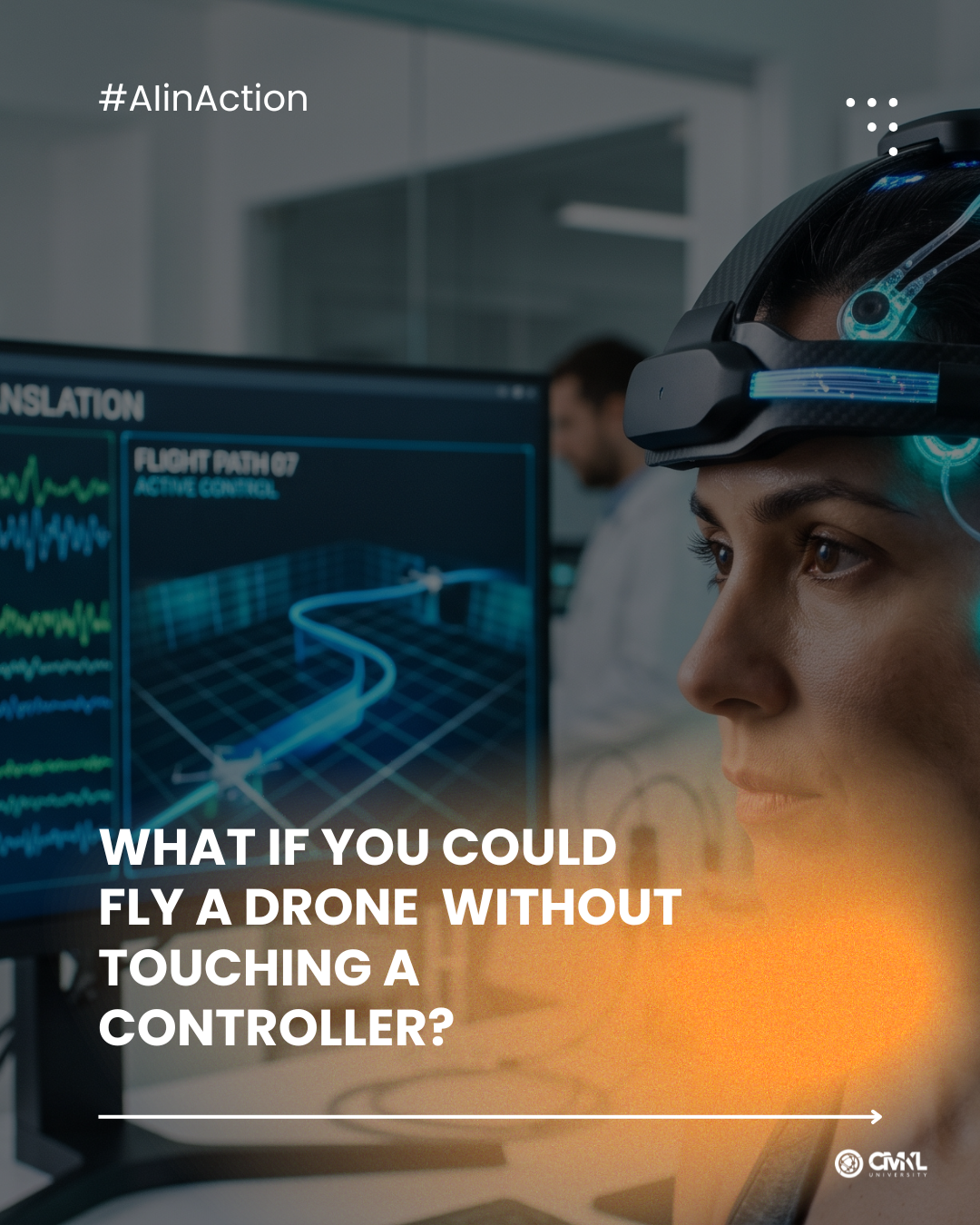
At CMKL University’s Digital Biomedicine & Intelligence Lab, M.S. in AiCE student Kantham Thangthong developed a brain-computer interface project that allows users to fly a virtual drone with their mind.
The system decodes brain signals in real time and converts them into drone movement commands without requiring physical input. This creates a direct interaction loop between neural intention and digital action, demonstrating how AI and signal processing can support more intuitive human-machine interfaces.
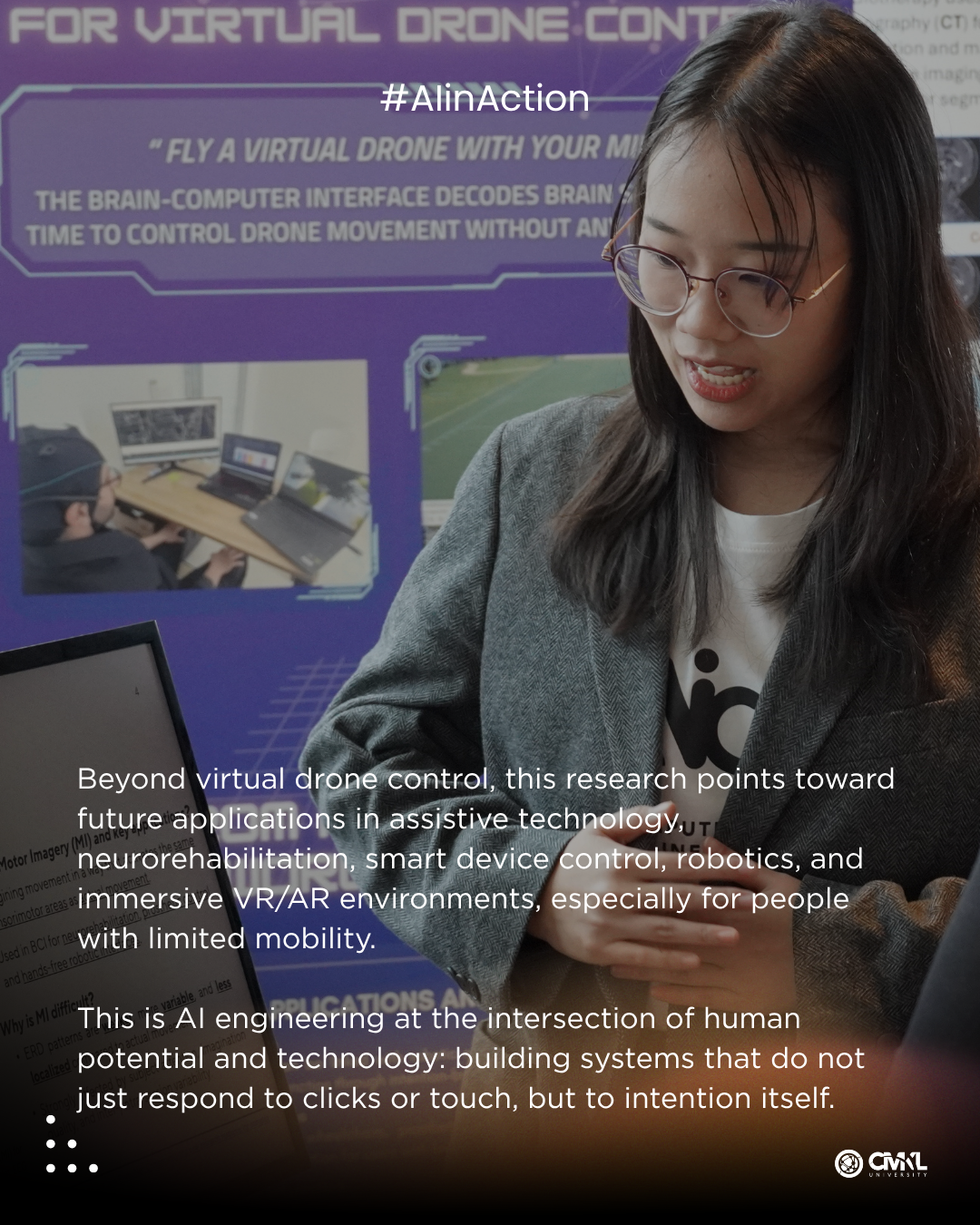
While the project is demonstrated through virtual drone control, its potential applications extend across several domains. BCI-driven systems could support neurorehabilitation, assistive technology for users with limited mobility, hands-free smart device control, robotic operation, and immersive VR/AR training environments.
The project also highlights the interdisciplinary nature of CMKL’s graduate research. It combines biomedical signal processing, AI, interaction design, and real-time system development to explore how neural data can be transformed into useful, responsive digital experiences.
For CMKL, this project represents a clear example of AI engineering applied to human-centered innovation: building systems that can expand accessibility, support rehabilitation, and create new ways for people to interact with technology.
Student: Kantham Thangthong, M.S. in AiCE
Advisors: Prof. Supan Tungjitkusolmun and Dr. Fawad Asadi
Category: Medical AI / Human-Machine Interaction
Tags: Brain-Computer Interface, BCI, Neurotechnology, Human-Machine Interaction, Assistive Technology, Graduate Research


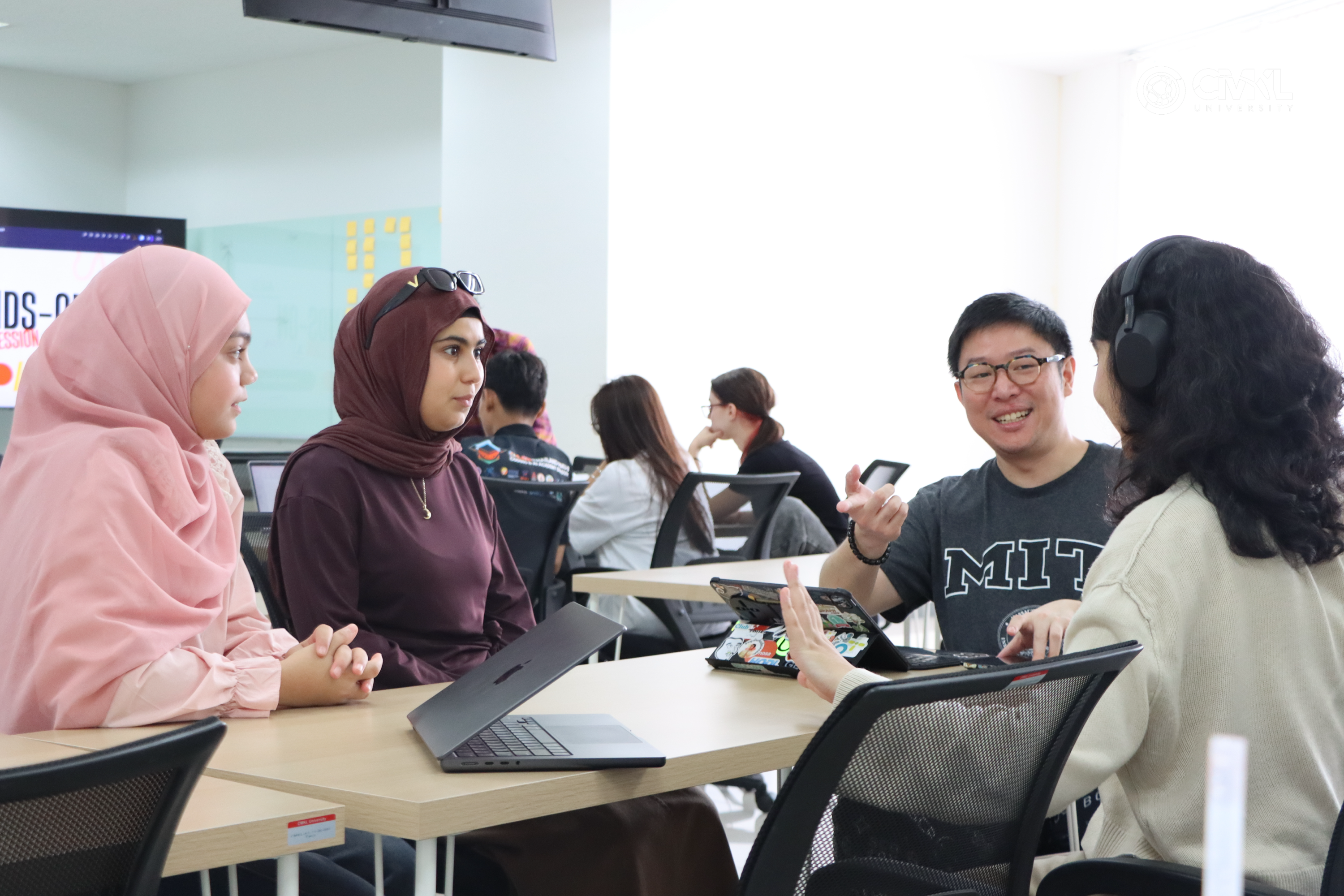
CMKL University supported the AI Kid School StartUp Case Challenge by hosting Workday 1: MVP Day in Room 601 at the university. The workday provided participants with a collaborative space and practical guidance to develop their minimum viable products (MVPs) ahead of the next round.
Read more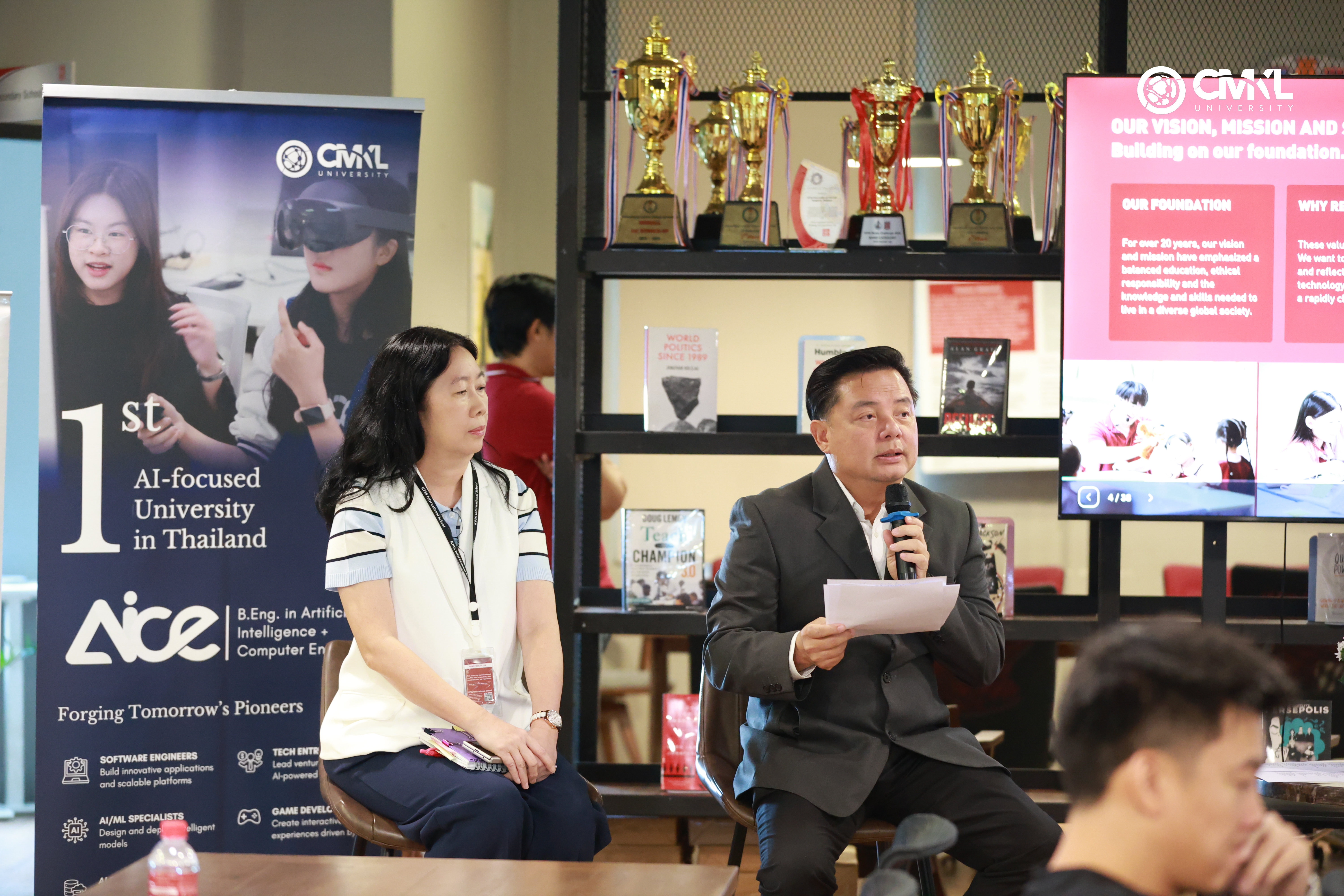
CMKL University joined KPIS Coffee Meet: More for Every Student at KPIS International School, bringing together parents, school leaders, and education partners to exchange perspectives on preparing students for a rapidly changing world and creating more meaningful learning opportunities.
Read more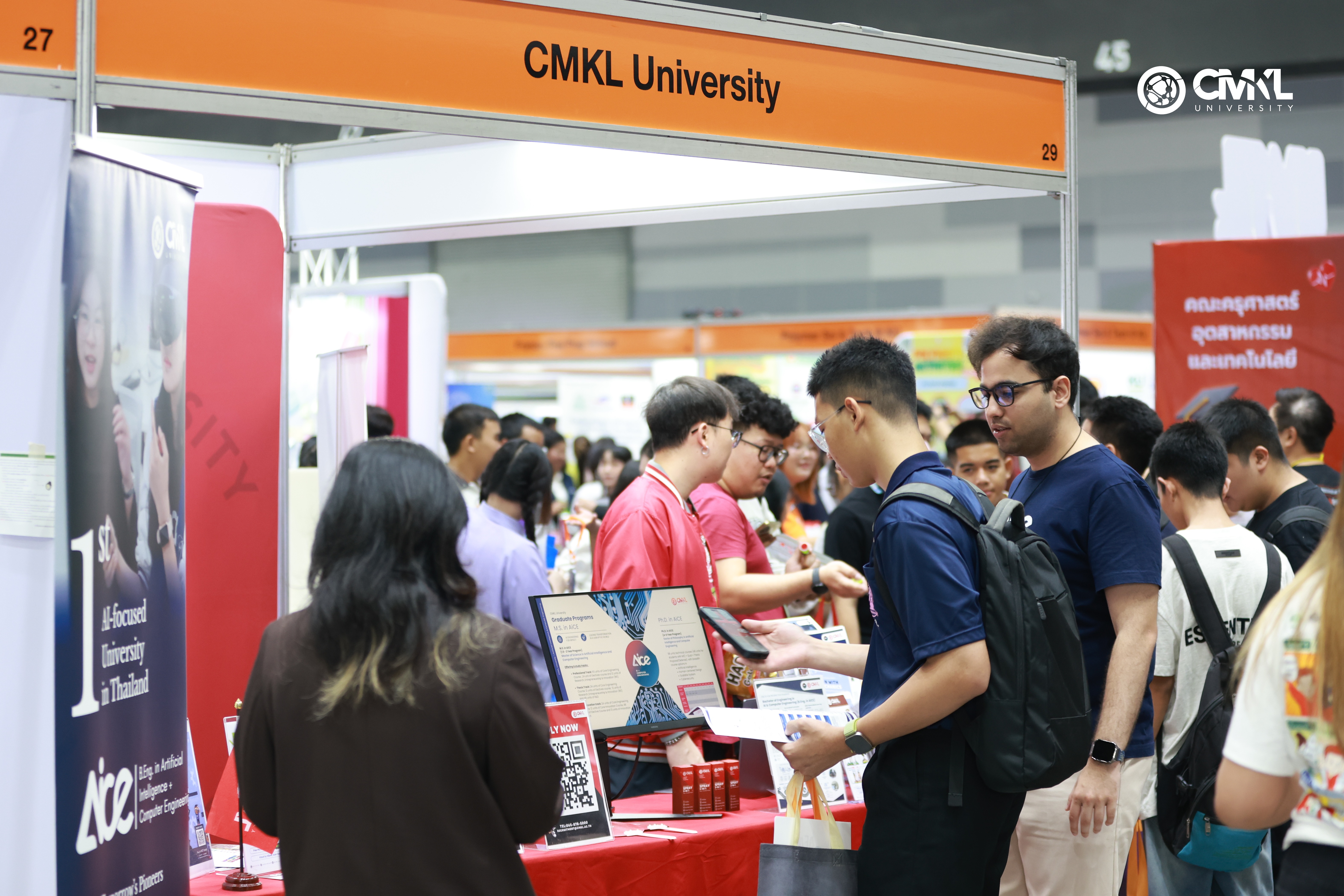
CMKL University participated in Dek-D’s TCAS FAIR, welcoming prospective students and parents who came to explore university programs, admission pathways, and future opportunities in technology and innovation.
Read more