
Folkcharm Carbon Calculator: Measuring What Matters in Sustainable Handwoven Cotton
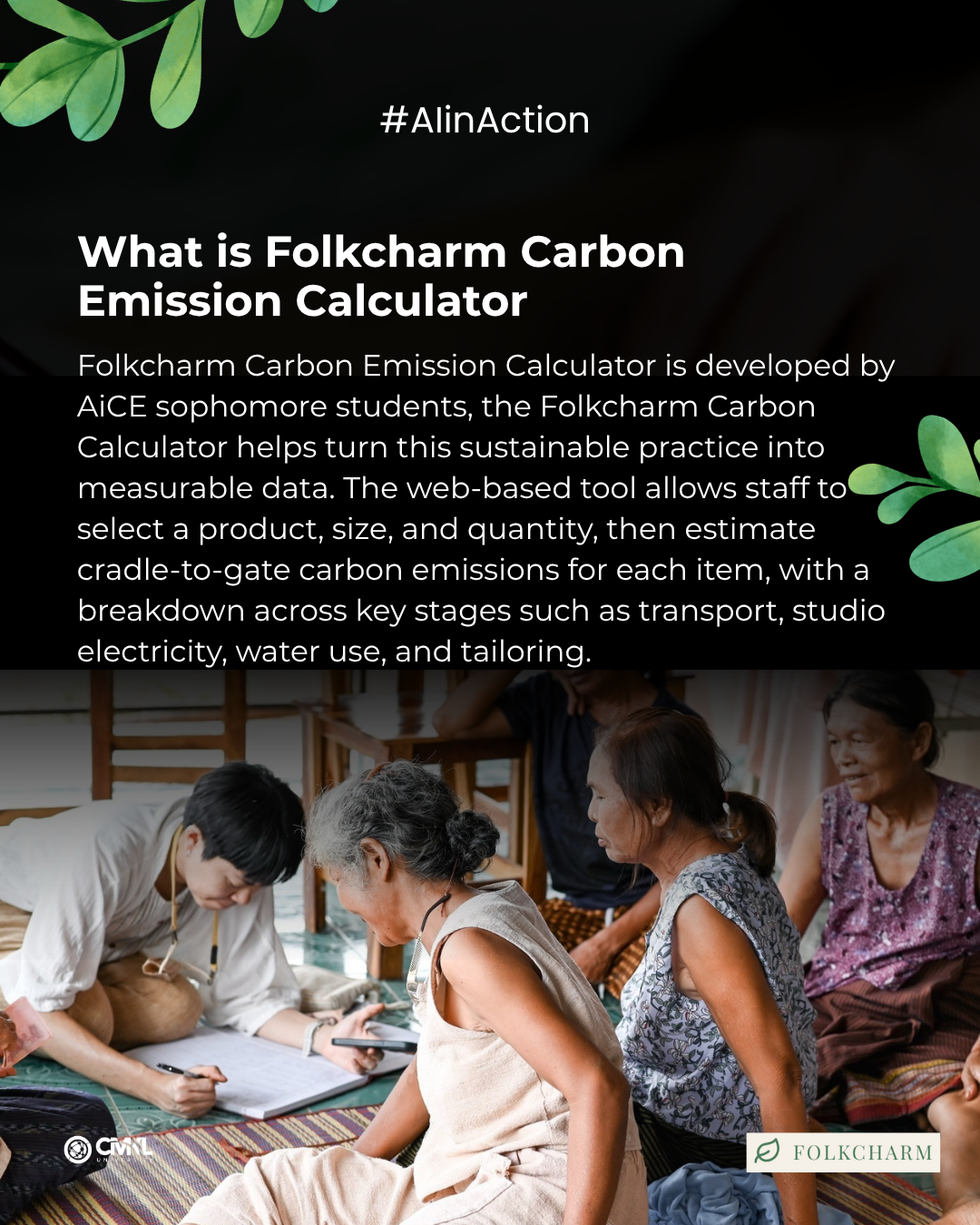
Sustainability is often seen in the choices a business makes: the materials it uses, the people it works with, the way products are made, and the values it carries through each step of production. For Folkcharm, a Thai social enterprise working with rain-fed cotton, hand-spun yarn, handwoven textiles, natural dyes, and artisan production, sustainability has long been part of its practice.
Yet for many responsible businesses, one important challenge remains: how can sustainable practices be translated into clear, consistent, and measurable data?
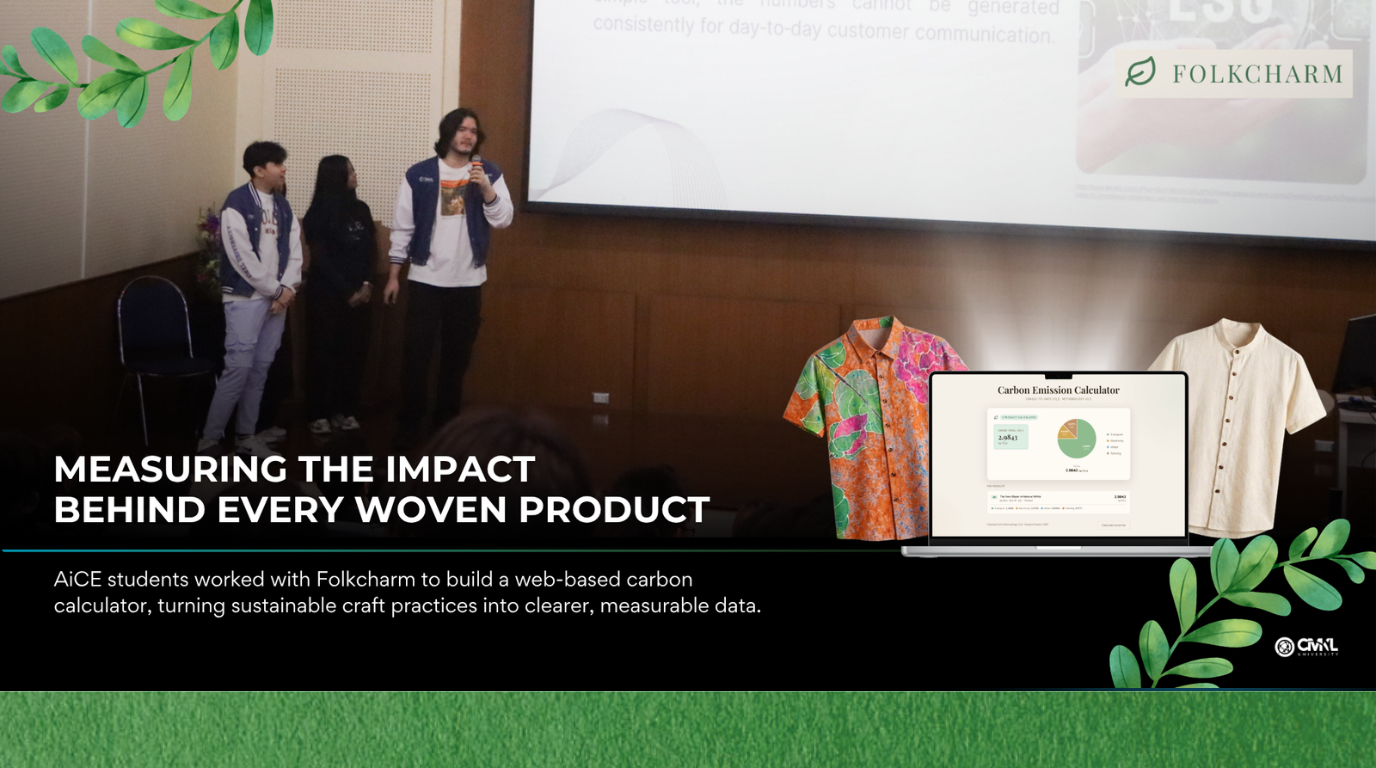
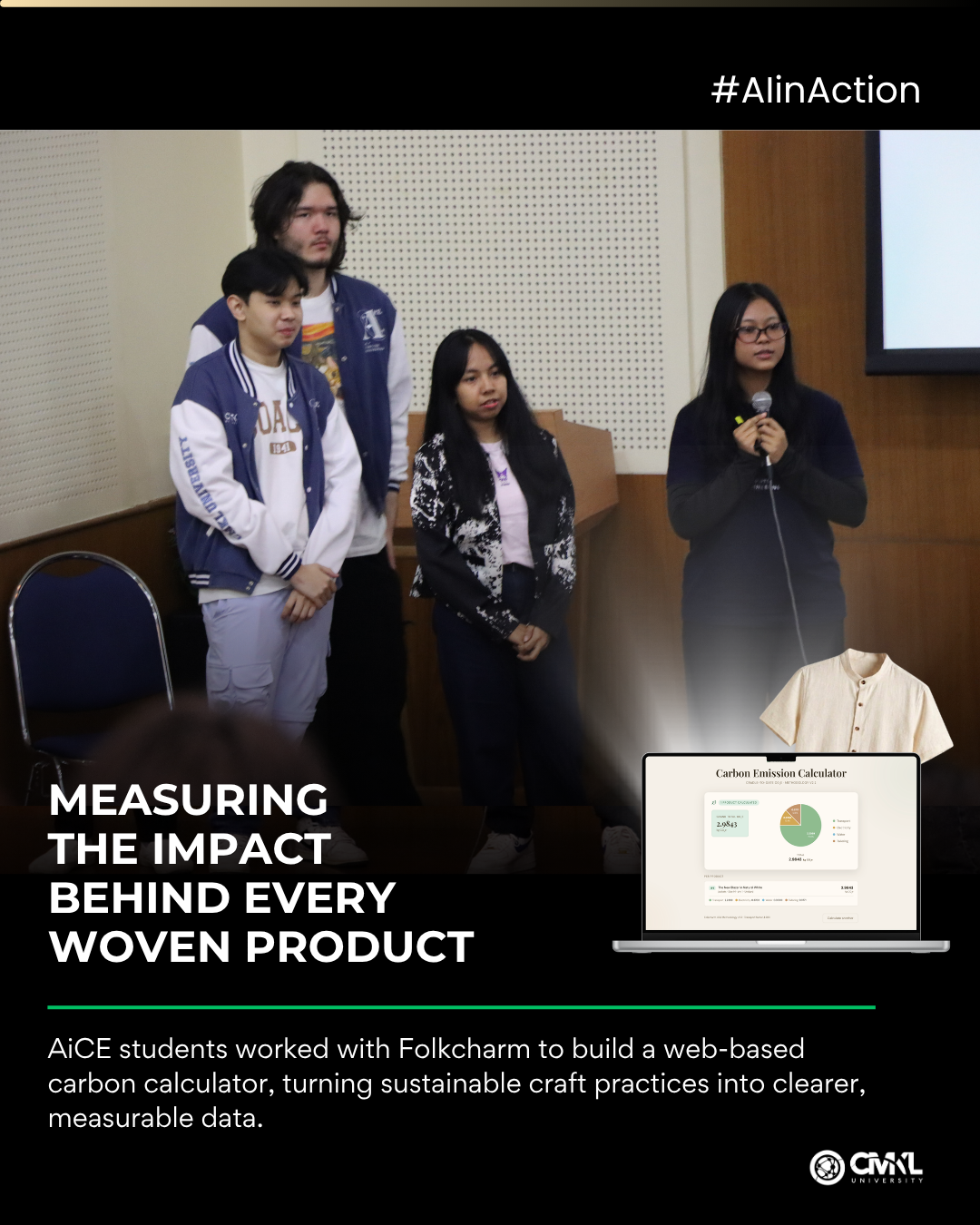
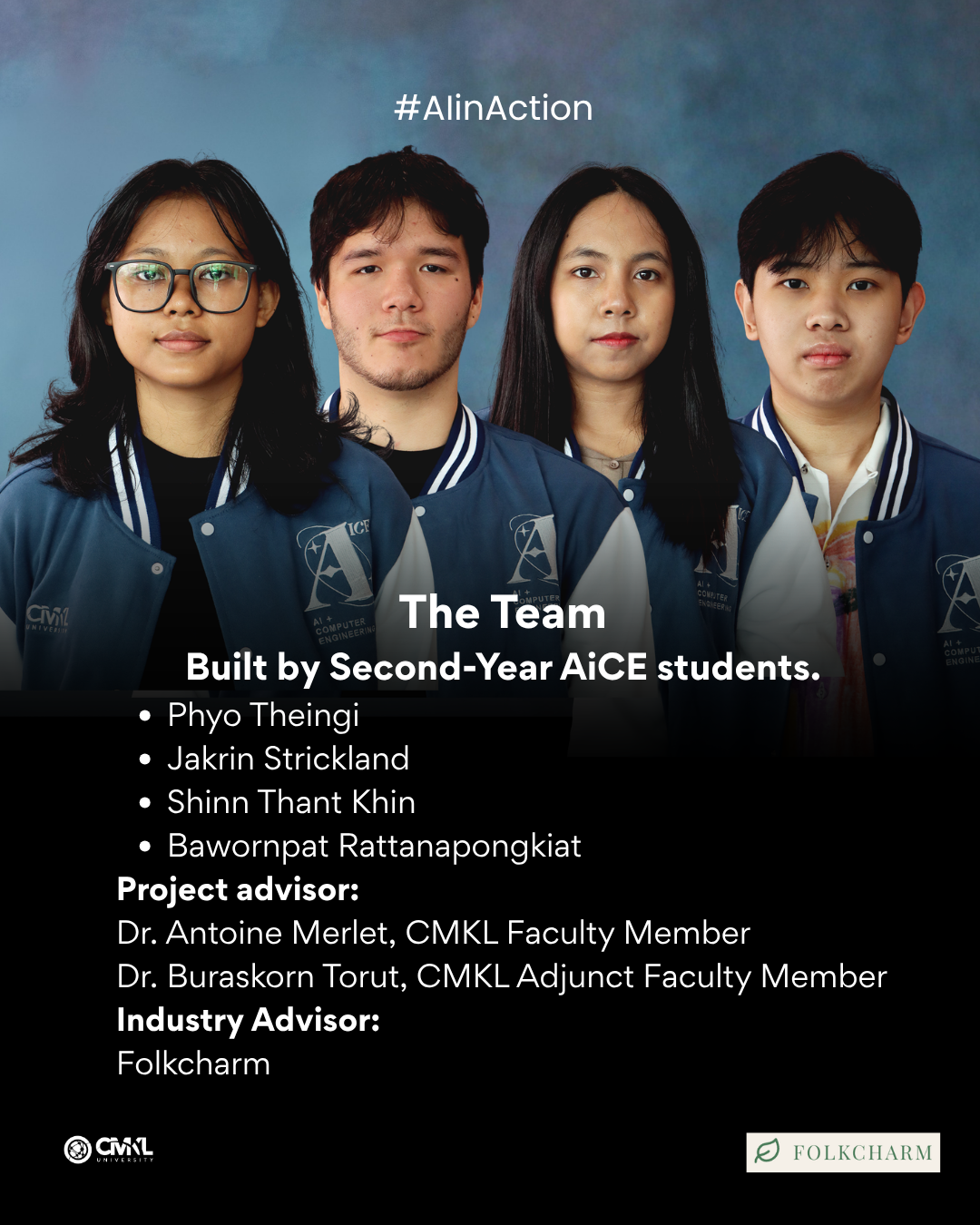
To support this challenge, AiCE sophomore students Phyo Theingi, Jakrin Strickland, Shinn Thant Khin, and Bawornpat Rattanapongkiat worked in collaboration with Folkcharm to develop the Folkcharm Carbon Calculator, a staff-facing web tool designed to estimate cradle-to-gate carbon emissions for individual handwoven cotton products.
The project was advised by Dr. Antoine Merlet and Dr. Buraskorn Torut, with Folkcharm serving as the industry partner.
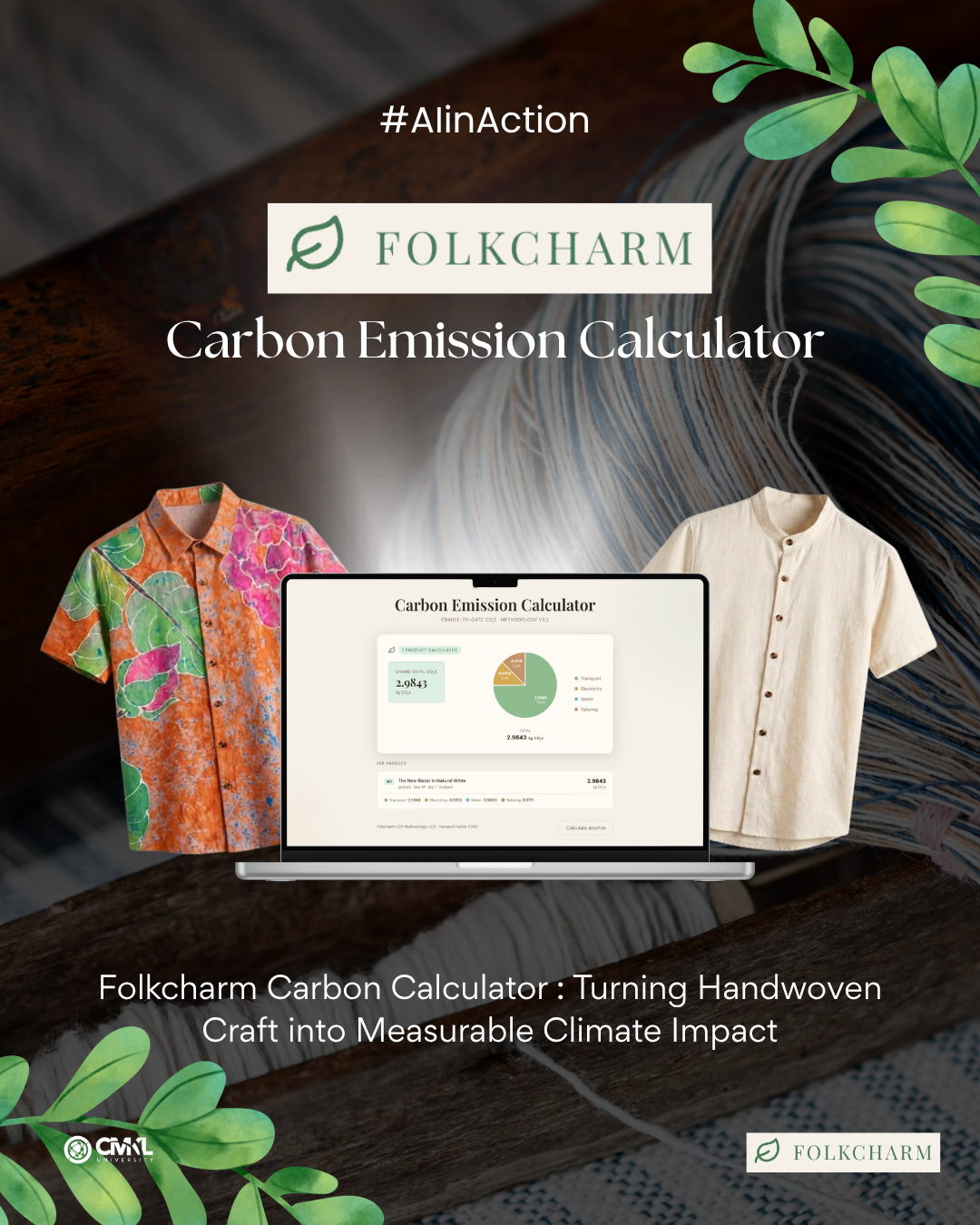
The calculator allows Folkcharm staff to select a product name, size, and quantity. The system then generates an estimated CO₂e value and breaks down the carbon footprint across key stages, including transport, studio electricity, water use, and tailoring. By turning product and production information into structured estimates, the tool helps Folkcharm better understand where environmental impact comes from and how it can be communicated more clearly.
Behind the interface, the project required more than software development. The student team had to study life-cycle assessment methodology, emission factors, system boundaries, product classification, and the difference between defensible internal estimates and third-party verified carbon labeling. The calculator follows a cradle-to-gate boundary, covering production-side impacts up to the point where the finished product leaves the studio.
From a technical perspective, the team built the calculator using a React frontend deployed on Vercel, with Google Sheets serving as a live data source. This architecture allows calculation logic and product data to remain maintainable over time. Folkcharm staff can update product information, emission factors, and assumptions directly in the spreadsheet without needing to redeploy the application.
One of the project’s key findings is that transport plays a major role in the estimated carbon footprint under the current assumptions. This insight is especially valuable because it points to logistics as an important area for future improvement, rather than focusing only on studio electricity or handcraft production stages.
The project also includes comparisons with published Thai textile life-cycle assessment references, helping place the results in a broader context. At the same time, the team carefully distinguishes between a student-built estimation tool and third-party verified carbon certification.
The Folkcharm Carbon Calculator demonstrates how software engineering can support sustainability, transparency, and responsible business communication. It also reflects an important lesson in applied sustainability work: the methodology behind the data is just as important as the interface that presents it.
Through this project, AiCE students applied computing skills to a real-world sustainability challenge, showing how technology can support craft-based businesses not by replacing traditional practices, but by helping make their environmental impact more visible, measurable, and actionable.
Project Members: Phyo Theingi, Jakrin Strickland, Shinn Thant Khin, Bawornpat Rattanapongkiat
Advisors: Dr. Antoine Merlet, Dr. Buraskorn Torut
Industry Partner: Folkcharm
Domain: Sustainability, Carbon Accounting, Life-Cycle Assessment, React, SME Tools


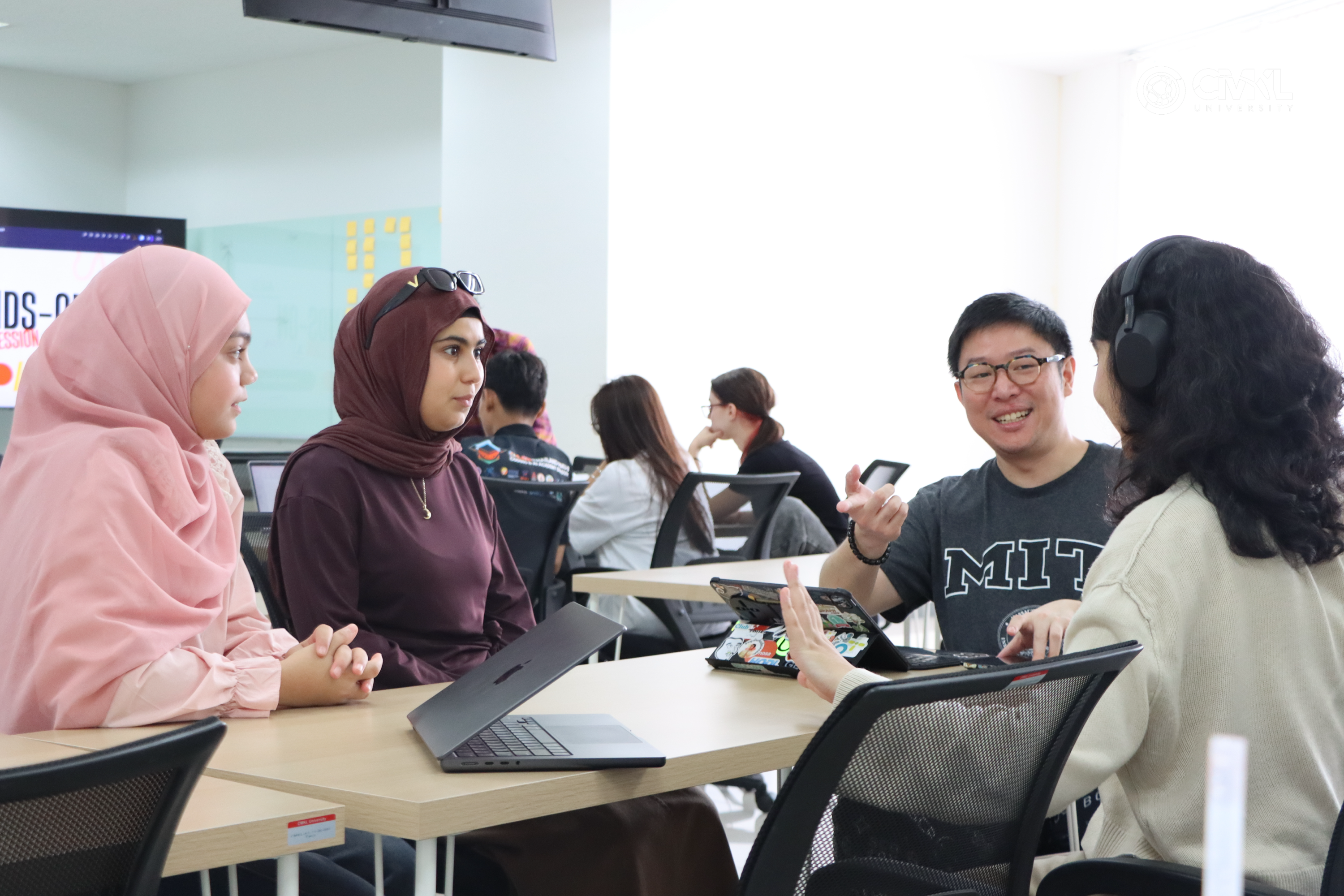
CMKL University supported the AI Kid School StartUp Case Challenge by hosting Workday 1: MVP Day in Room 601 at the university. The workday provided participants with a collaborative space and practical guidance to develop their minimum viable products (MVPs) ahead of the next round.
Read more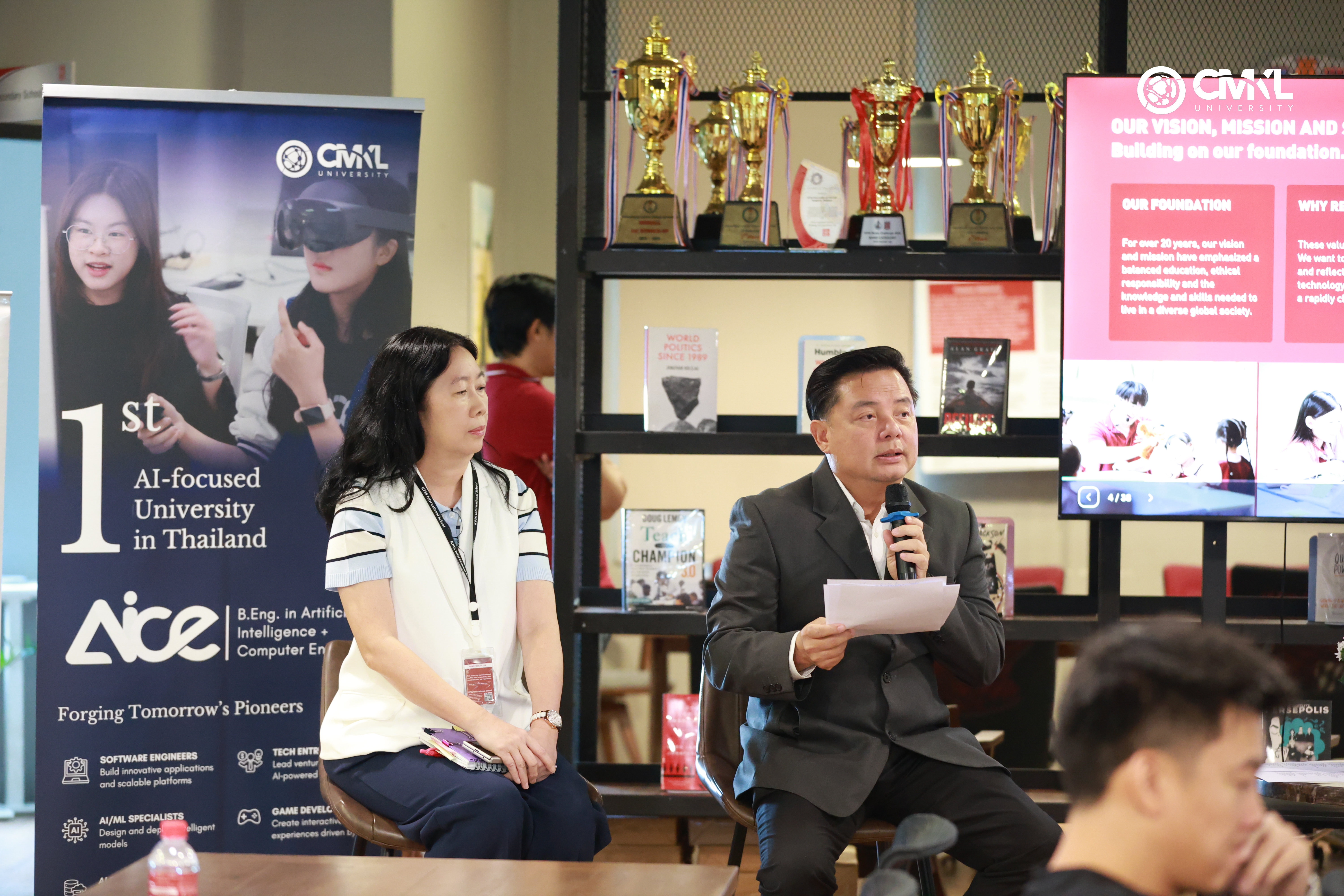
CMKL University joined KPIS Coffee Meet: More for Every Student at KPIS International School, bringing together parents, school leaders, and education partners to exchange perspectives on preparing students for a rapidly changing world and creating more meaningful learning opportunities.
Read more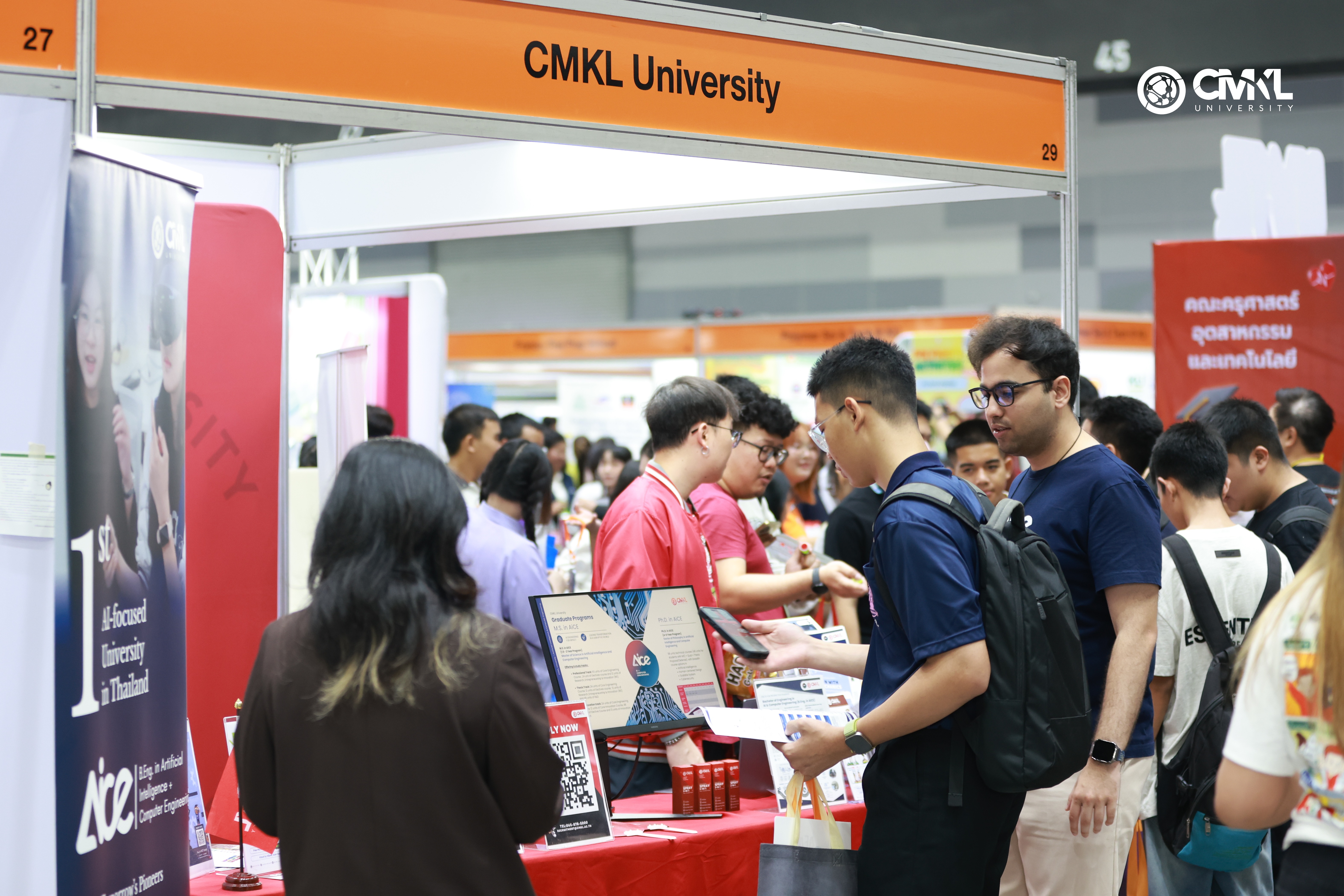
CMKL University participated in Dek-D’s TCAS FAIR, welcoming prospective students and parents who came to explore university programs, admission pathways, and future opportunities in technology and innovation.
Read more