
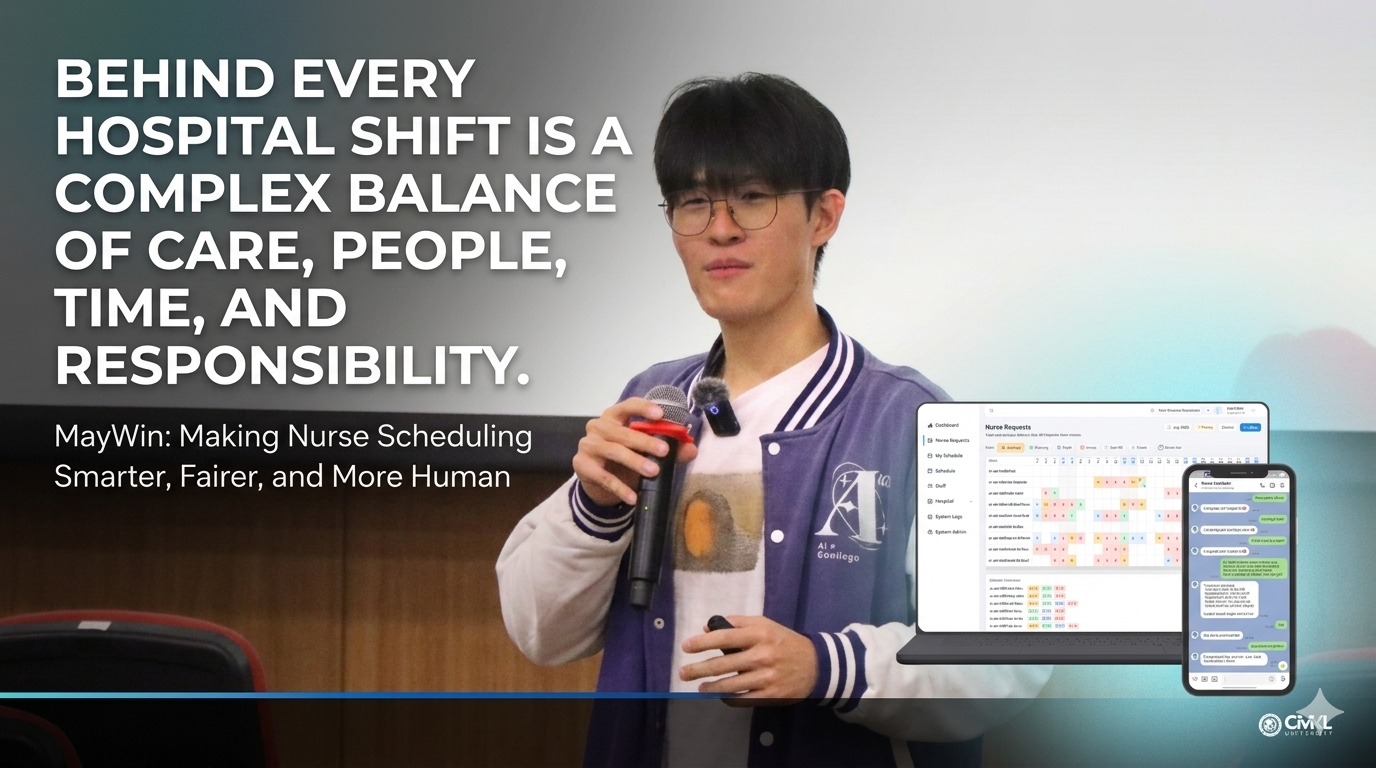
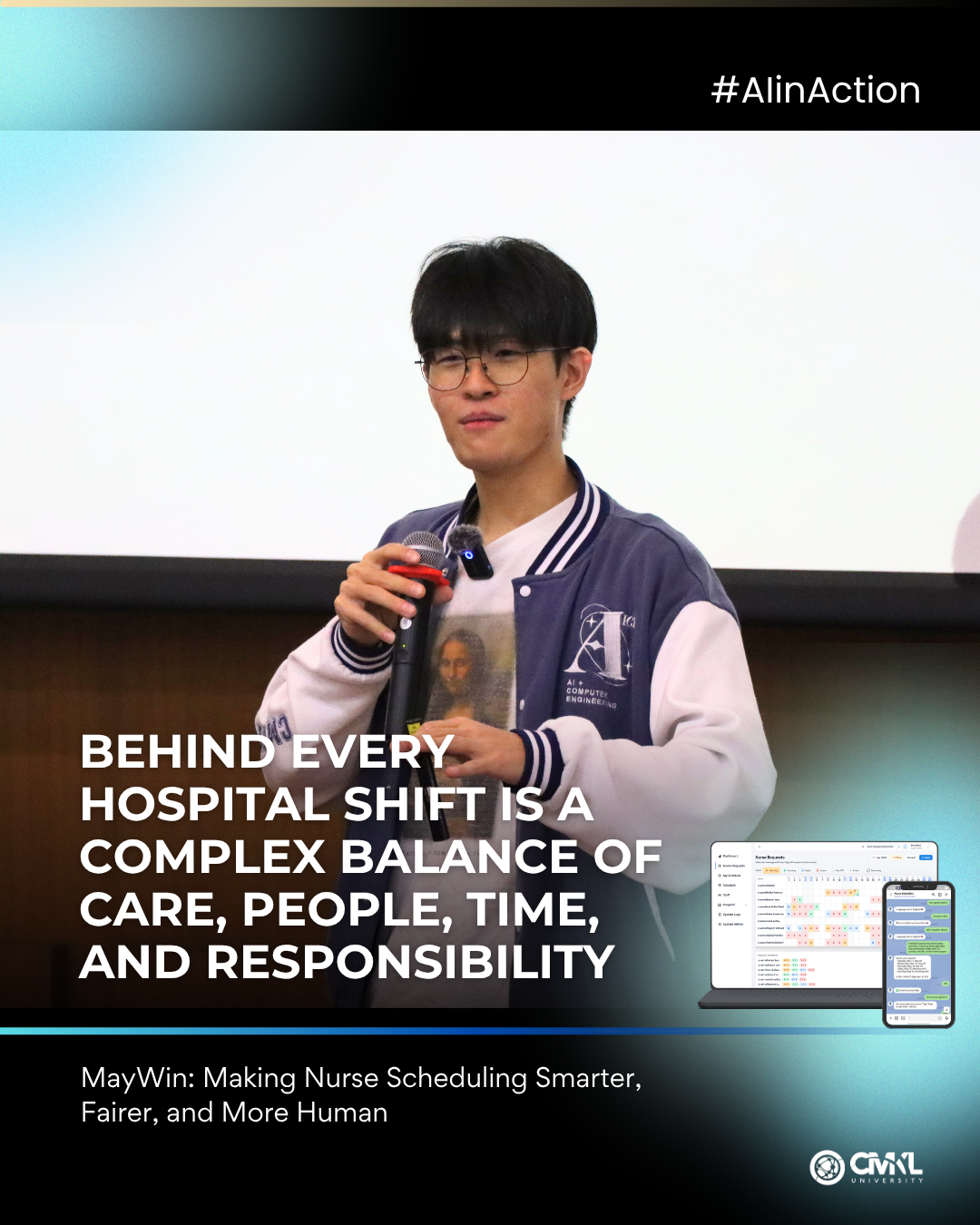
MayWin: Making Nurse Scheduling Smarter, Fairer, and More Human
Hospital nurse scheduling is a high-stakes operational problem. A good schedule must provide adequate staffing, respect labor rules, balance workloads, and consider individual preferences. When done manually, the process can be time-consuming, stressful, and difficult to make fair.
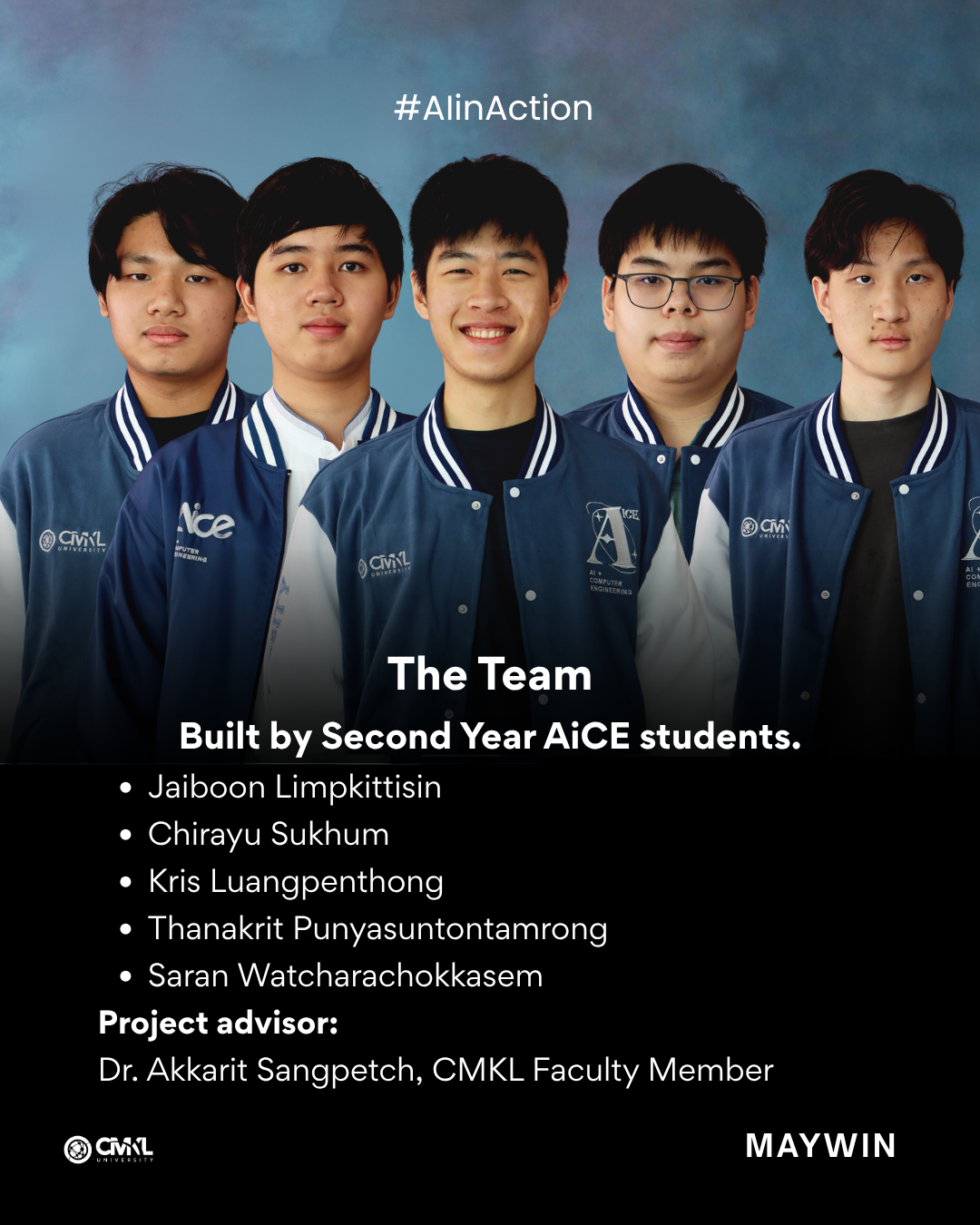
MayWin was developed by CMKL sophomore students Jaiboon Limpkittisin, Chirayu Sukhum, Kris Luangpenthong, Thanakrit Punyasuntontamrong, and Saran Watacharachokkasem, with Dr. Akkarit Sangpetch as advisor. The project combines nurse preference collection, optimization, and dashboard-based schedule management into one healthcare scheduling system.
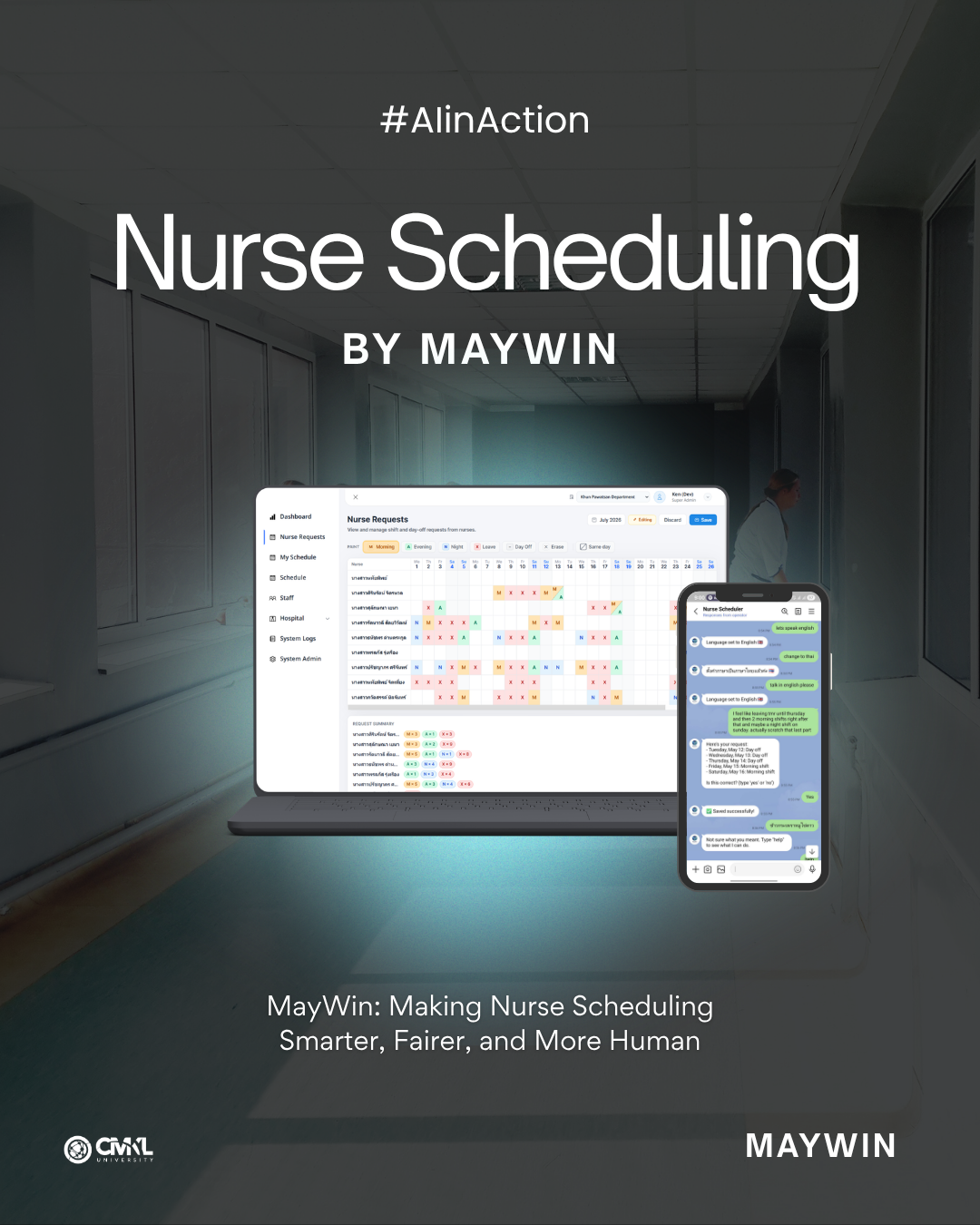
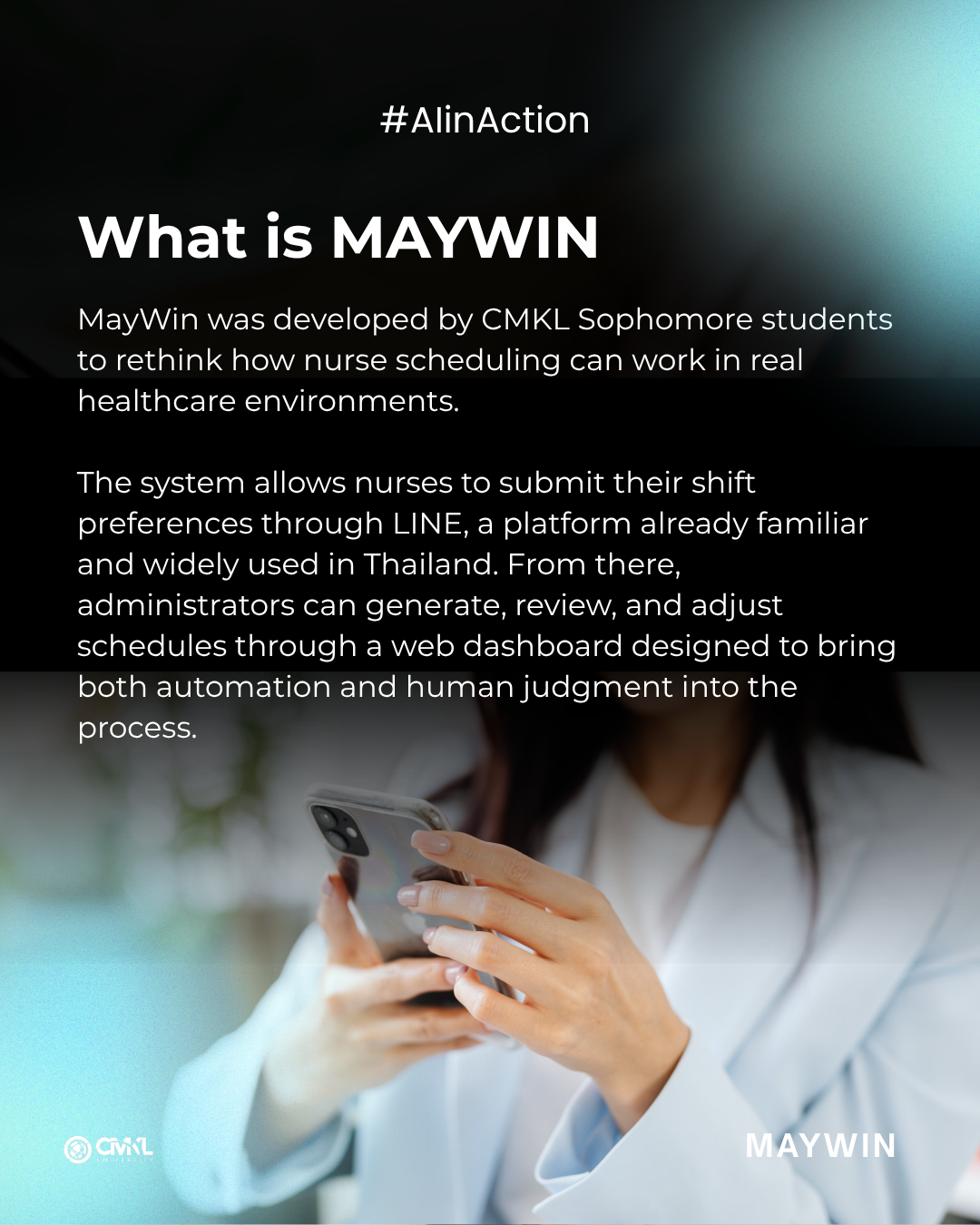
The team built a platform where nurses can submit schedule preferences through LINE, a communication tool already widely used in Thailand. Administrators can then use a web dashboard to generate, review, and adjust schedules based on staffing needs and constraints.
The technical core of the system uses OR-Tools CP-SAT optimization. This allows the platform to search for schedules that satisfy hard constraints, such as required staffing levels and shift rules, while also balancing softer goals such as fairness and preference satisfaction.
A key strength of MayWin is its user-centered workflow. Instead of requiring nurses to log into an unfamiliar system, the project uses LINE as the entry point for preference collection. This design choice recognizes that adoption depends not only on algorithmic performance but also on how naturally the system fits into existing behavior.
The administrator dashboard adds another layer of practicality. Schedules generated by optimization systems still need human review, adjustment, and approval. MayWin supports this by giving administrators visibility and control rather than treating the system as a black box.
The project is a strong example of how AI and optimization can support healthcare operations. Better scheduling can improve fairness, reduce administrative burden, and support safer staffing. For students, MayWin demonstrates the challenge of building technology for real organizations, where constraints are human, operational, and technical at the same time.
Project Members: Jaiboon Limpkittisin, Chirayu Sukhum, Kris Luangpenthong, Thanakrit Punyasuntontamrong, Saran Watacharachokkasem
Advisor: Dr. Akkarit Sangpetch
Industry Advisor: King Mongkut Chaokhunthahan Hospital (KMCH), Bangkok
Domain: Healthcare Operations, Optimization, Workforce Scheduling


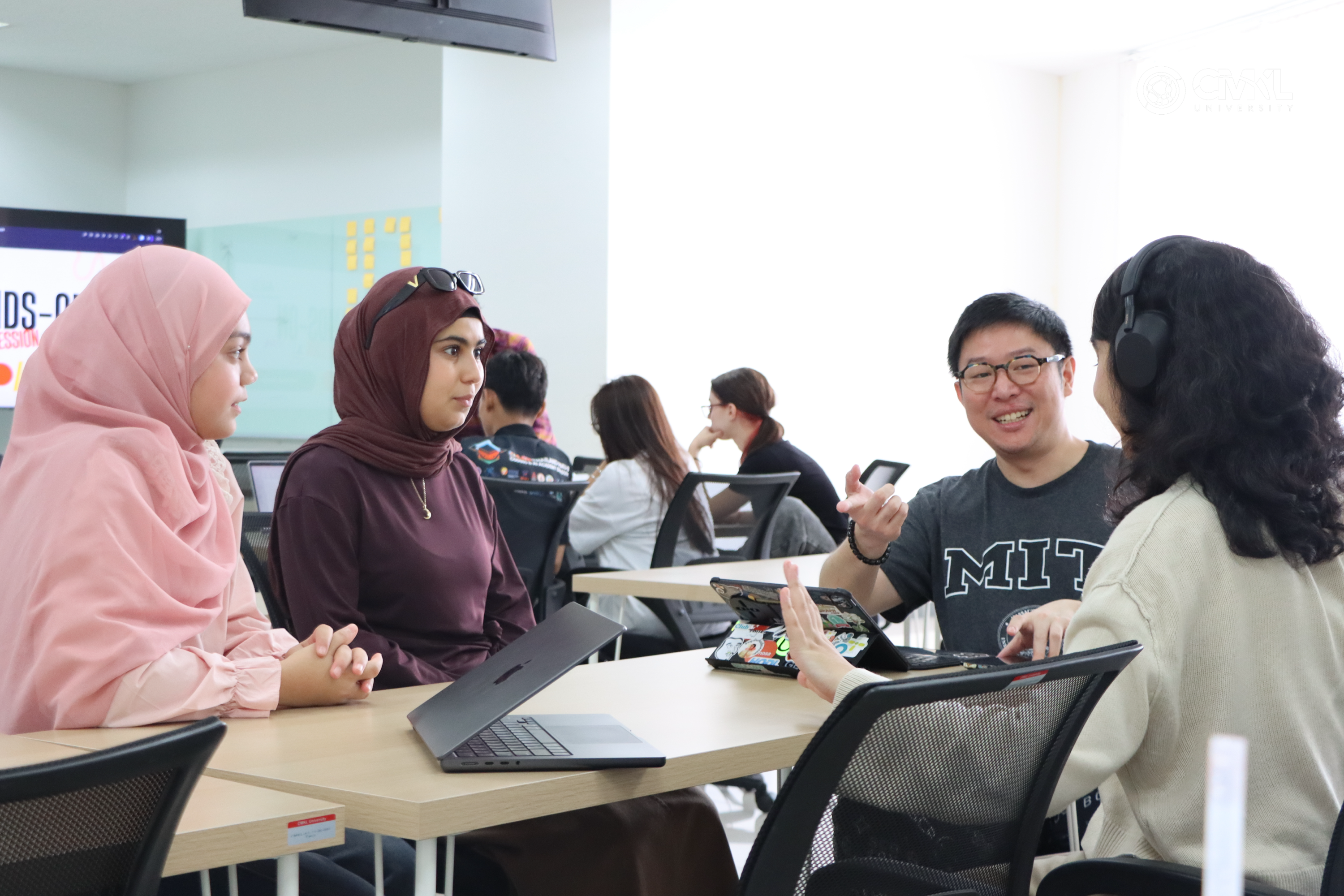
CMKL University supported the AI Kid School StartUp Case Challenge by hosting Workday 1: MVP Day in Room 601 at the university. The workday provided participants with a collaborative space and practical guidance to develop their minimum viable products (MVPs) ahead of the next round.
Read more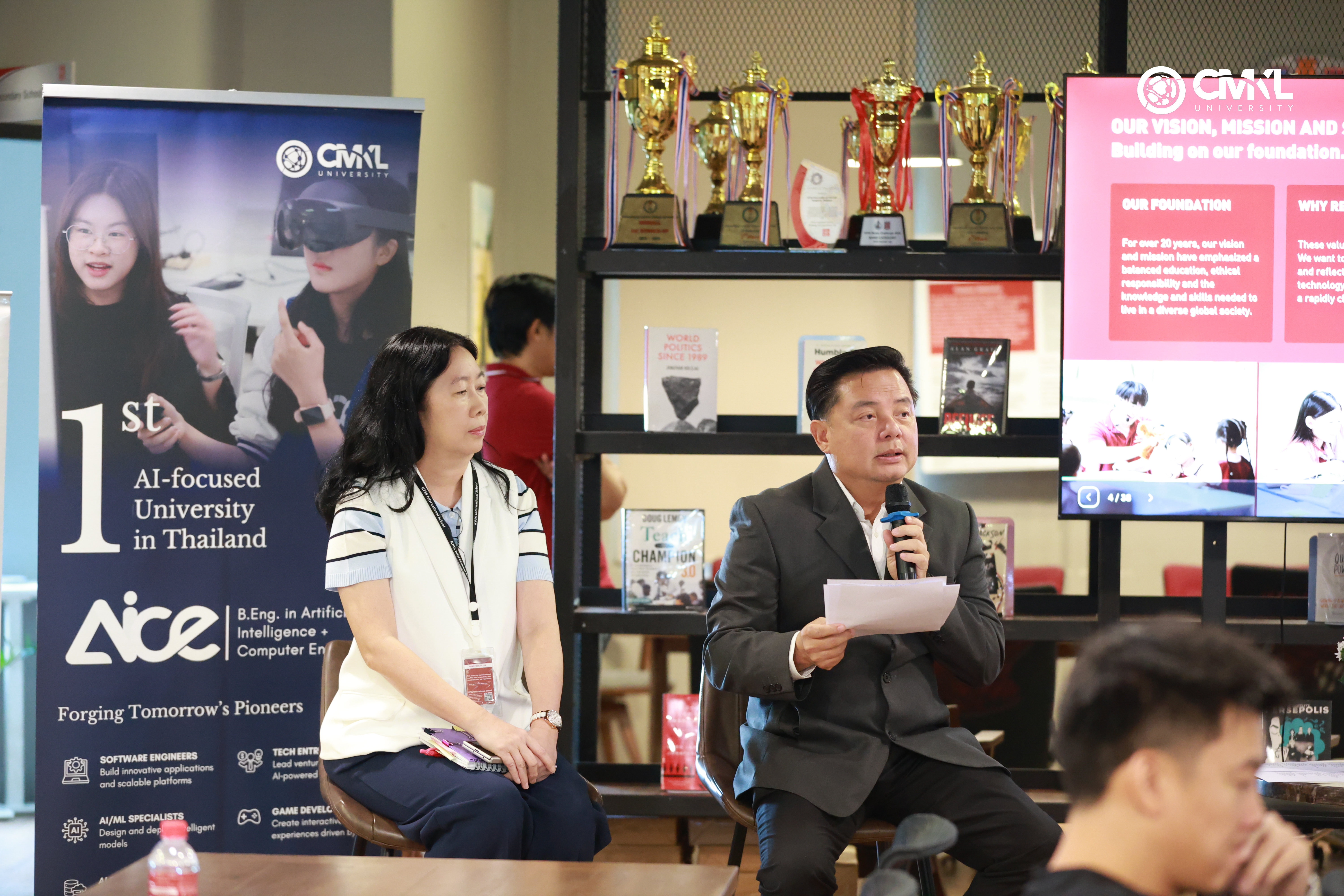
CMKL University joined KPIS Coffee Meet: More for Every Student at KPIS International School, bringing together parents, school leaders, and education partners to exchange perspectives on preparing students for a rapidly changing world and creating more meaningful learning opportunities.
Read more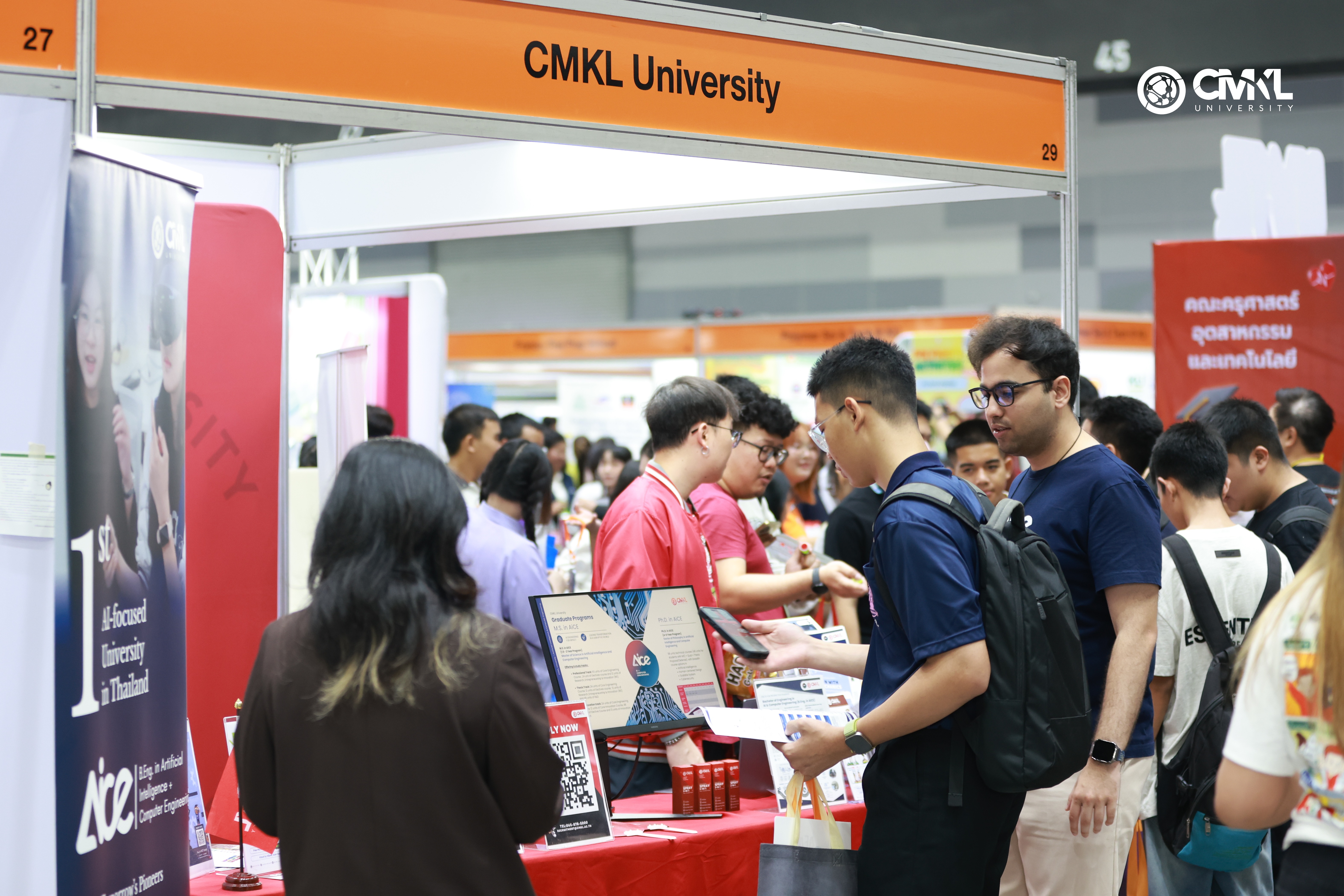
CMKL University participated in Dek-D’s TCAS FAIR, welcoming prospective students and parents who came to explore university programs, admission pathways, and future opportunities in technology and innovation.
Read more