
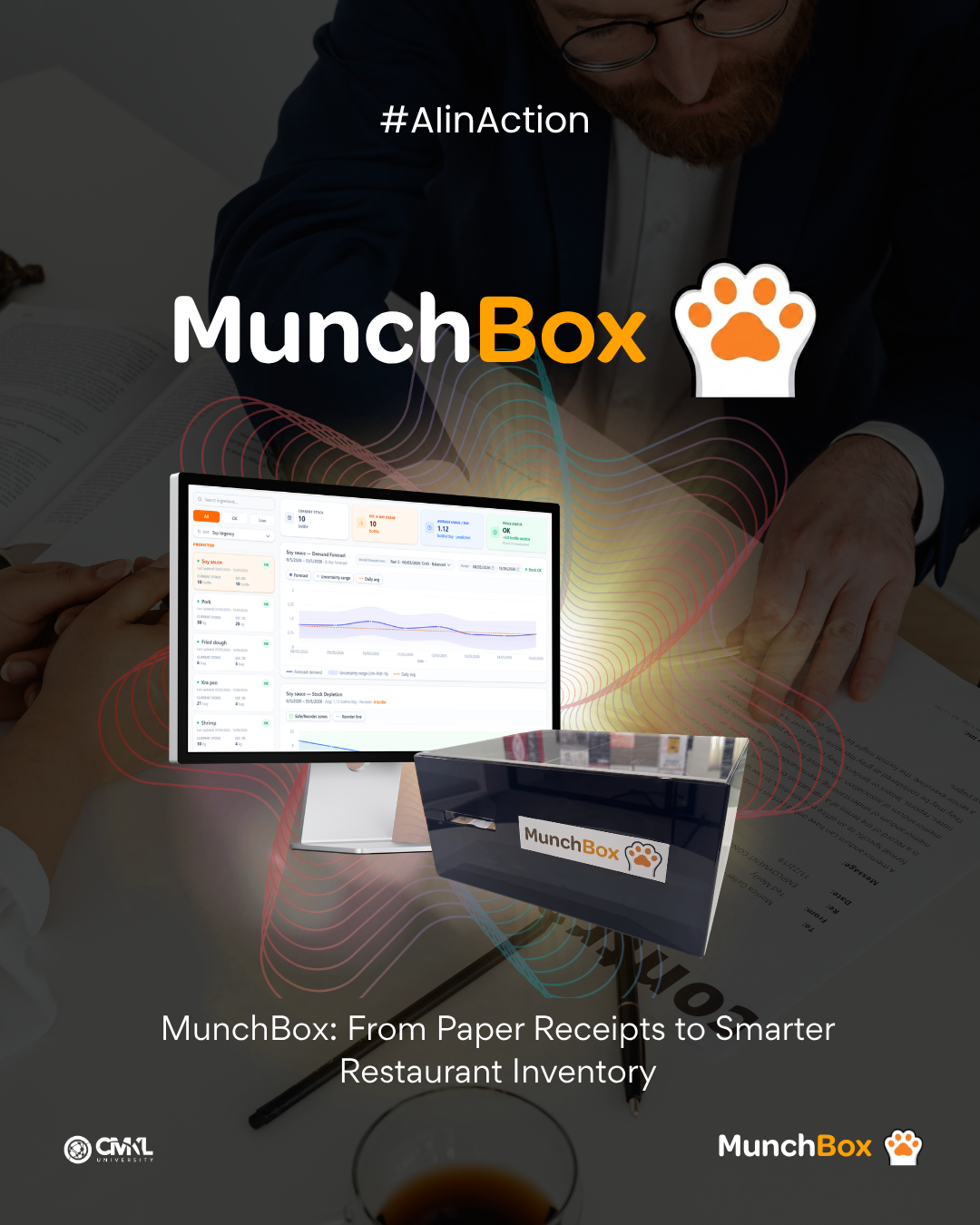
MunchBox: From Paper Receipts to Smarter Restaurant Inventory
For many small restaurants, inventory management still depends on manual tracking, experience, and guesswork. Owners and staff may know what sells, but turning daily orders into ingredient-level planning can be difficult. Without better data, restaurants risk overstocking, running out of ingredients, or generating avoidable food waste.
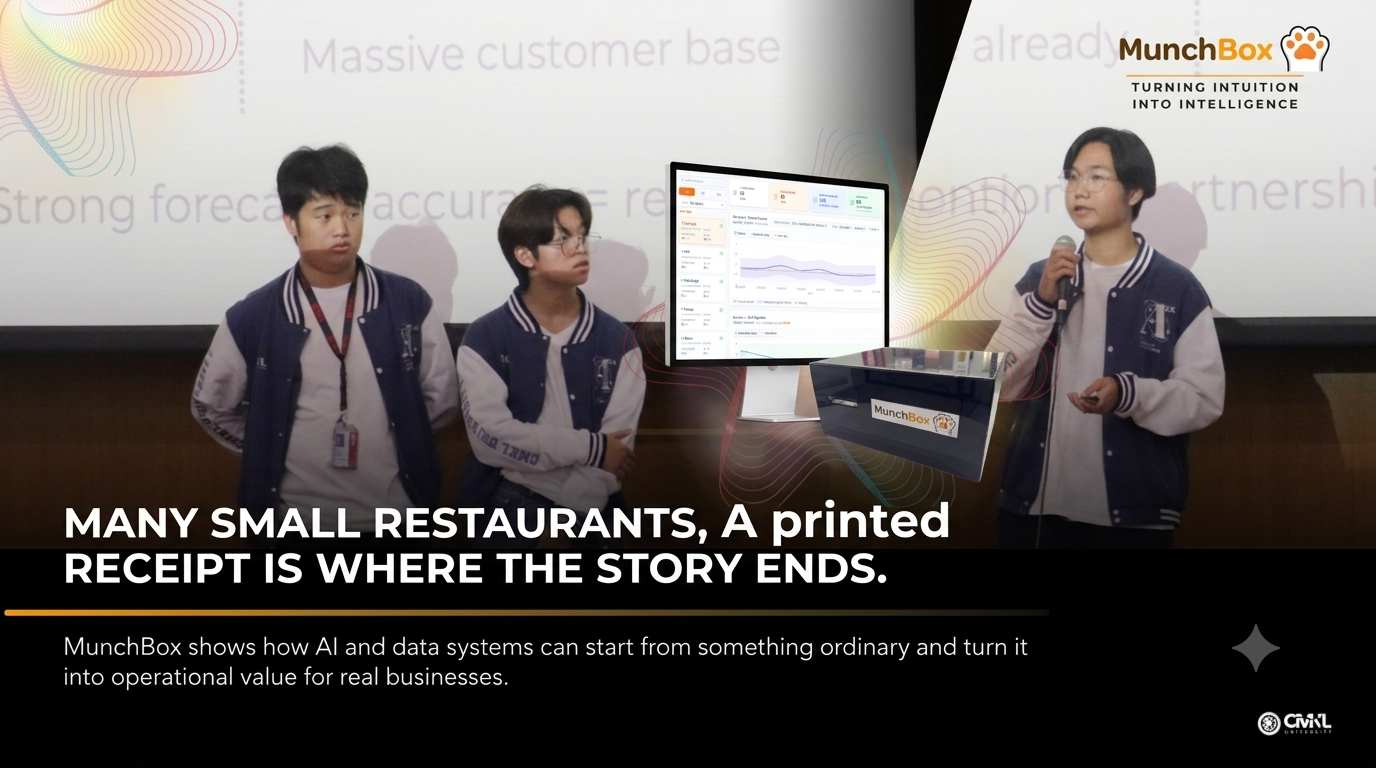
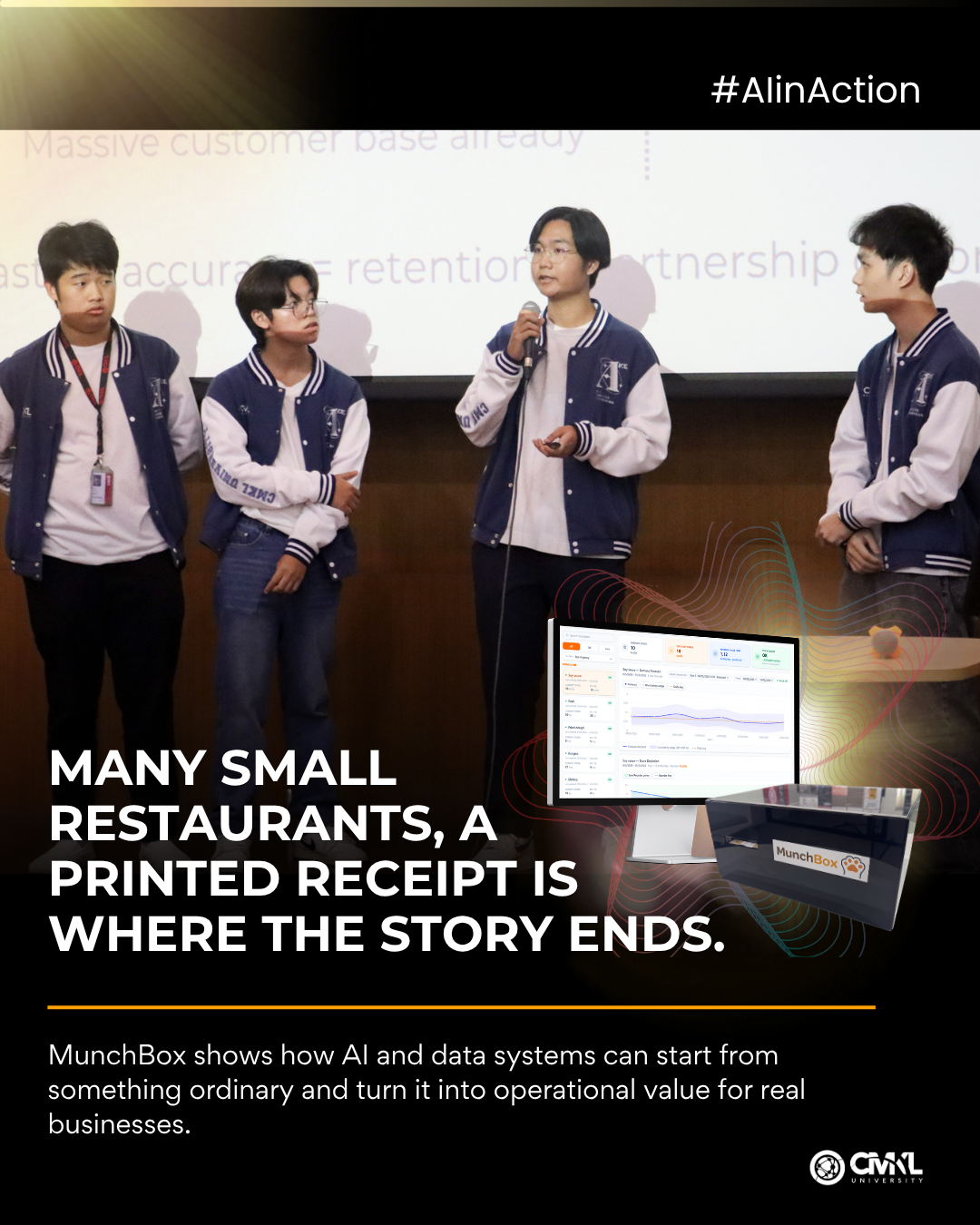
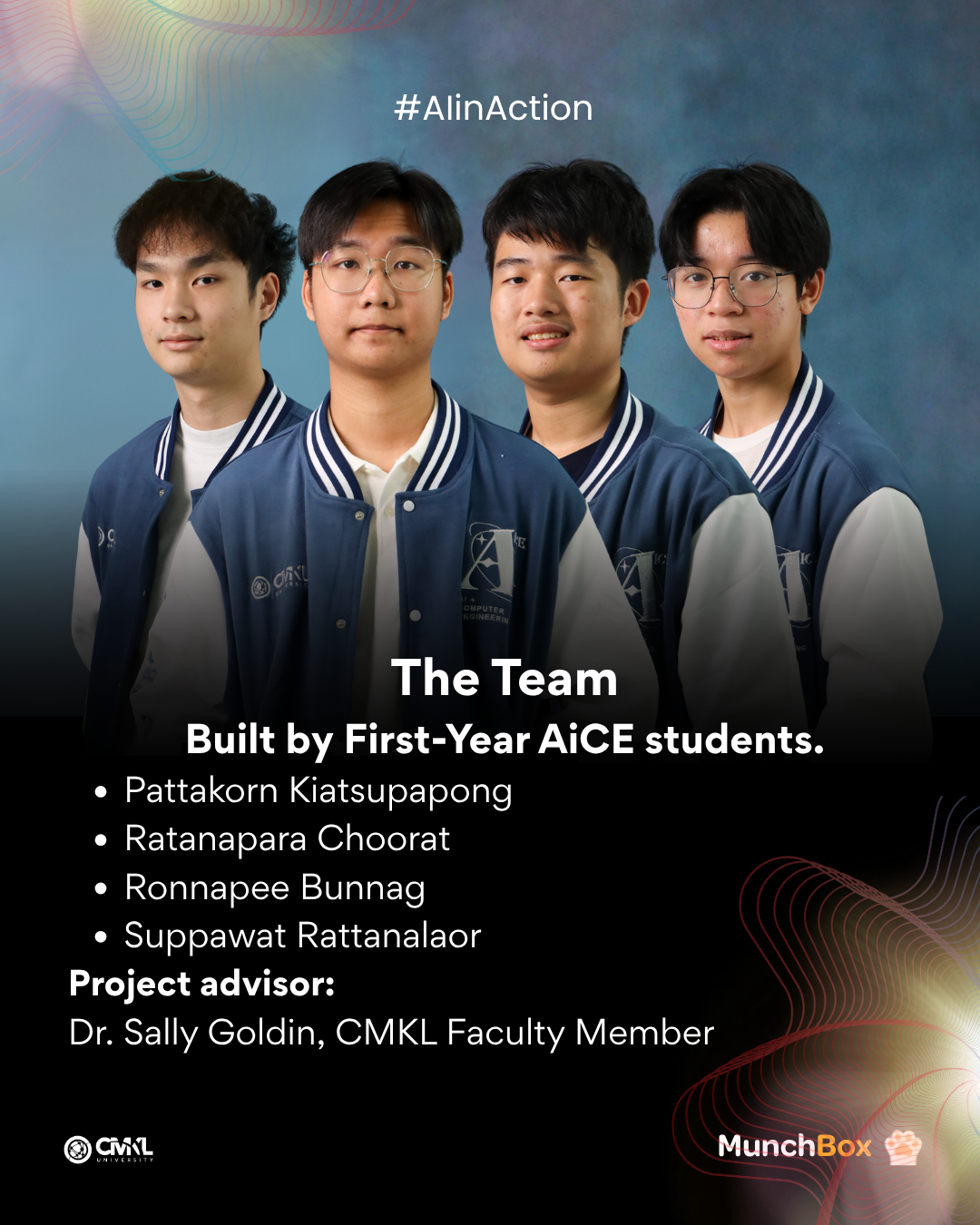
MunchBox was developed by CMKL students Pattakorn Kiatsupapong, Ratanapara Choorat, Ronapee Bunnag, and Suppawat Rattanalaor under the guidance of Sally E. Goldin. The project helps SME restaurants transform paper receipts into inventory insights and demand forecasts.
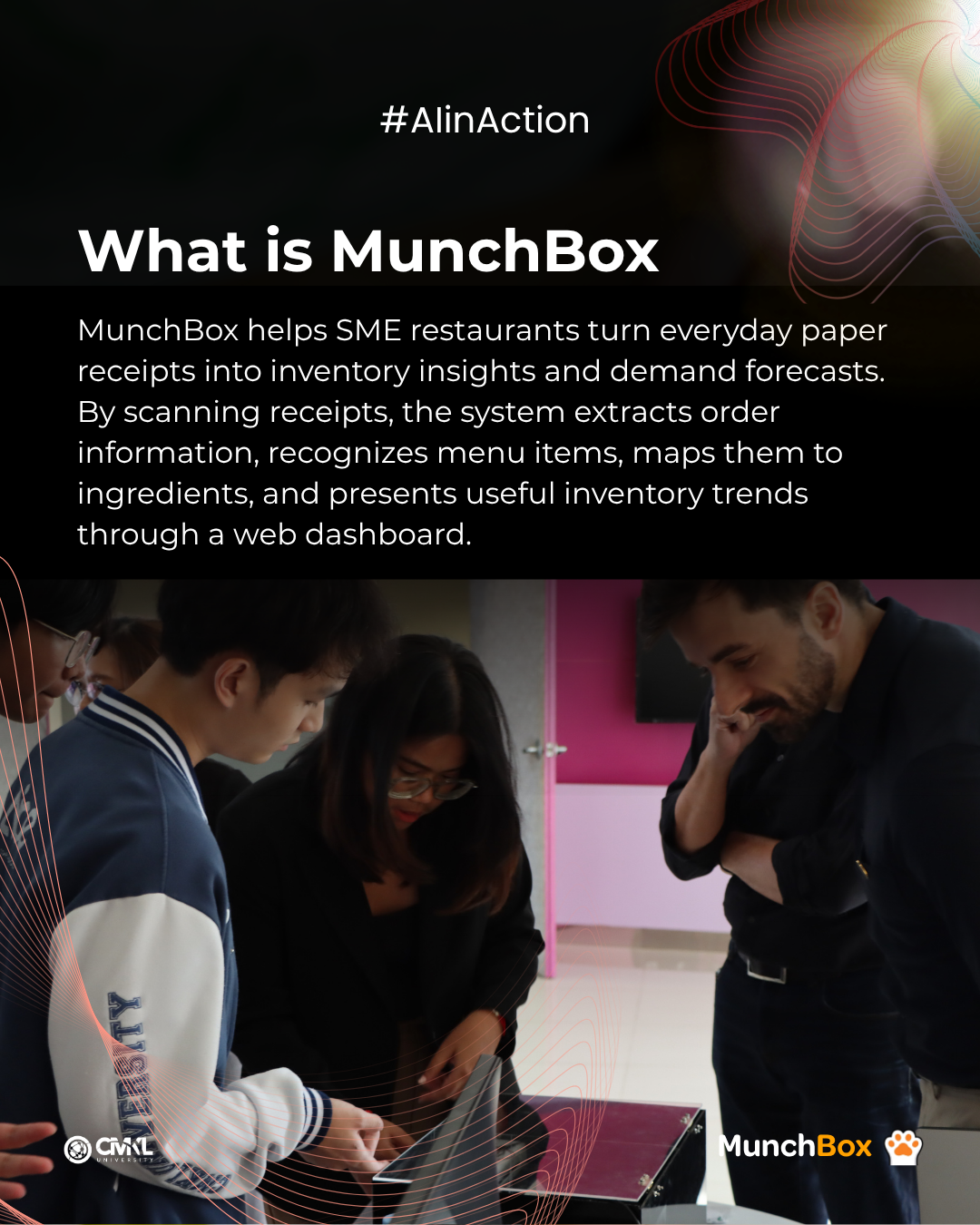
The team built an end-to-end system that starts with receipt scanning. A physical receipt-scanning component captures order information, while the software system extracts menu items, maps them to ingredients, and estimates future inventory needs. The output is presented through a web dashboard that helps restaurant operators better understand ingredient usage and demand patterns.
The technical approach combines hardware prototyping, optical character recognition, menu-item recognition, ingredient mapping, forecasting logic, and dashboard development. The system needed to account for the realities of restaurant workflows: receipts may be messy, menu items may vary, and staff need outputs that are quick to interpret.
Rather than asking restaurants to manually enter every sale or change their entire point-of-sale system, MunchBox begins from something many restaurants already have: printed receipts. This makes the project practical for small businesses that may not have access to advanced restaurant management software.
The project also addresses a broader sustainability issue. Better demand forecasting and inventory visibility can help reduce food waste, improve purchasing decisions, and support smoother day-to-day operations.
MunchBox demonstrates how CMKL students can connect AI and data systems to real SME challenges. It is not only a technical prototype, but a business-aware solution that considers adoption, usability, and operational value.
Project Members: Pattakorn Kiatsupapong, Ratanapara Choorat, Ronapee Bunnag, Suppawat Rattanalaor
Advisor: Sally E. Goldin
Domain: SME Technology, OCR, Forecasting, Inventory Management, Food Waste Reduction


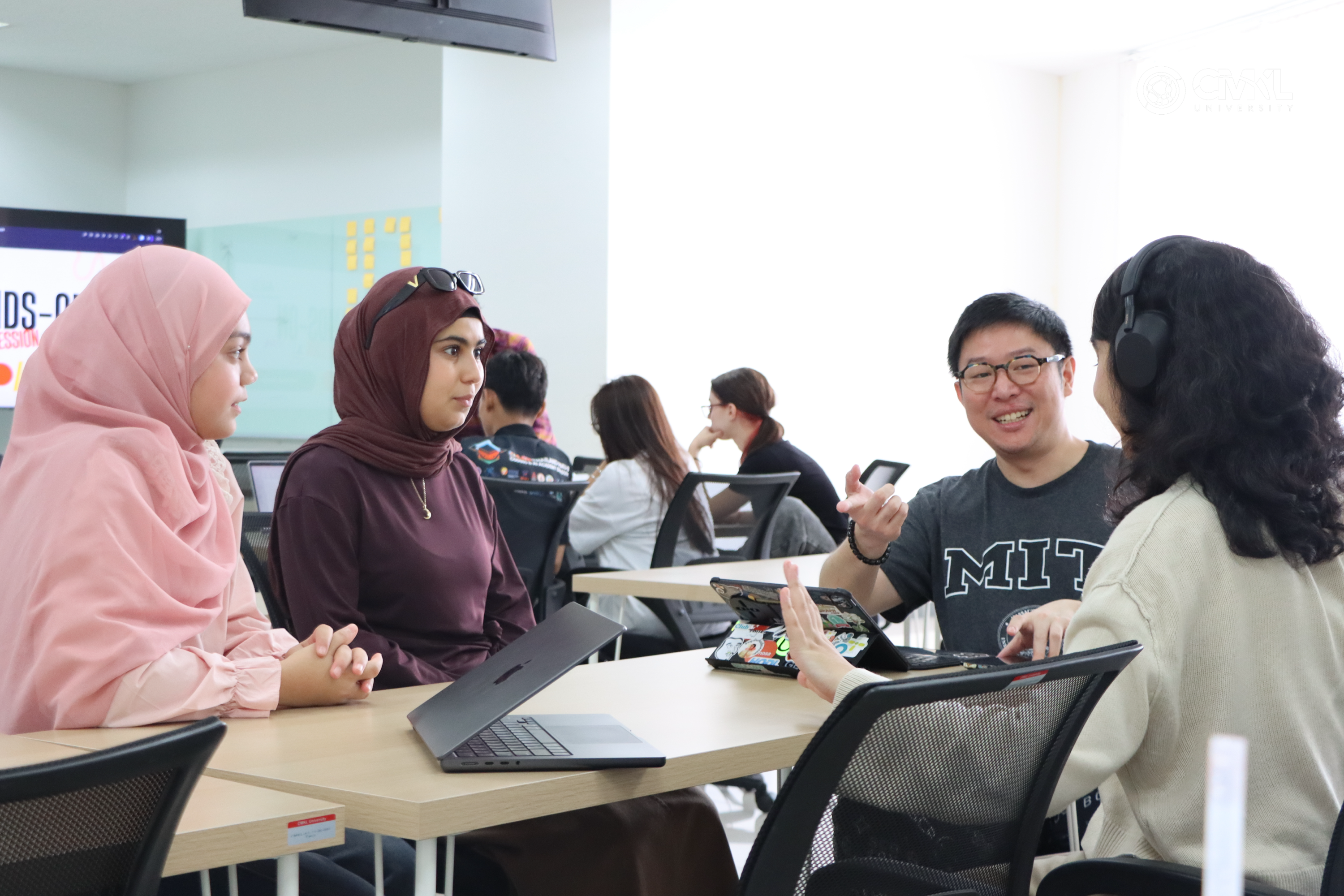
CMKL University supported the AI Kid School StartUp Case Challenge by hosting Workday 1: MVP Day in Room 601 at the university. The workday provided participants with a collaborative space and practical guidance to develop their minimum viable products (MVPs) ahead of the next round.
Read more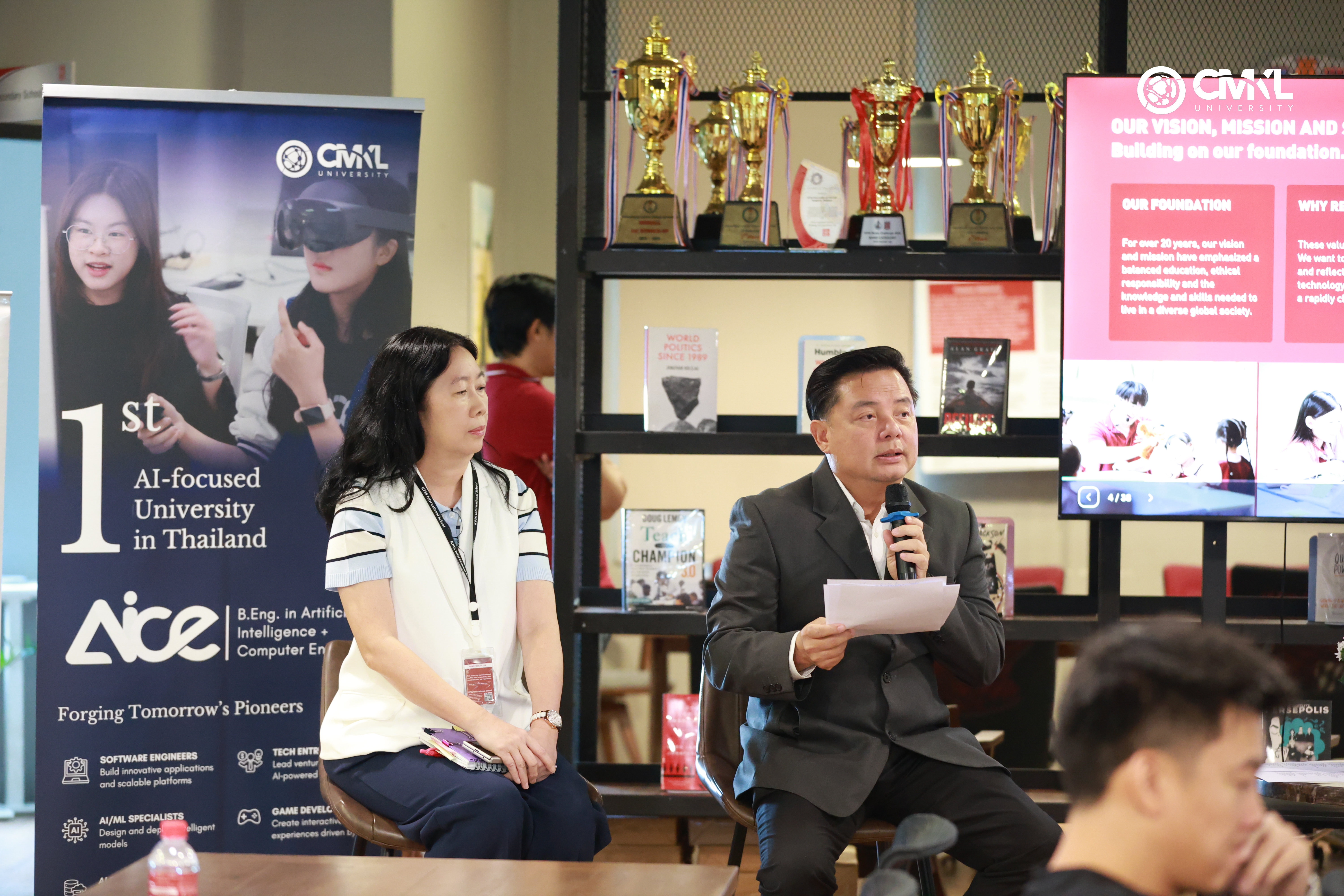
CMKL University joined KPIS Coffee Meet: More for Every Student at KPIS International School, bringing together parents, school leaders, and education partners to exchange perspectives on preparing students for a rapidly changing world and creating more meaningful learning opportunities.
Read more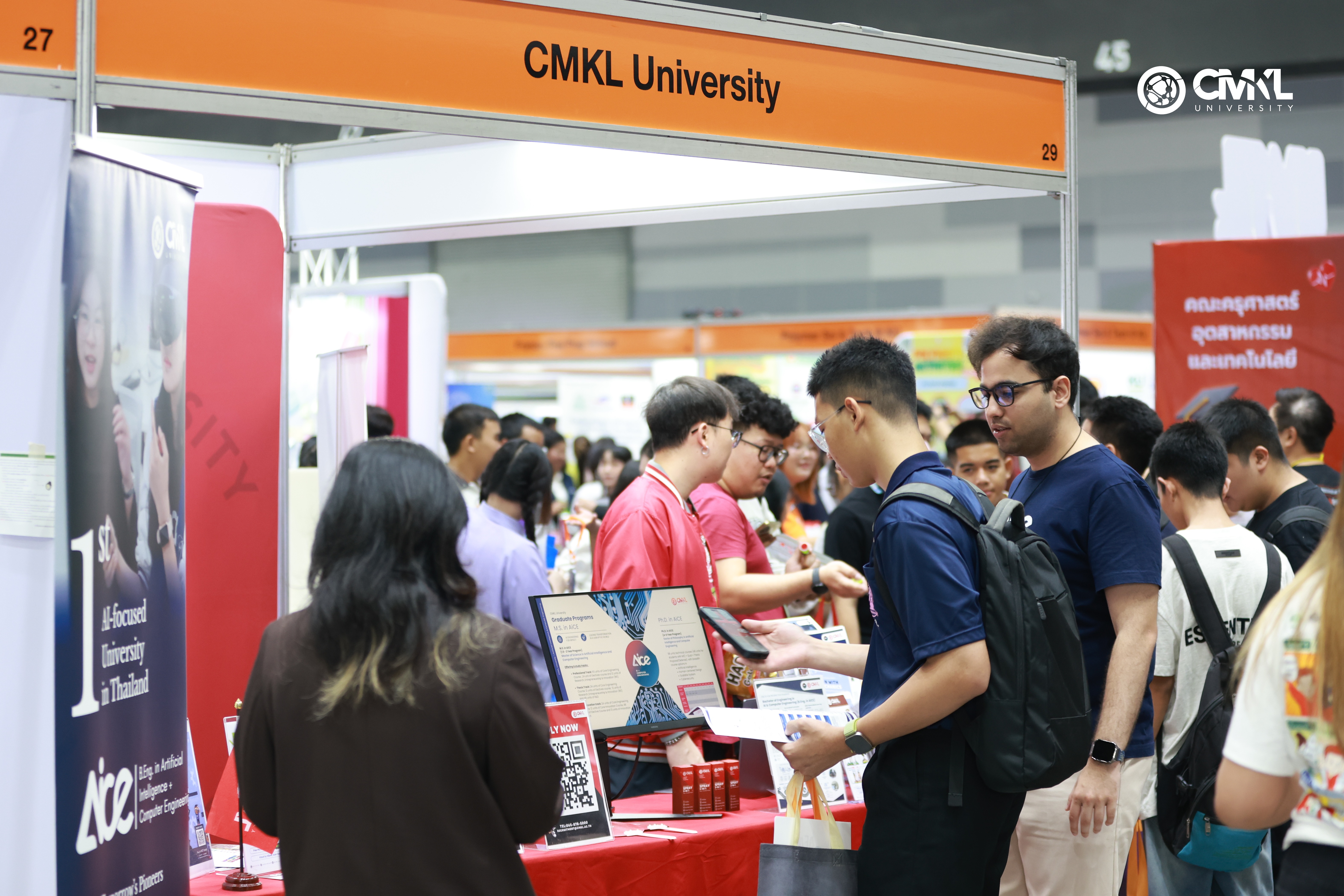
CMKL University participated in Dek-D’s TCAS FAIR, welcoming prospective students and parents who came to explore university programs, admission pathways, and future opportunities in technology and innovation.
Read more