
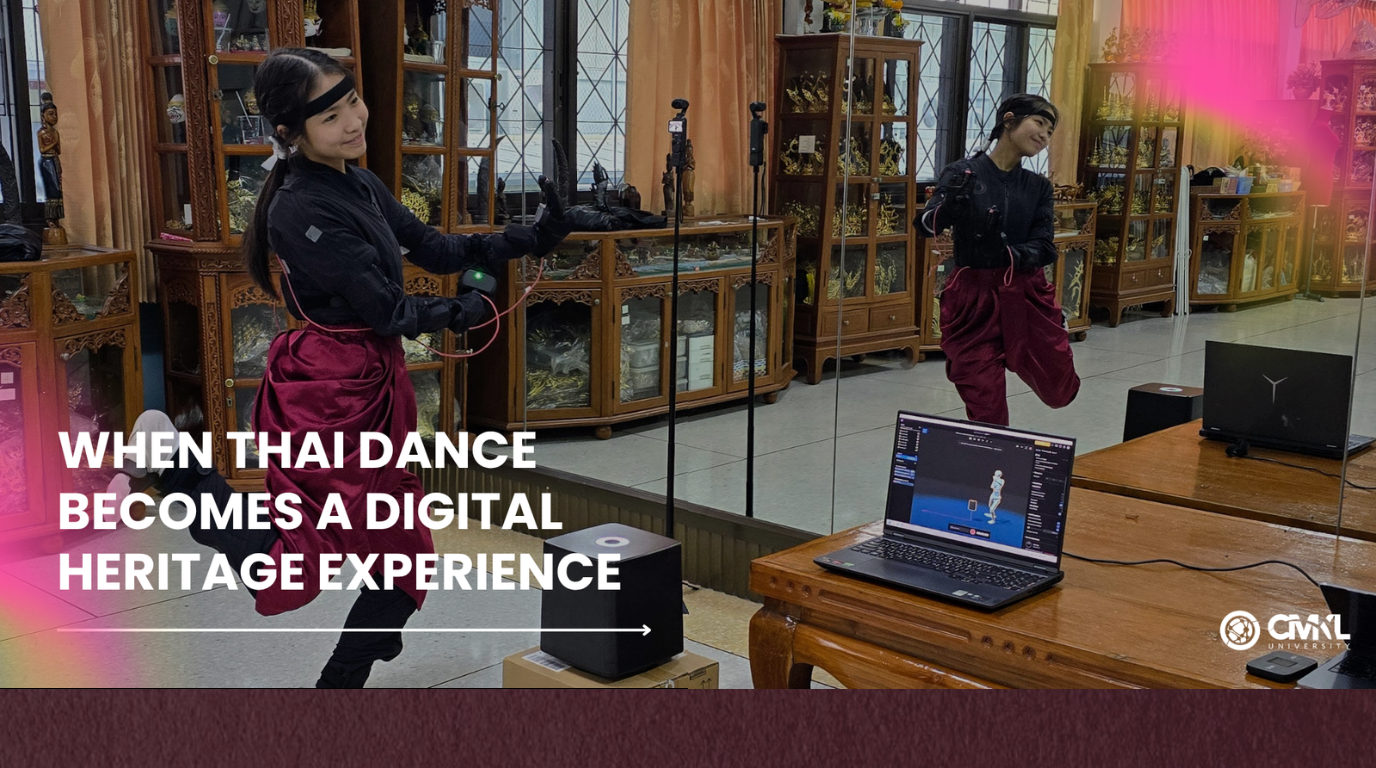
Preserving Thai Traditional Dance in the Age of Mixed Reality
Thai traditional dance is a living art form shaped by rhythm, posture, gesture, and symbolic movement. Each pose carries cultural meaning, and each transition requires precision that is often learned through years of close observation and guided practice.
Yet in today’s learning environment, preserving and teaching these movements presents a growing challenge. Static images, written descriptions, and two-dimensional videos can capture parts of a performance, but they may not fully convey spatial form, body alignment, timing, and the subtle details that make Thai dance distinctive.
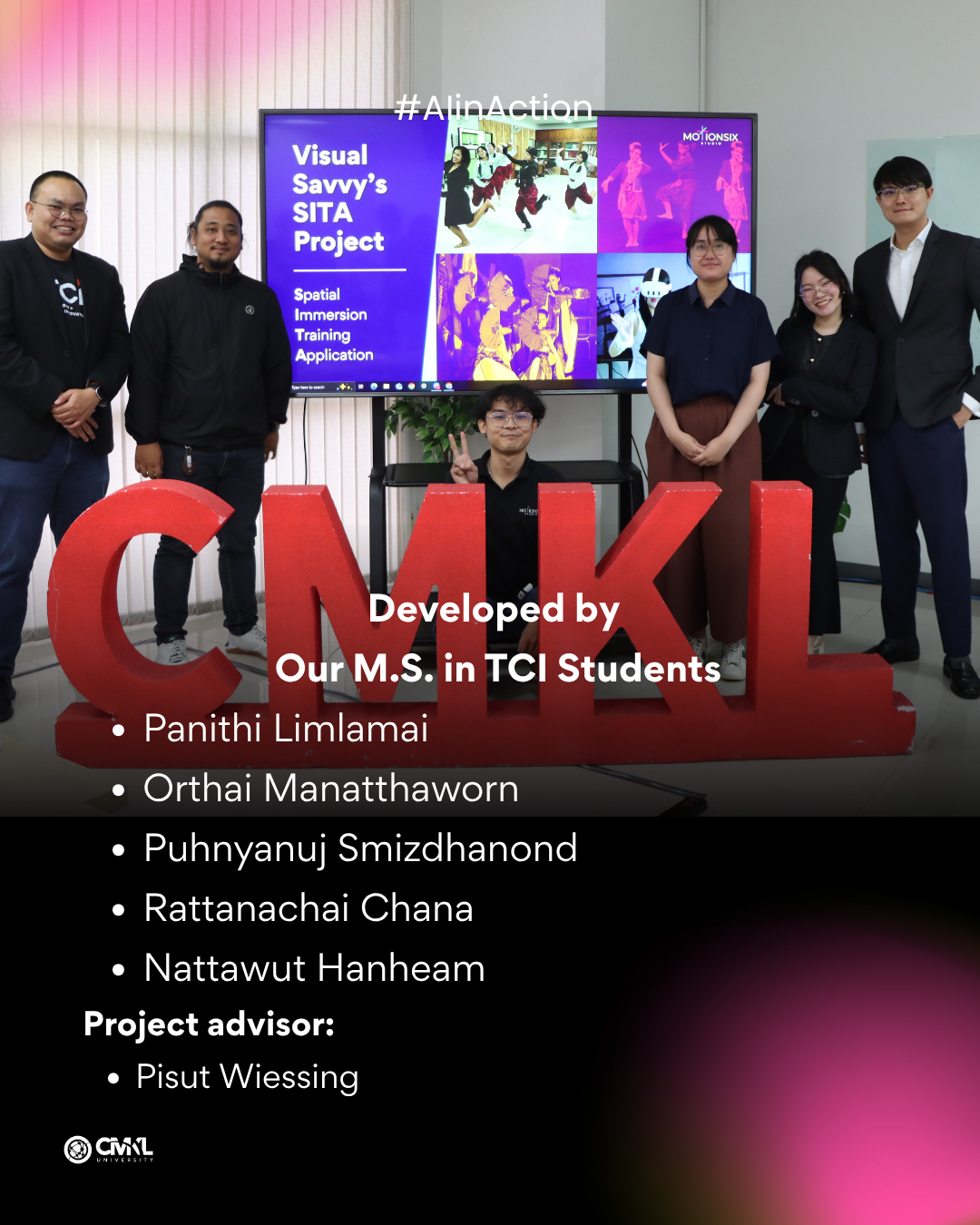
At CMKL University, a team of M.S. in Technology and Creative Innovation students developed SITA: Spatial Immersion Training Application, a mixed reality learning platform designed to make Thai traditional dance more immersive, interactive, and accessible for future learners.
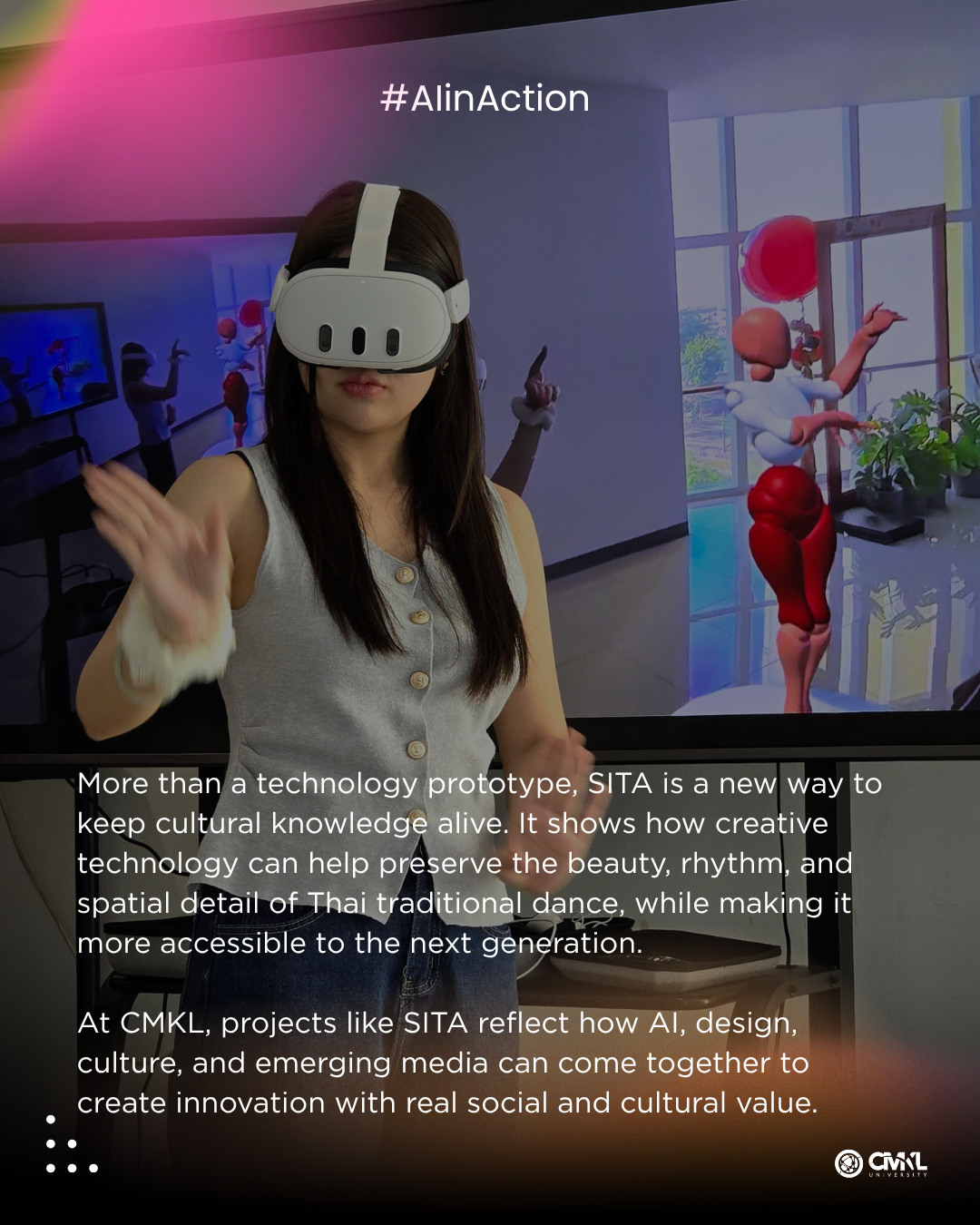
Created by Visual Savvy, SITA allows students to study traditional dance movements through digital instructors, spatial guidance, and immersive 3D visualization. Instead of observing from a fixed screen, learners can explore gestures from multiple perspectives, understand how the body moves through space, and practice with clearer visual references.
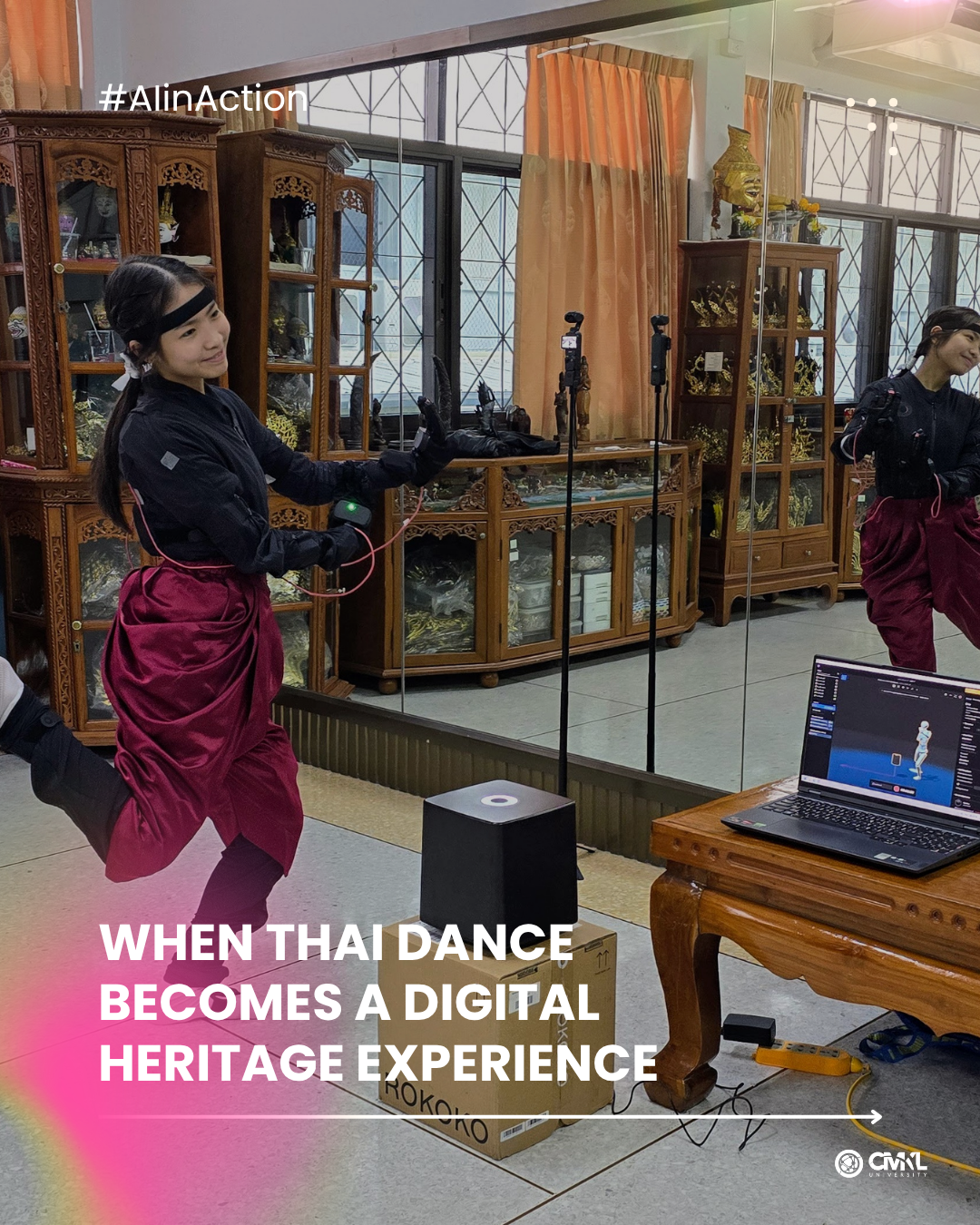
The project works alongside RAMA: Real-time Archival of Motion Artistry, a motion capture system designed to record Thai dance movements as three-dimensional digital data. While RAMA focuses on preserving the movement itself, SITA transforms that data into an interactive mixed reality learning experience. Together, the two systems explore how emerging technologies can help protect cultural knowledge while making it more engaging for new generations.
To support prototype development and user experience testing, the project received collaboration from the Thai Traditional Dance Club of Saint Joseph Thiphawan School, under the Sisters of Saint Paul de Chartres. Student representatives from the club served as model dancers during the motion capture process, helping the team record foundational Thai dance movements such as Phrom Si Na, Sot Soi Mala, Khaek Tao, Choet Chin, and Kwang Doen Dong.
For the student team, SITA is more than a technical prototype. It is an experiment in how creative technology can support cultural preservation, education, and embodied learning. By turning traditional dance instruction into an interactive mixed reality experience, the project creates new possibilities for transmitting movement-based heritage in a way that feels both respectful and future-facing.
The same principles behind SITA, including motion capture, 3D visualization, and spatial feedback, could also be adapted to other forms of skill-based learning such as performance training, sports, physical therapy, and procedural education.
The project also reflects CMKL University’s approach to graduate education in creative technology, where students are encouraged to build systems that combine technical capability with human-centered thinking. SITA shows that innovation is not only about creating new digital tools. It is also about reimagining how knowledge, tradition, and cultural identity can be learned, preserved, and shared.
Through SITA, Thai traditional dance enters a new learning dimension, one where technology does not replace heritage, but helps carry it forward.
Student members: Panithi Limlamai, Orthai Manatthaworn, Puhnyanuj Smizdhanond, Rattanachai Chana, and Nattawut Hanheam
Program: M.S. in Technology and Creative Innovation
Advisor: Dr. Pisut Wiessing


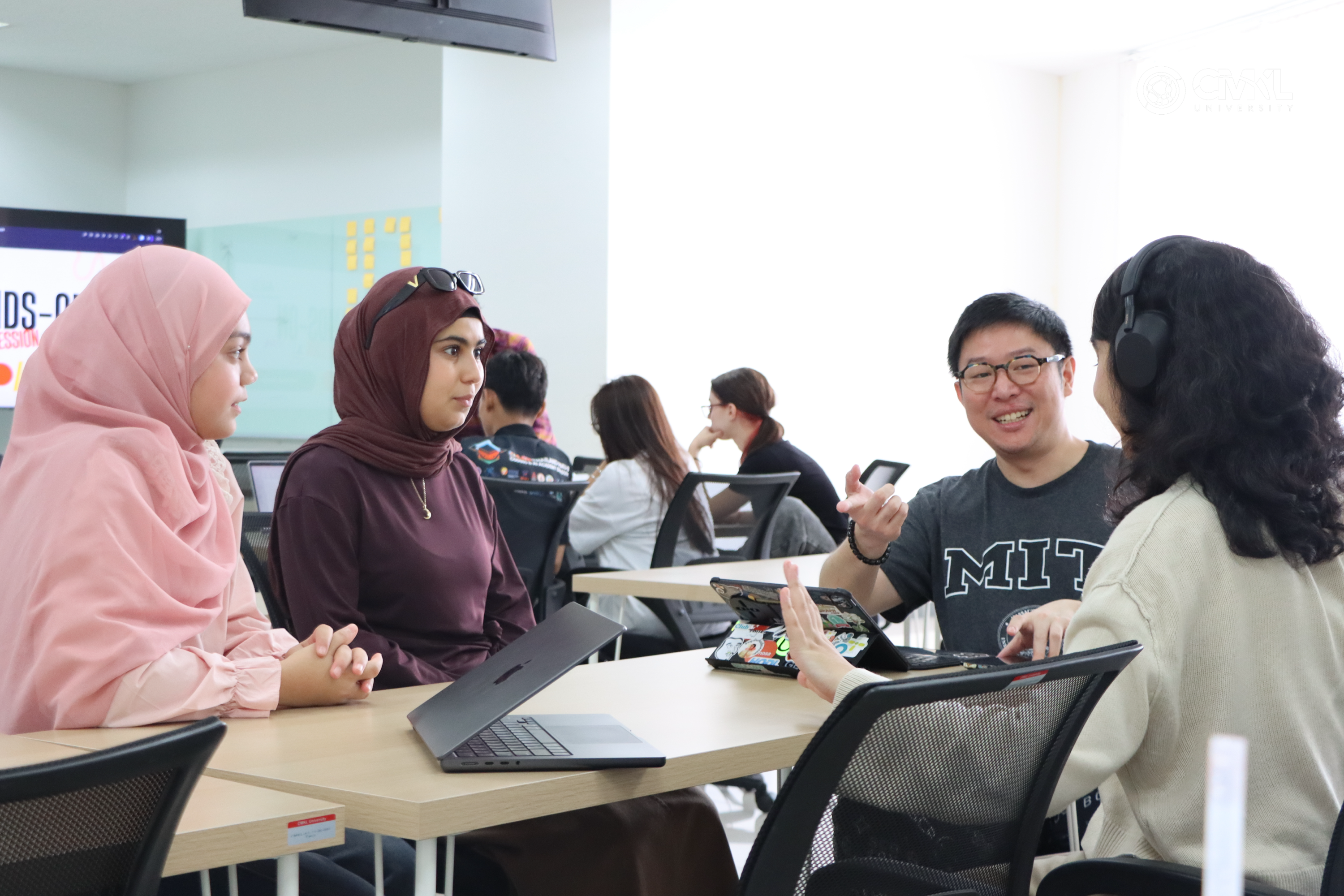
CMKL University supported the AI Kid School StartUp Case Challenge by hosting Workday 1: MVP Day in Room 601 at the university. The workday provided participants with a collaborative space and practical guidance to develop their minimum viable products (MVPs) ahead of the next round.
Read more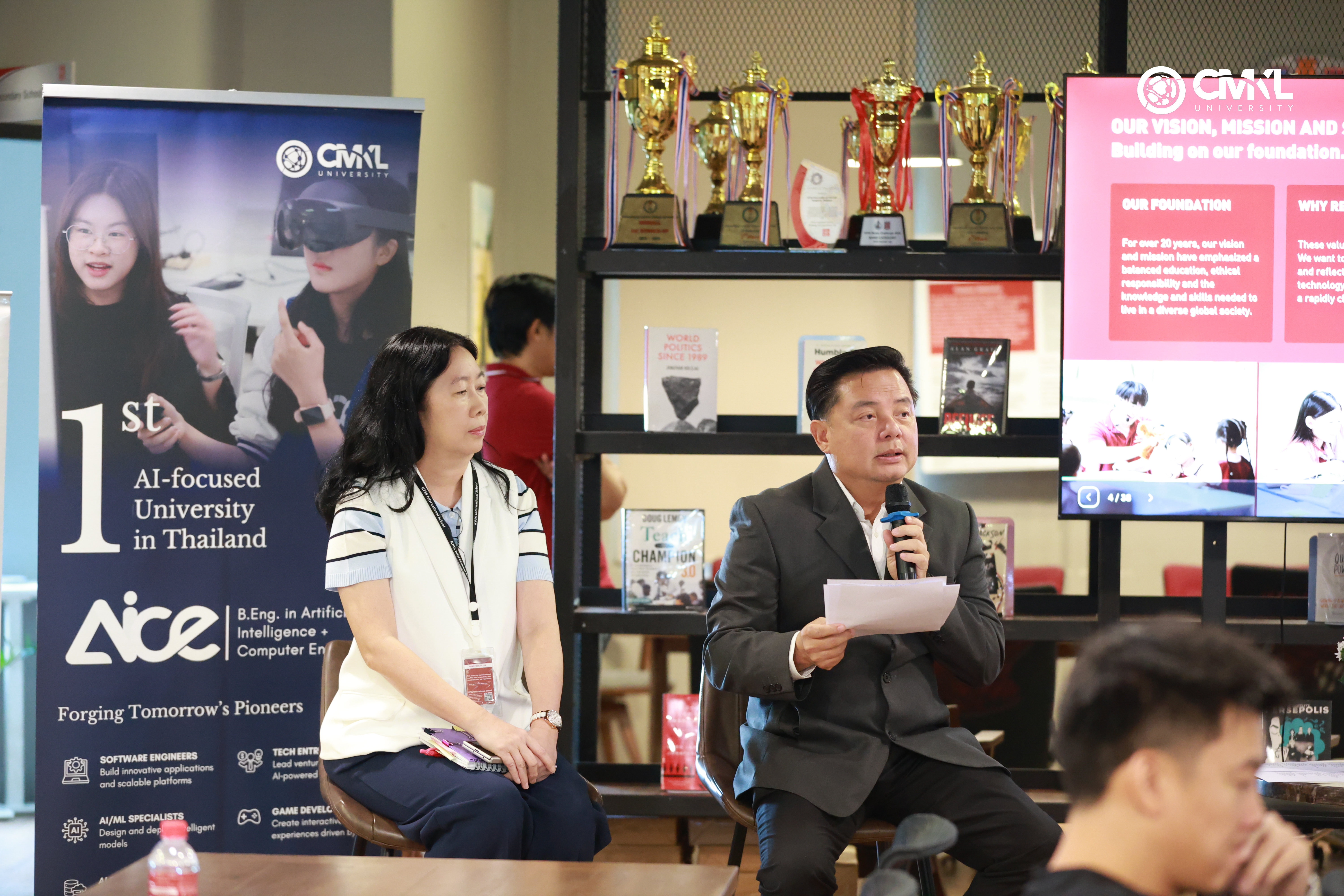
CMKL University joined KPIS Coffee Meet: More for Every Student at KPIS International School, bringing together parents, school leaders, and education partners to exchange perspectives on preparing students for a rapidly changing world and creating more meaningful learning opportunities.
Read more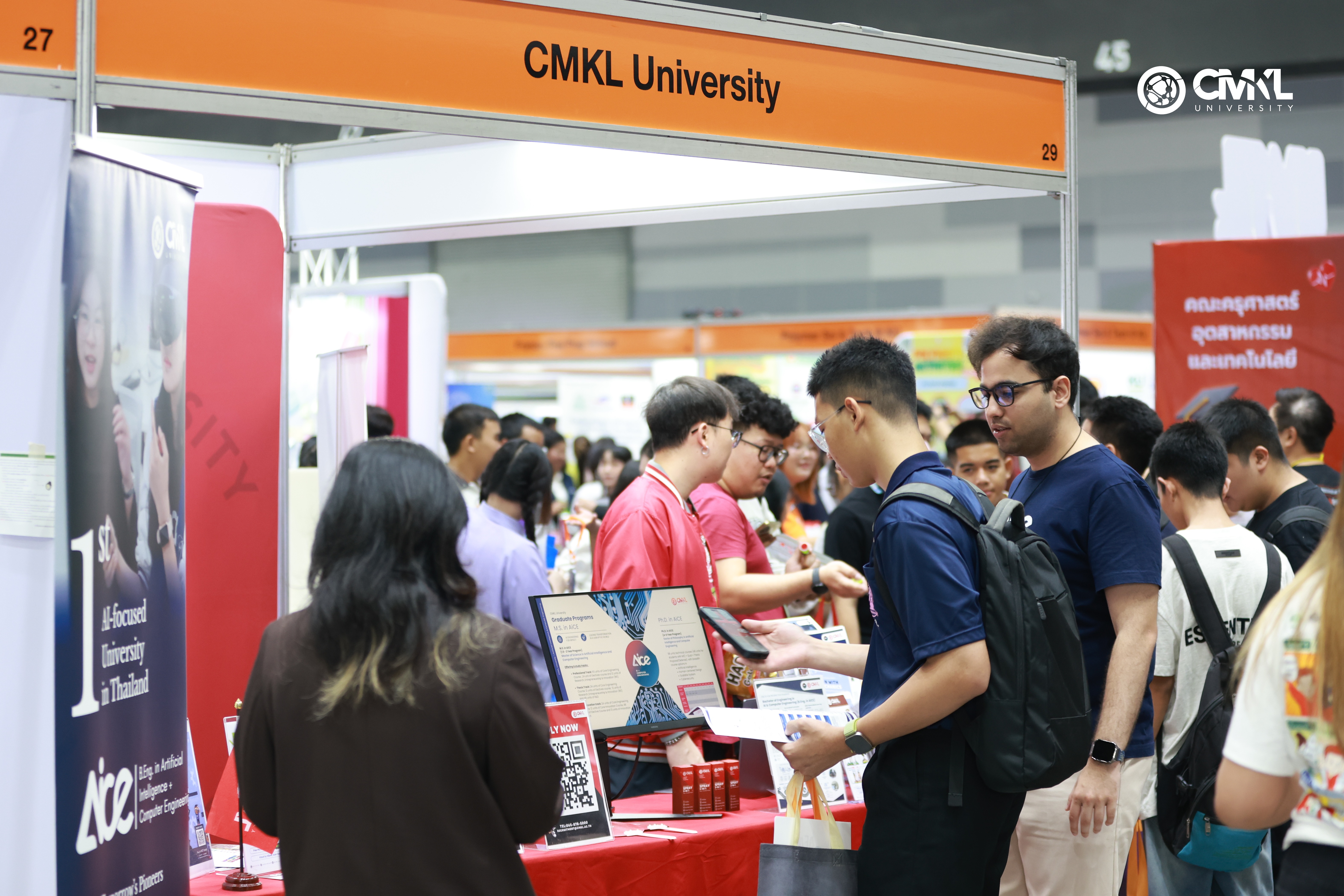
CMKL University participated in Dek-D’s TCAS FAIR, welcoming prospective students and parents who came to explore university programs, admission pathways, and future opportunities in technology and innovation.
Read more