
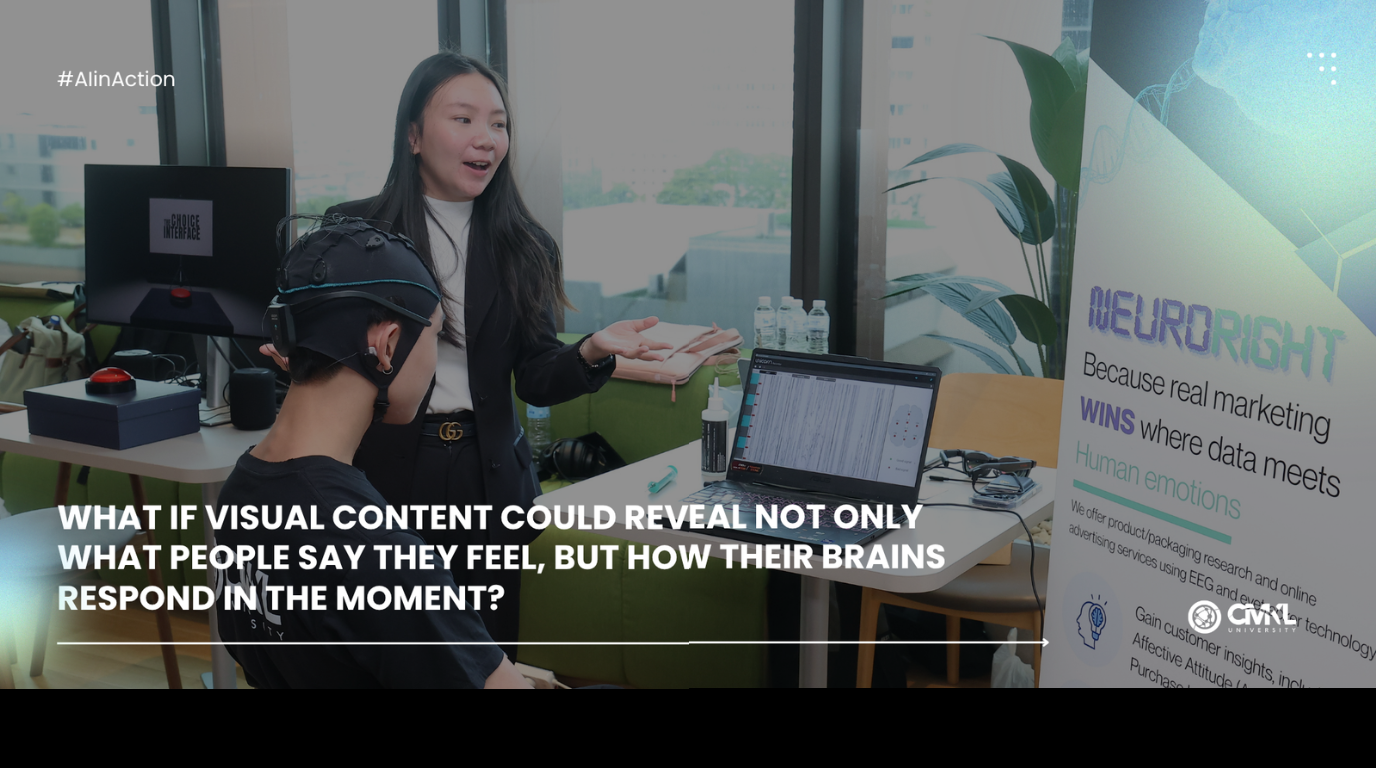
Reading Real-Time Brain Reactions to Understand Visual Engagement
Understanding how people respond to visual content is a major challenge in marketing, design, media, and experience development. Traditional feedback methods such as surveys and interviews can capture what people say, but they may not fully reveal immediate cognitive or emotional reactions.
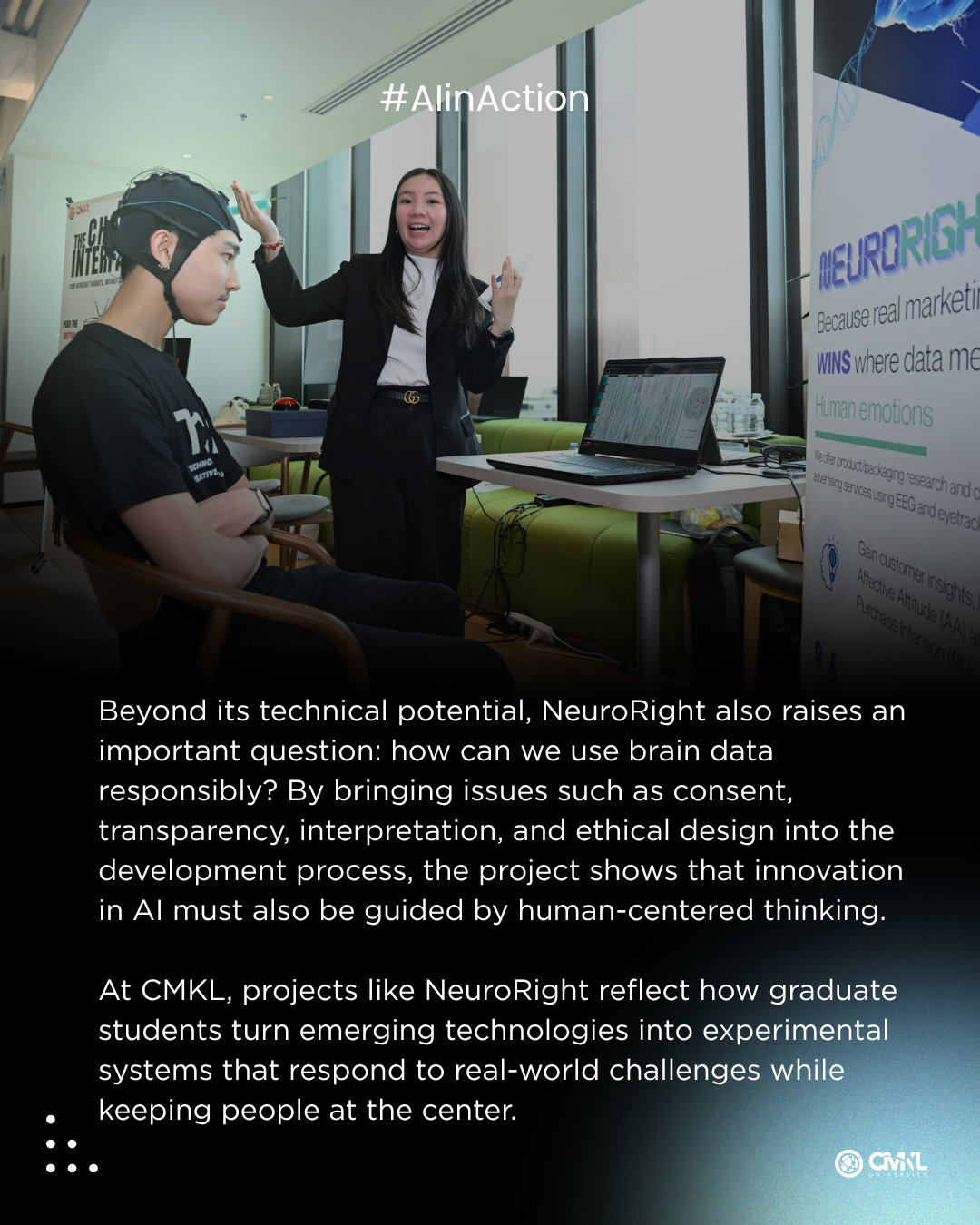
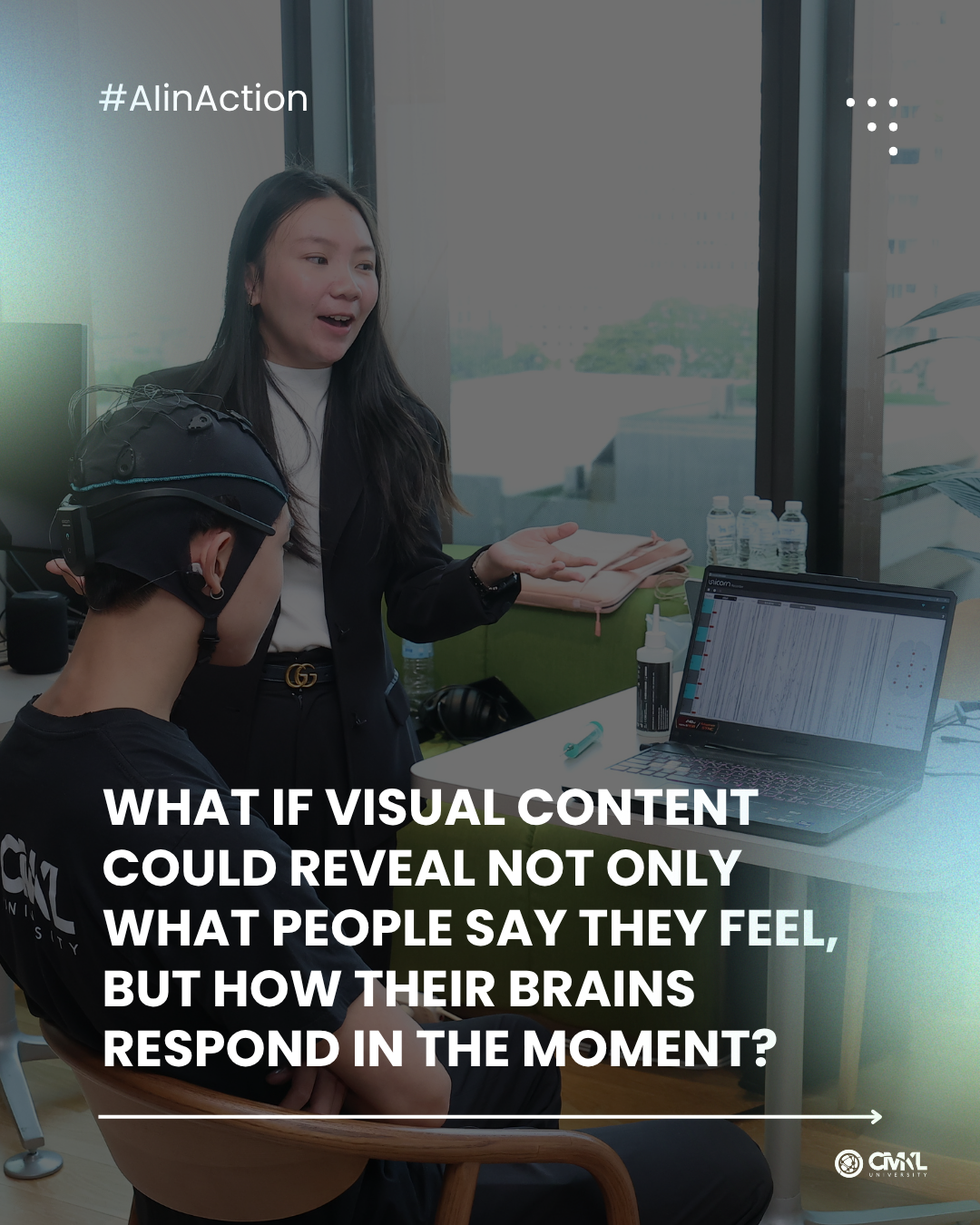
At CMKL University, a team of M.S. in TCI students developed NeuroRight, a brain-computer interface neuromarketing system designed to read real-time brain reactions and reveal how users engage with visuals.
The project explores how neural signals can be used as a new layer of insight for evaluating visual communication. By capturing brain responses as users view content, NeuroRight aims to help identify patterns of attention, engagement, and reaction that may not be visible through conventional feedback alone.
As a graduate project, NeuroRight sits at the intersection of AI, neuroscience, design, and human-computer interaction. It demonstrates how brain-computer interface technologies can move beyond laboratory settings into applied contexts such as advertising, media testing, experience design, and user research.
The system’s neuromarketing focus also raises important questions about responsible technology design. When brain data becomes part of the feedback loop, issues such as consent, transparency, interpretation, and ethical use become central to the development process. This makes NeuroRight not only a technical project, but also a platform for exploring how emerging AI systems should be designed and governed.
For CMKL, the project reflects the university’s approach to graduate education in creative technology: helping students build experimental systems that combine technical capability with human-centered thinking and responsible innovation.
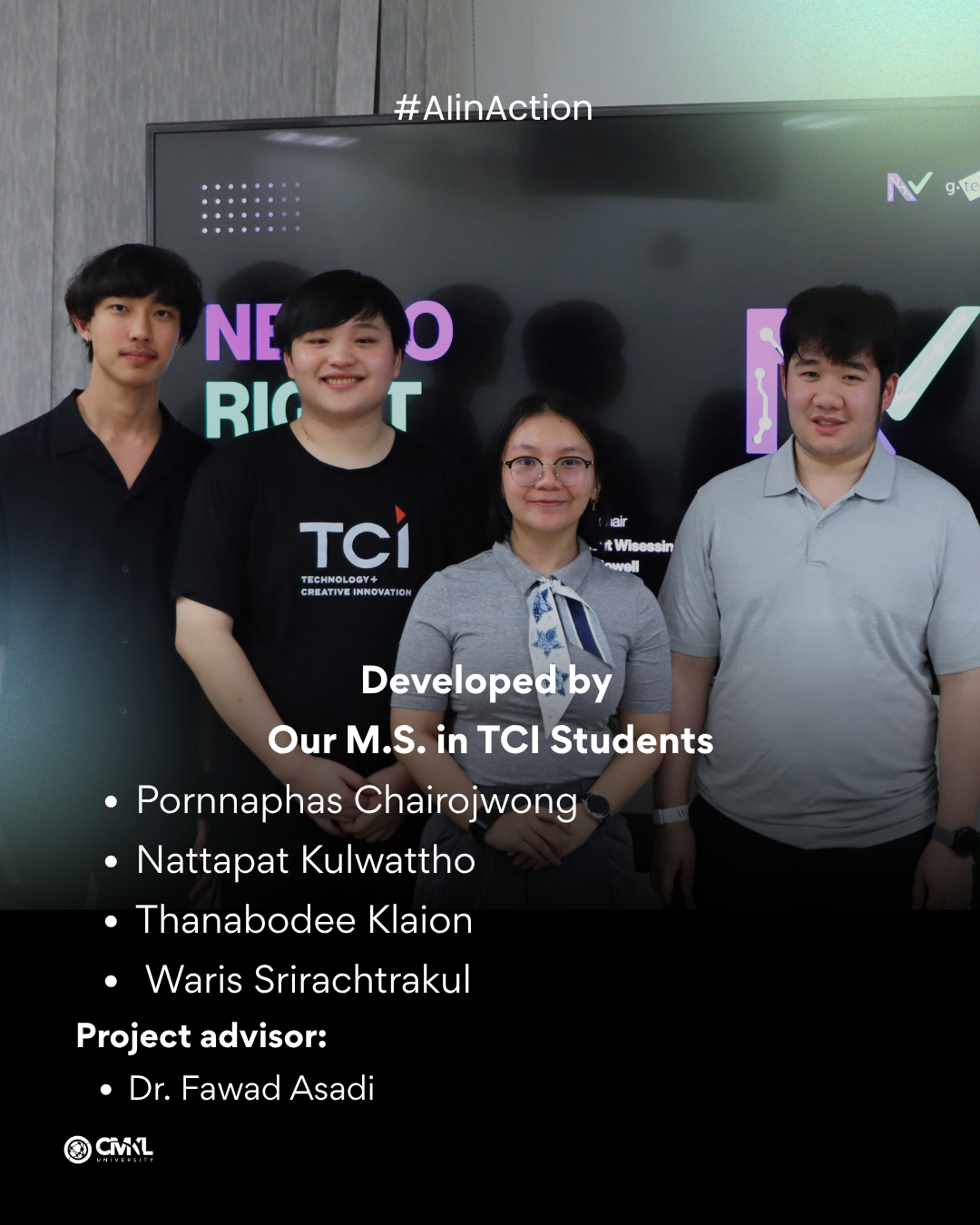
Student members: Pornnaphas Chairojwong, Nattapat Kulwattho, Thanabodee Klaion, and Waris Srirachtrakul, M.S. in TCI
Advisor: Dr. Fawad Asadi
Category: Creative Technology / Human-Computer Interaction
Tags: Neuromarketing, Brain-Computer Interface, BCI, Visual Engagement, Creative Technology, Graduate Project


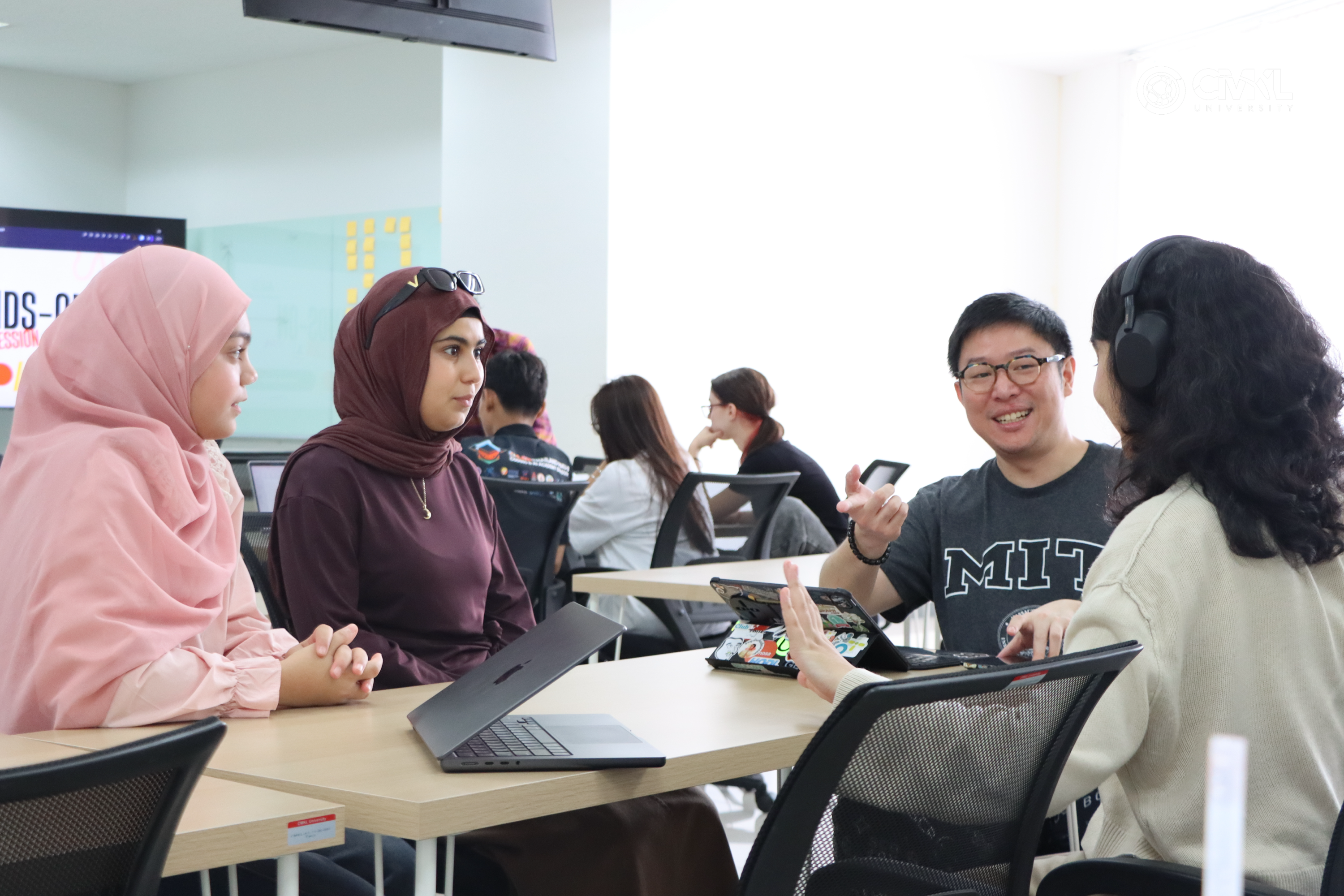
CMKL University supported the AI Kid School StartUp Case Challenge by hosting Workday 1: MVP Day in Room 601 at the university. The workday provided participants with a collaborative space and practical guidance to develop their minimum viable products (MVPs) ahead of the next round.
Read more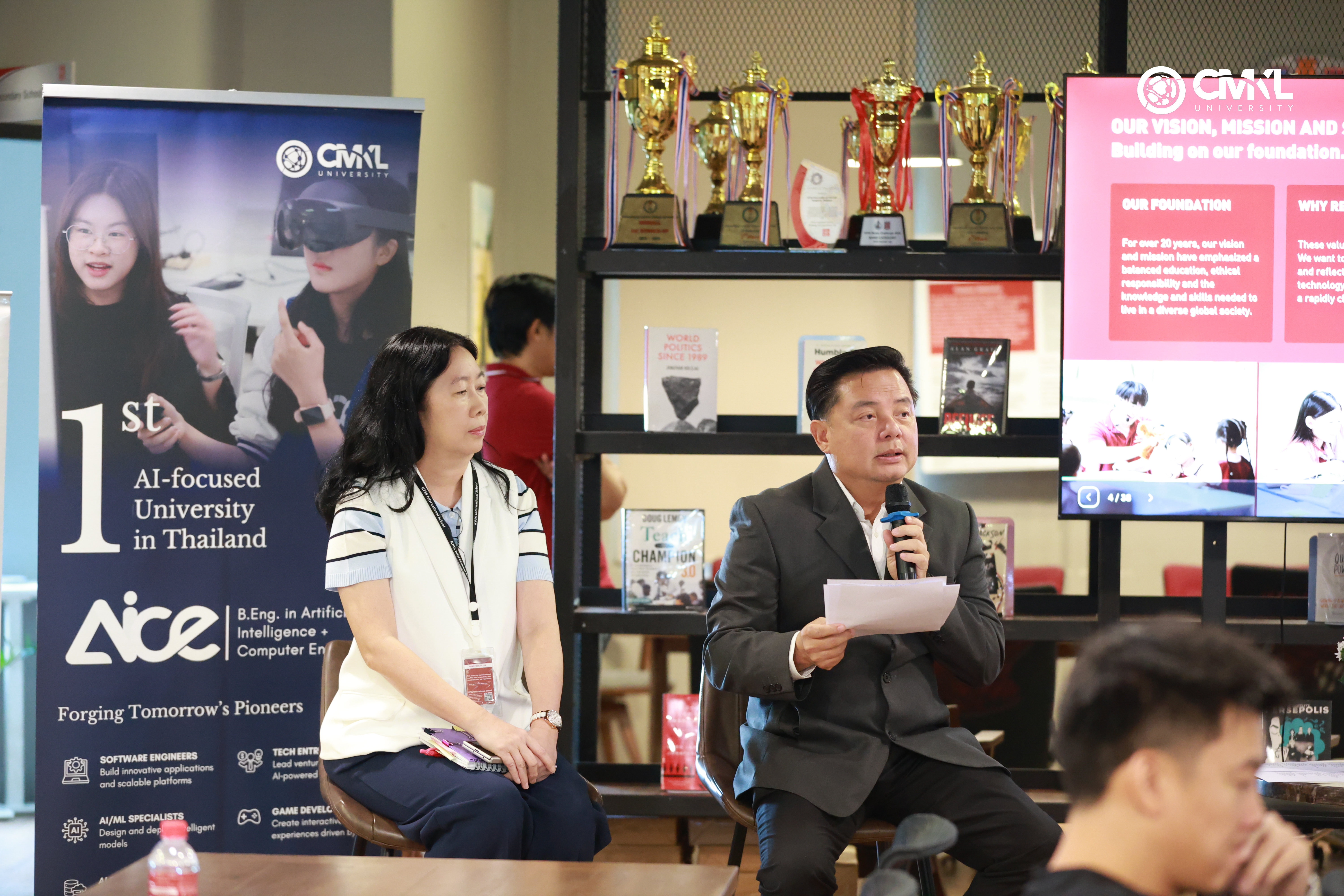
CMKL University joined KPIS Coffee Meet: More for Every Student at KPIS International School, bringing together parents, school leaders, and education partners to exchange perspectives on preparing students for a rapidly changing world and creating more meaningful learning opportunities.
Read more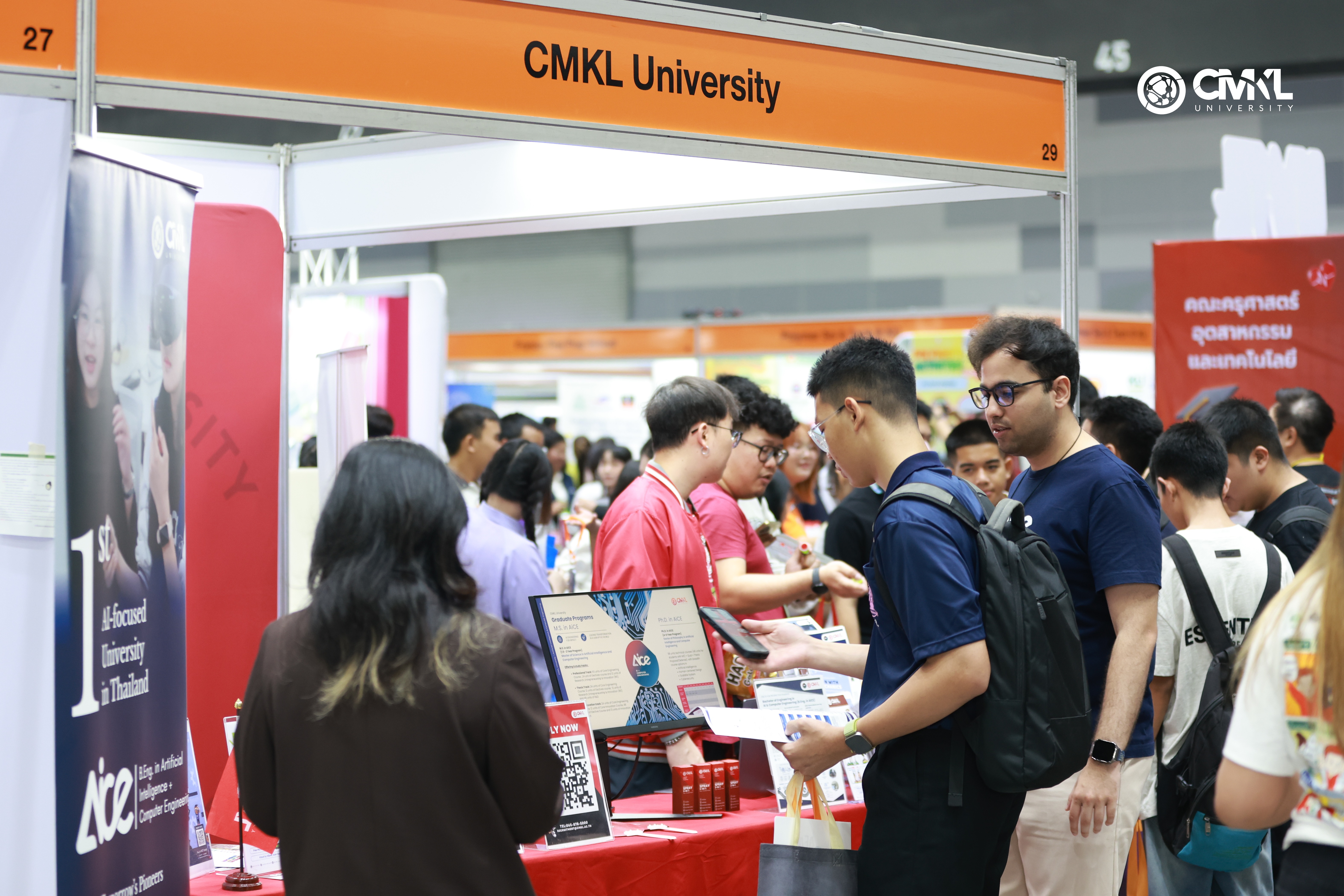
CMKL University participated in Dek-D’s TCAS FAIR, welcoming prospective students and parents who came to explore university programs, admission pathways, and future opportunities in technology and innovation.
Read more