
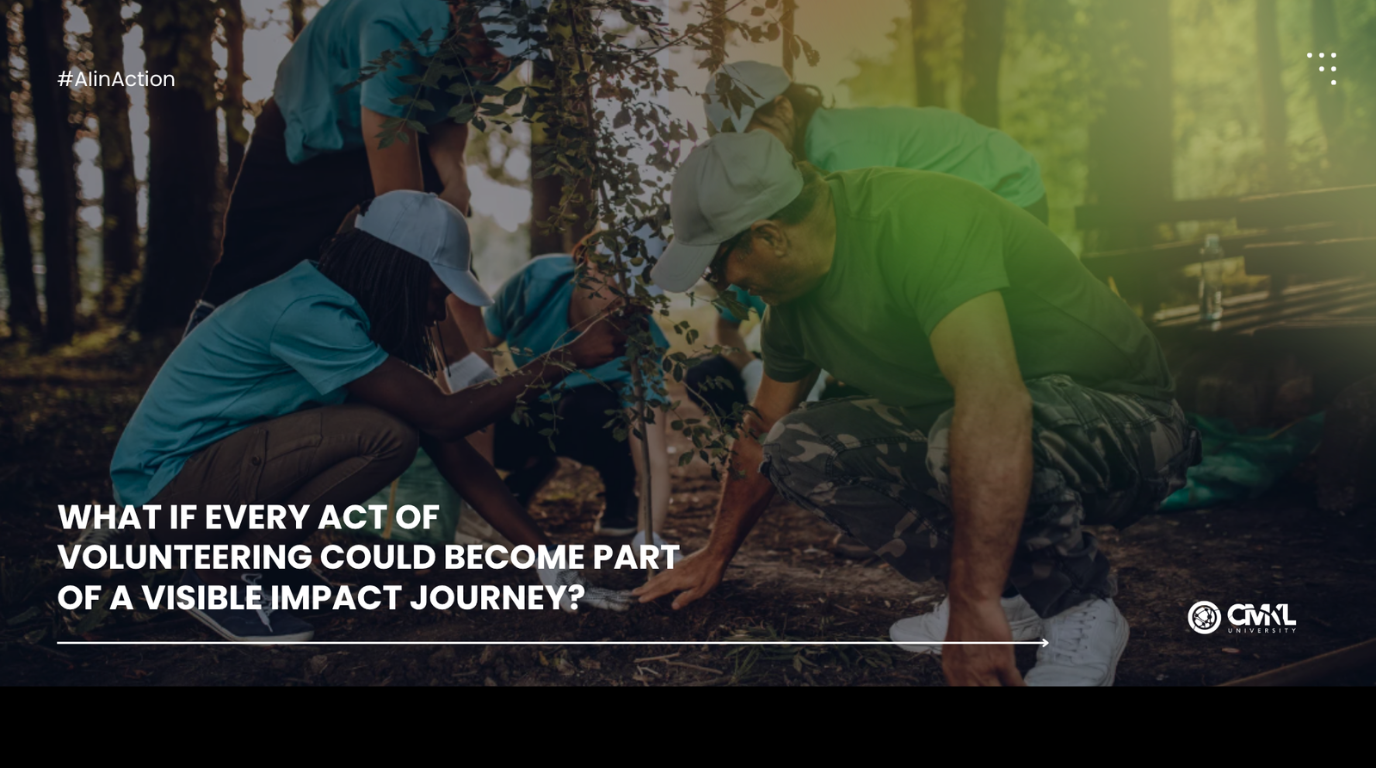
Turning Volunteer Work into Measurable Impact with ASAI-ASA
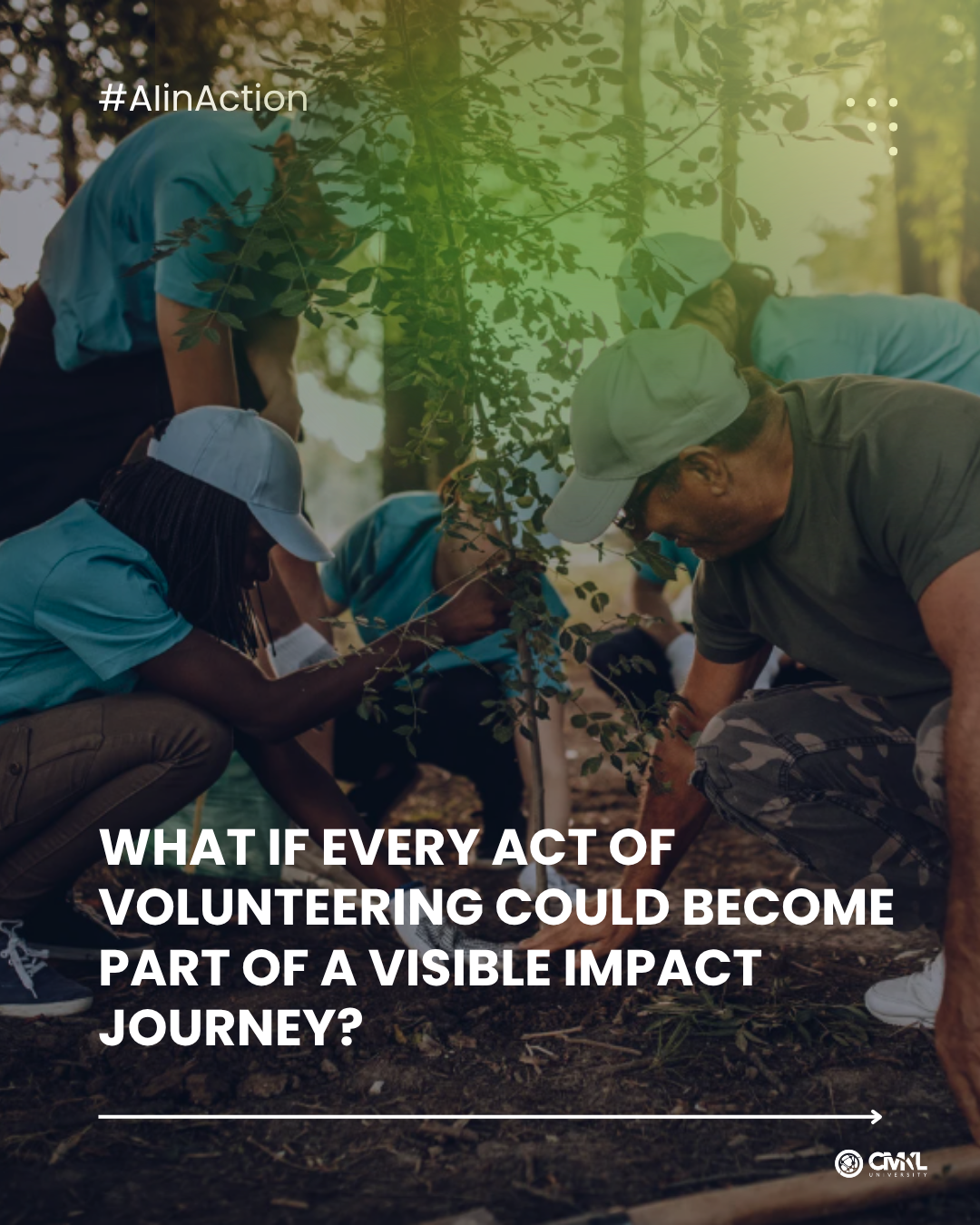
Volunteering plays an important role in connecting people with social causes, but it can be difficult for volunteers to find the right opportunities, track their contribution, and show the impact of their work over time.
Social organizations also need better ways to engage participants and communicate the value of each project.
At CMKL University, a team of M.S. in TCI students developed ASAI-ASA, an AI-powered platform designed to connect volunteers with meaningful social projects and make social impact more visible.
The platform uses AI-powered SDG badges, impact tracking, and gamified features to help users build a volunteer profile over time. As participants join projects, complete activities, and contribute to social causes, ASAI-ASA helps translate those actions into recognizable indicators of impact.
The project combines social innovation with interaction design. Rather than treating volunteering as a one-time activity, ASAI-ASA encourages users to see their contributions as part of a growing personal journey. Gamification and rewards are used not simply to motivate participation, but to help users understand how their actions connect to broader social goals.
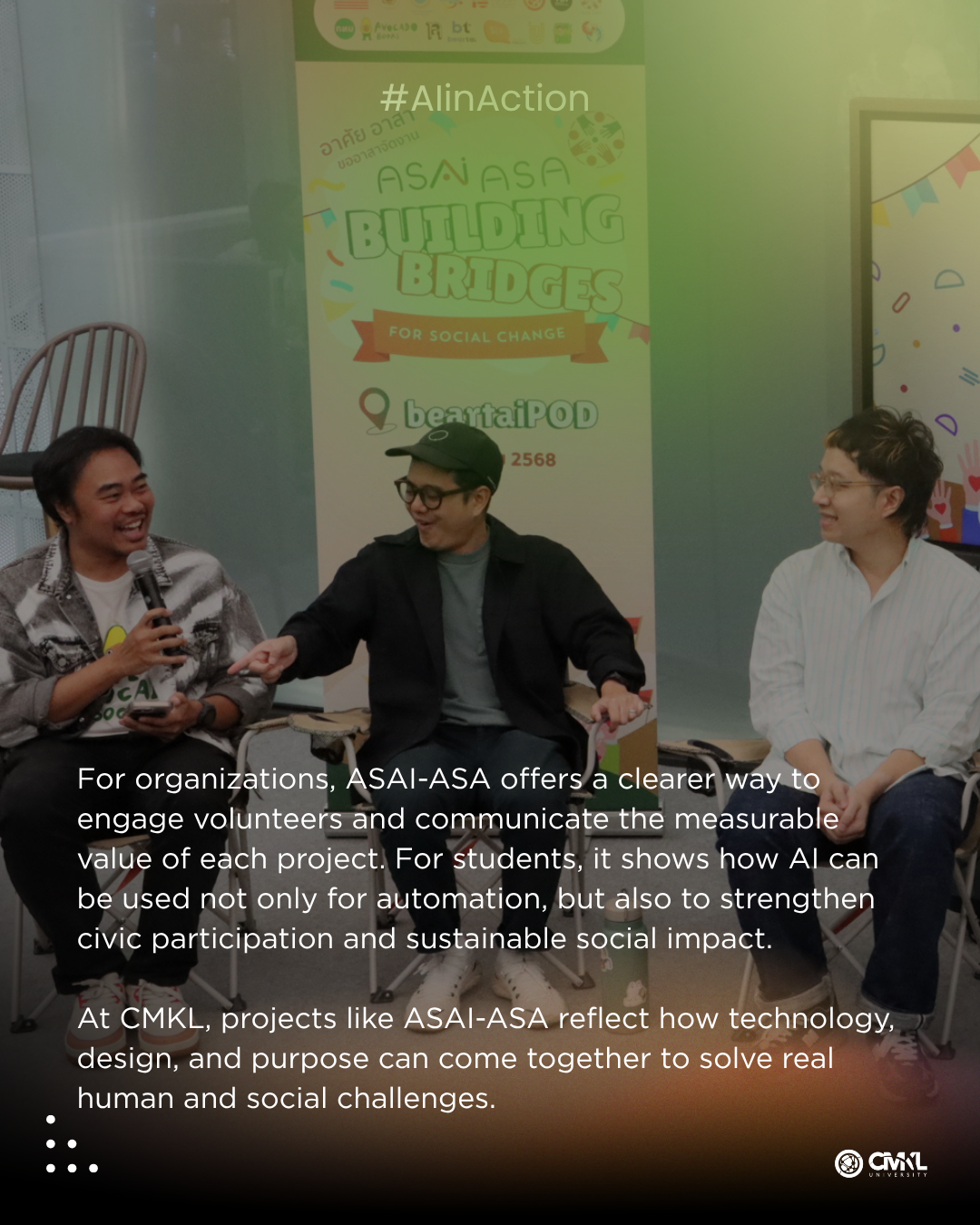
For organizations, the platform can support clearer communication around project participation, volunteer engagement, and measurable contribution. For students, the project demonstrates how AI can be applied beyond automation and analytics, serving as a tool to encourage civic participation and sustainable impact.
At CMKL, ASAI-ASA reflects the university’s commitment to building AI systems that respond to real human and social needs, especially through graduate projects that combine technology, design, and purpose-driven innovation.
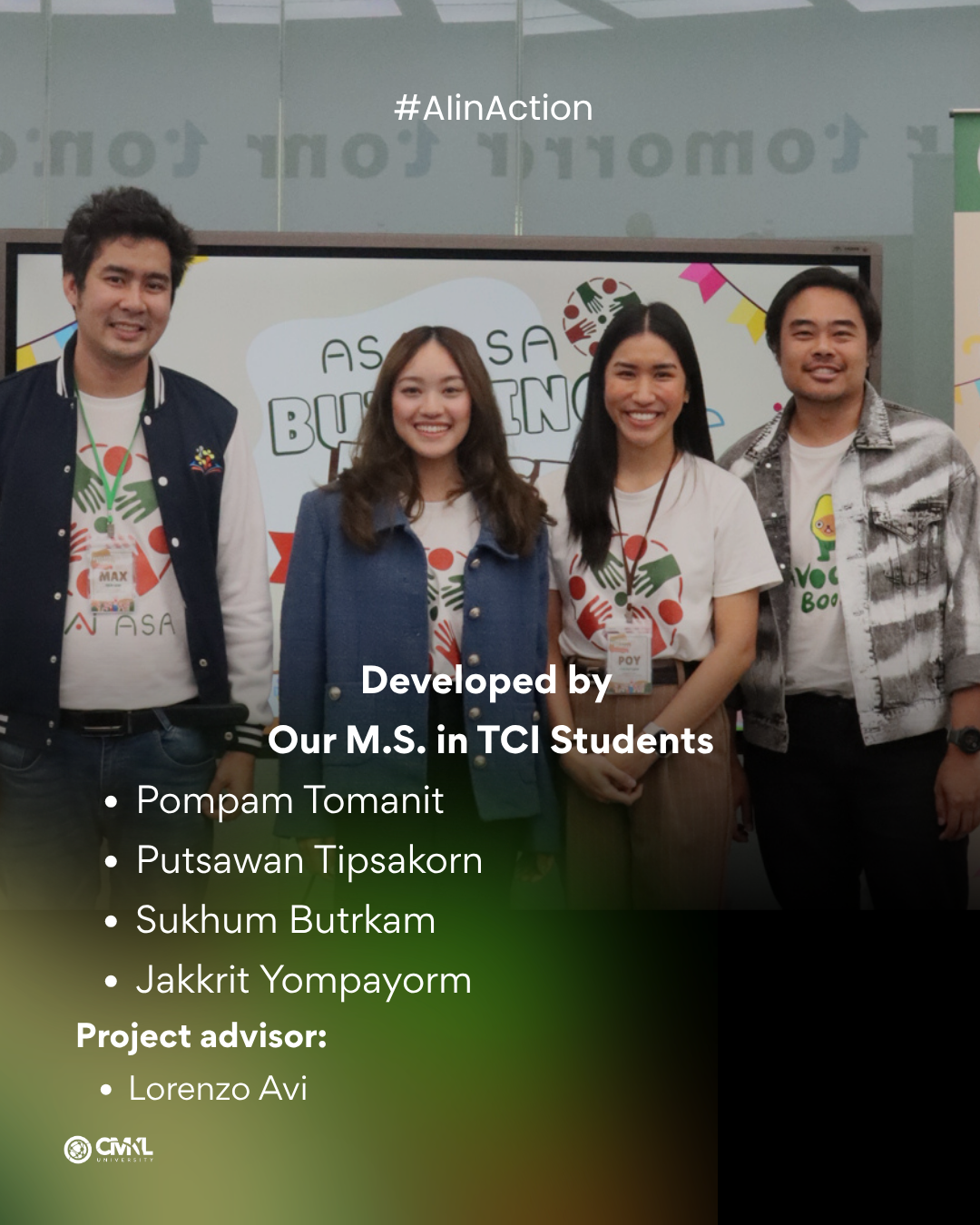
Student members: Pompam Tomanit, Putsawan Tipsakorn, Sukhum Butrkam, and Jakkrit Yompayorm, M.S. in TCI
Advisor: Lorenzo
Category: AI for Social Impact / Creative Technology
Tags: Social Impact, Volunteer Platform, SDGs, Gamification, AI for Good, Graduate Project


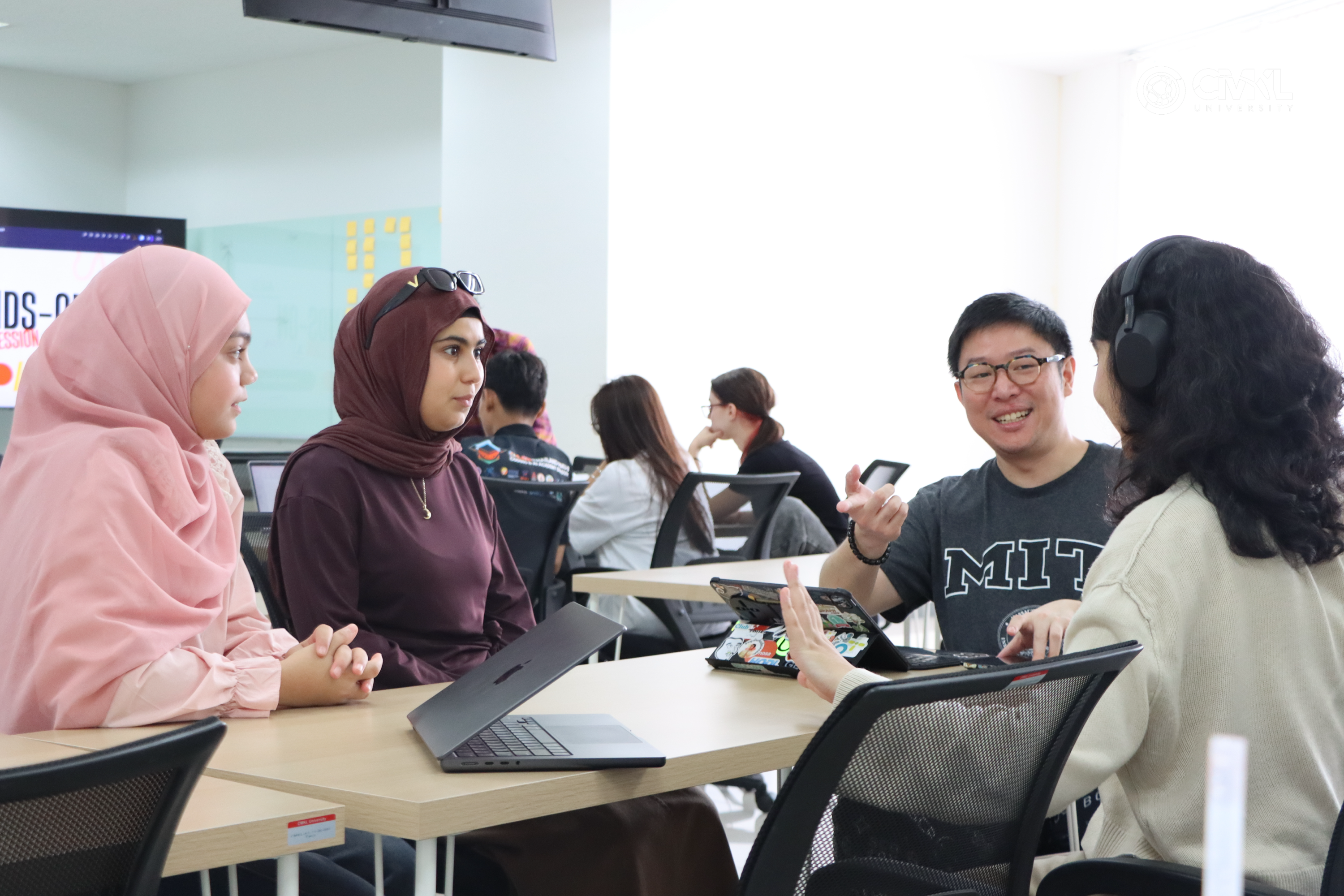
CMKL University supported the AI Kid School StartUp Case Challenge by hosting Workday 1: MVP Day in Room 601 at the university. The workday provided participants with a collaborative space and practical guidance to develop their minimum viable products (MVPs) ahead of the next round.
Read more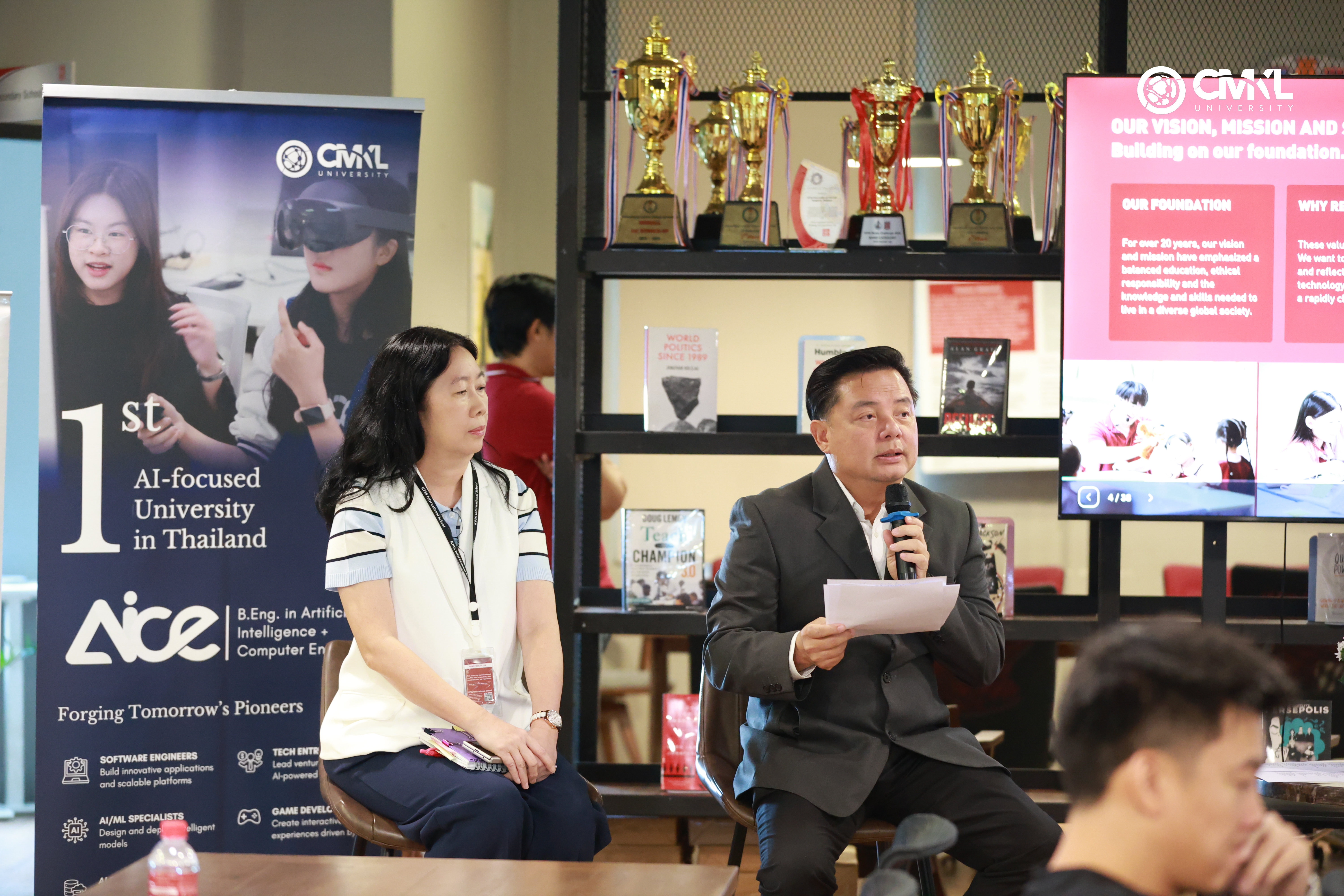
CMKL University joined KPIS Coffee Meet: More for Every Student at KPIS International School, bringing together parents, school leaders, and education partners to exchange perspectives on preparing students for a rapidly changing world and creating more meaningful learning opportunities.
Read more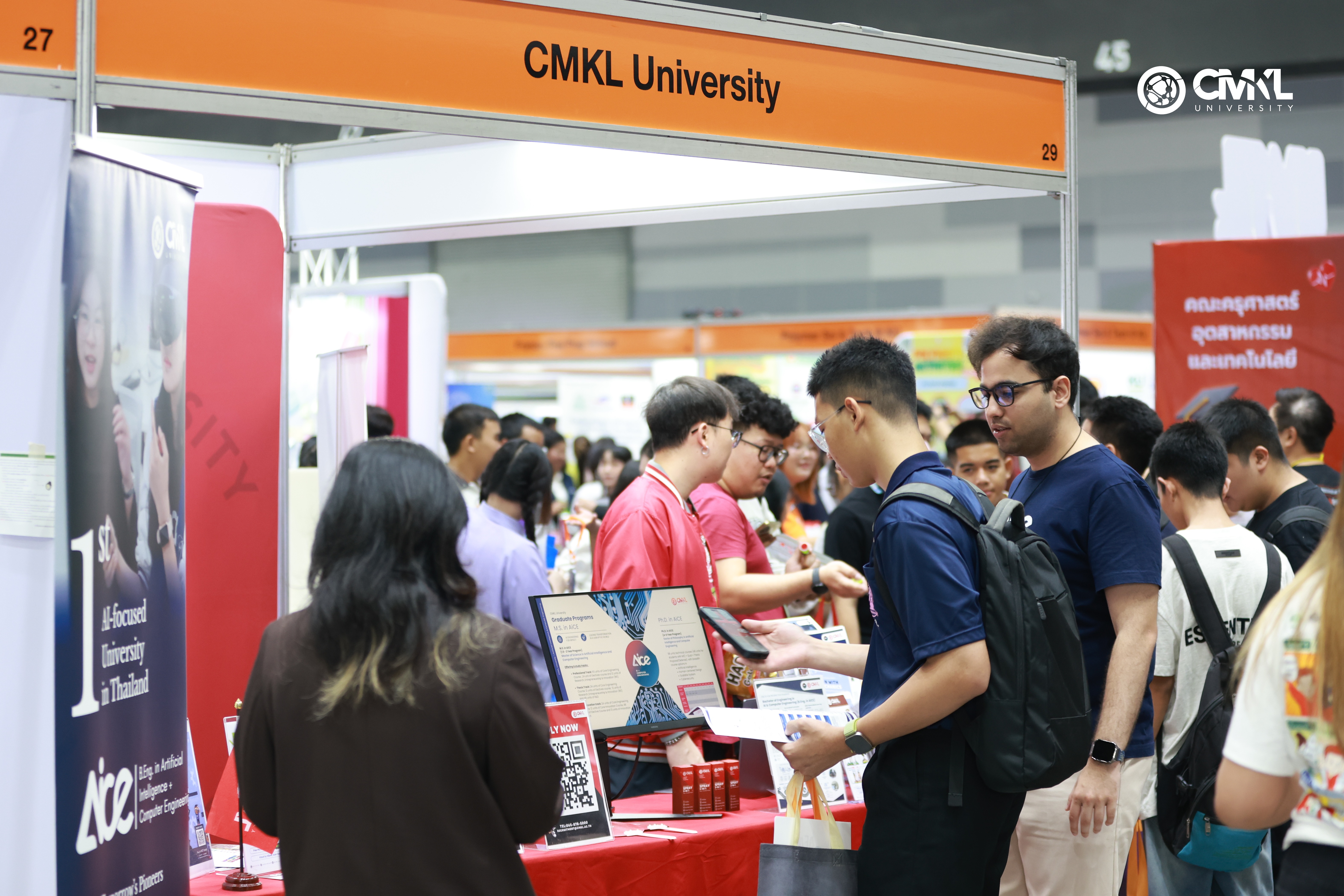
CMKL University participated in Dek-D’s TCAS FAIR, welcoming prospective students and parents who came to explore university programs, admission pathways, and future opportunities in technology and innovation.
Read more