
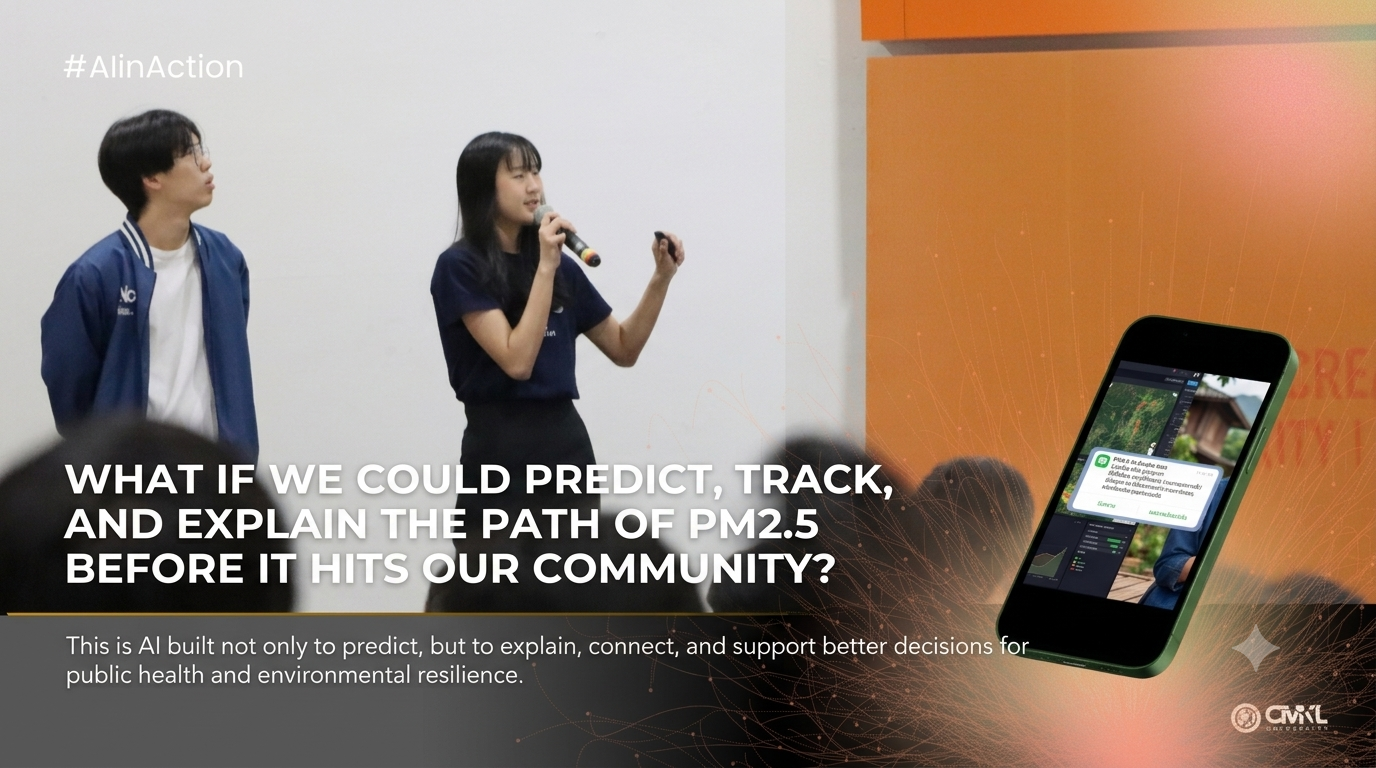
An Agentic AI Architecture for PM2.5 Monitoring in Northern Thailand
Northern Thailand experiences severe seasonal PM2.5 pollution, especially during the annual burning season. The challenge is not only measuring air pollution, but also forecasting where it will move, identifying possible sources, and translating technical outputs into information that decision-makers can use.
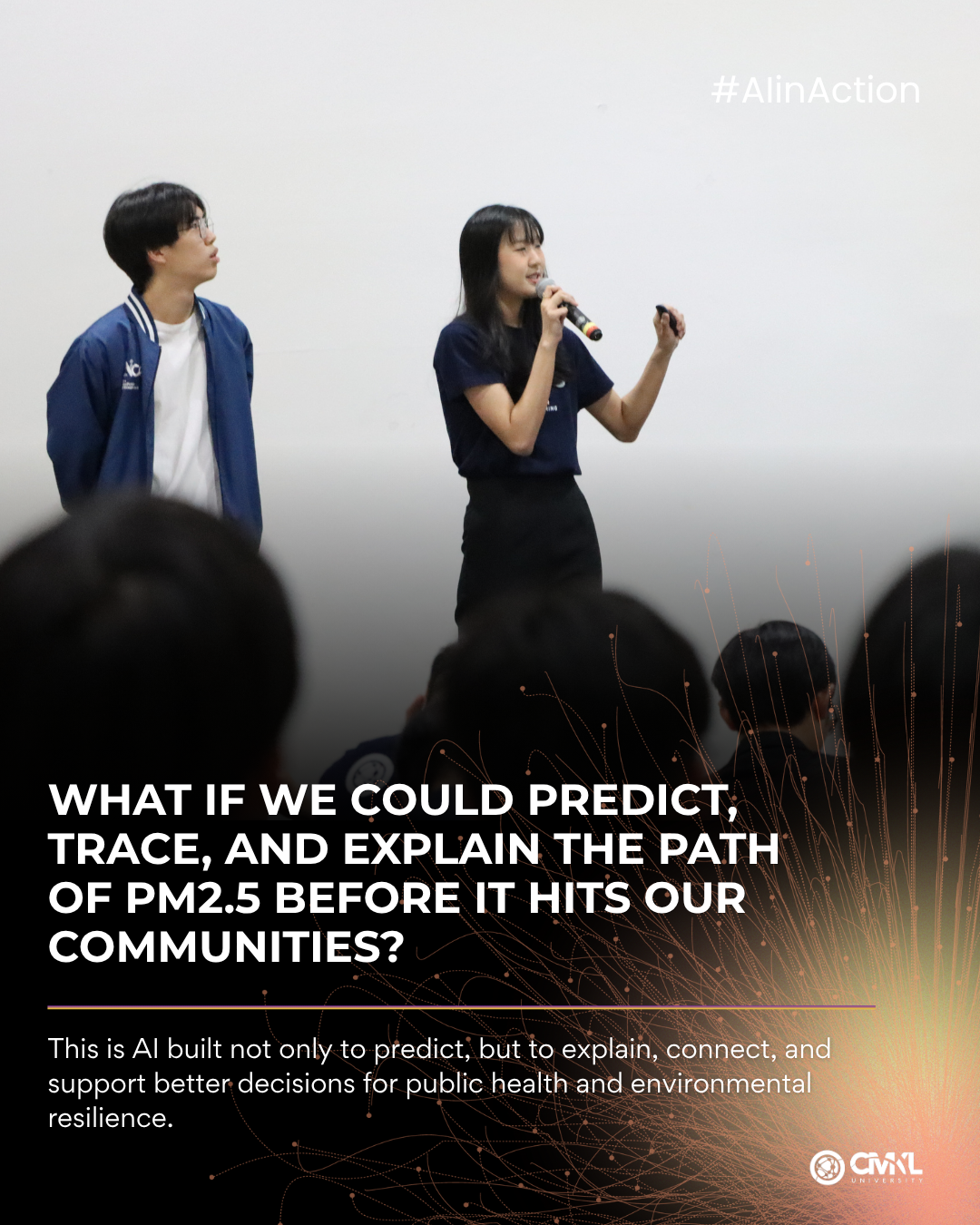
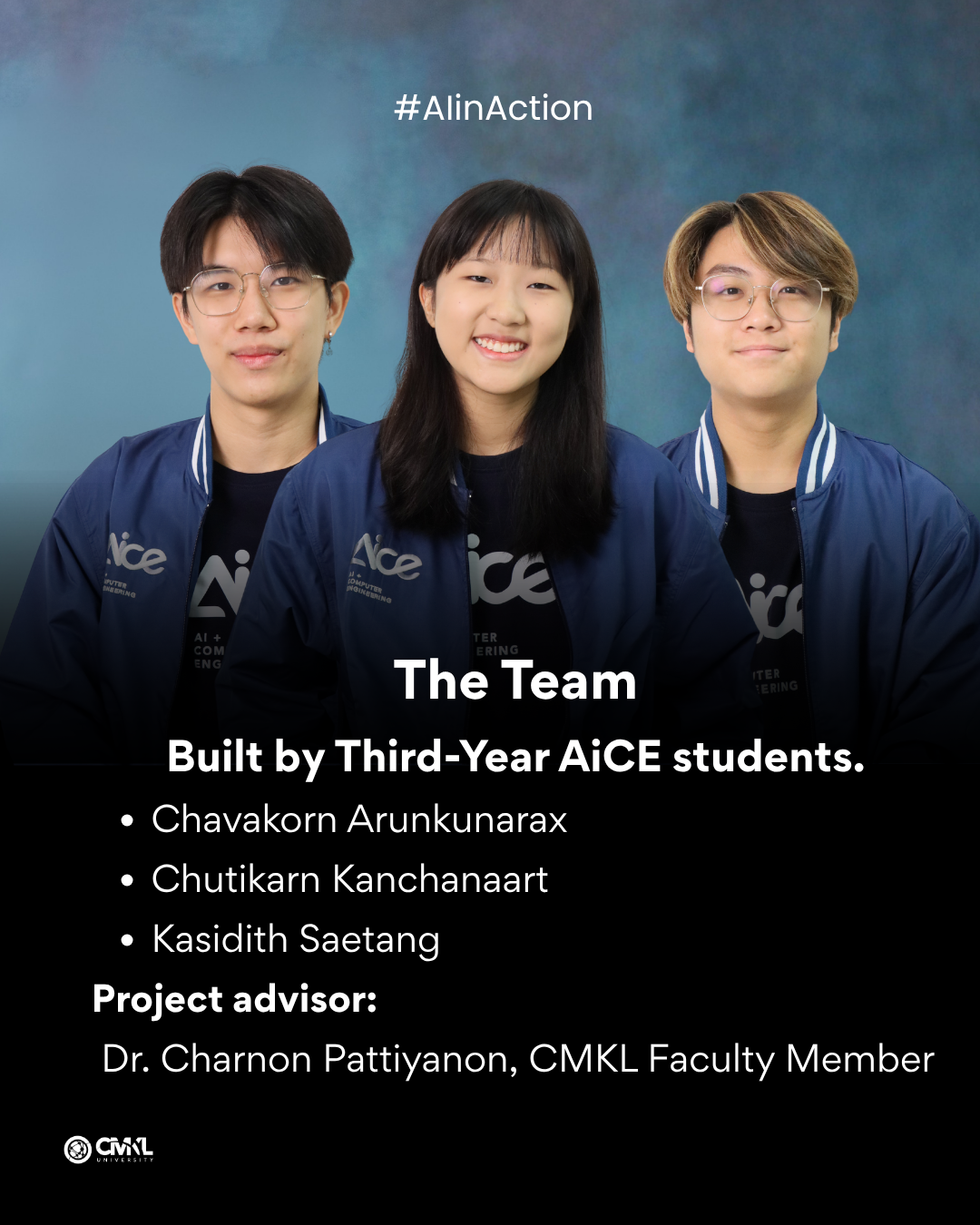
This project was developed by 3rd year AiCE students Chavakorn Arunkunarax, Chutikarn Kanchanaart, and Kasidith Saetang, with Dr. Charnon Pattiyanon as advisor. The team built an advanced agentic AI framework for real-time PM2.5 monitoring, forecasting, and source attribution in Northern Thailand.
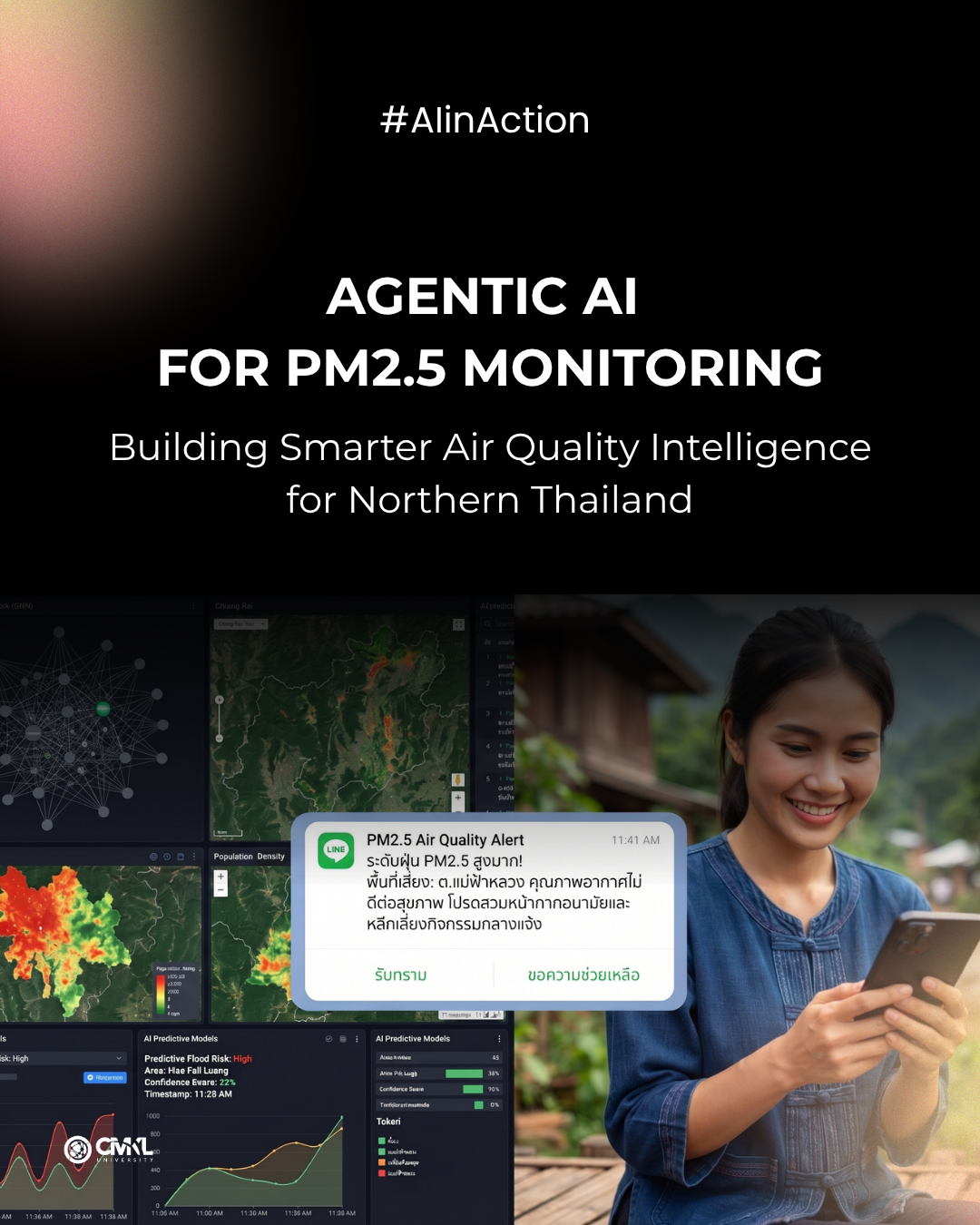
The system brings together multiple specialist pipelines. One pipeline addresses missing sensor data across a sparse monitoring network. Another generates spatial PM2.5 forecasts. A third models smoke transport using satellite and wind data. A fourth performs inverse source attribution to estimate which fire clusters may contribute most to observed pollution. These components are coordinated through an agentic architecture using LangGraph.
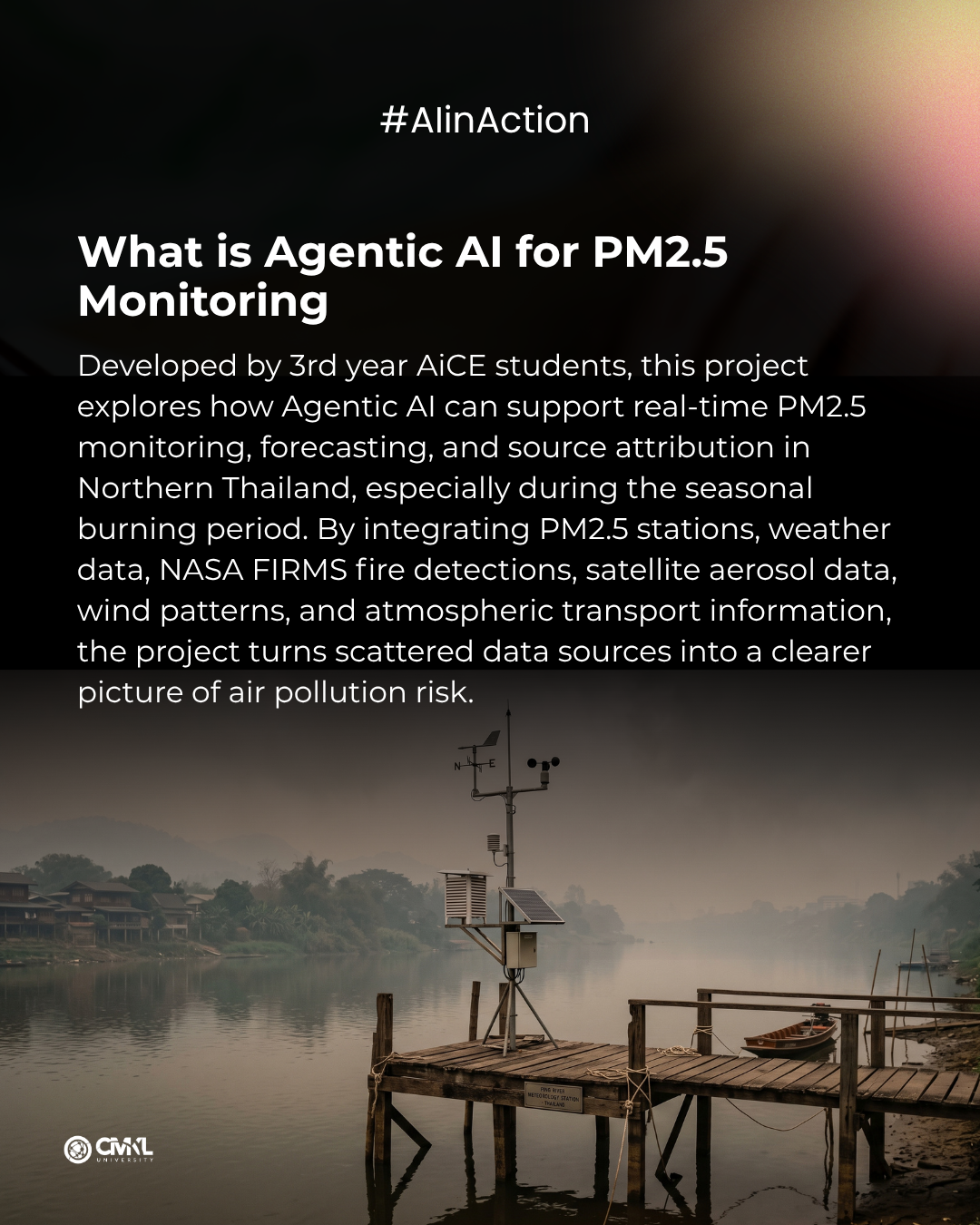
The data layer integrates multiple sources, including PM2.5 monitoring stations, weather data, NASA FIRMS fire detections, vehicle registration data, satellite aerosol optical depth, and atmospheric transport information. The system uses a hybrid gap-filling framework to recover missing observations, improving the completeness of the monitoring network.
For forecasting, the project uses a hybrid SVR-PICNN approach. Support Vector Regression provides a coarse temporal prior, while a physics-informed convolutional neural network refines the spatial PM2.5 field under an advection-diffusion-reaction constraint. The system can trigger LINE alerts for near-term public warnings and structured government-style reports for 24-hour forecasts.
For source attribution, the project uses Lagrangian transport modeling, graph neural networks, and inverse modeling to connect fire source locations with observed aerosol patterns. The policy playground agent then translates technical outputs into plain-language briefings for decision-makers.
This is one of the most advanced research projects in the URD deep tech series. It combines environmental science, physics-informed AI, graph neural networks, satellite data, source attribution, public health, and LLM-based orchestration. It demonstrates how CMKL students can build systems that are not only technically sophisticated but also connected to urgent regional challenges.
Project Members: Chavakorn Arunkunarax, Chutikarn Kanchanaart, Kasidith Saetang
Advisor: Dr. Charnon Pattiyanon
Domain: Environmental AI, PM2.5 Forecasting, Agentic AI, Satellite Data, Physics-Informed Machine Learning


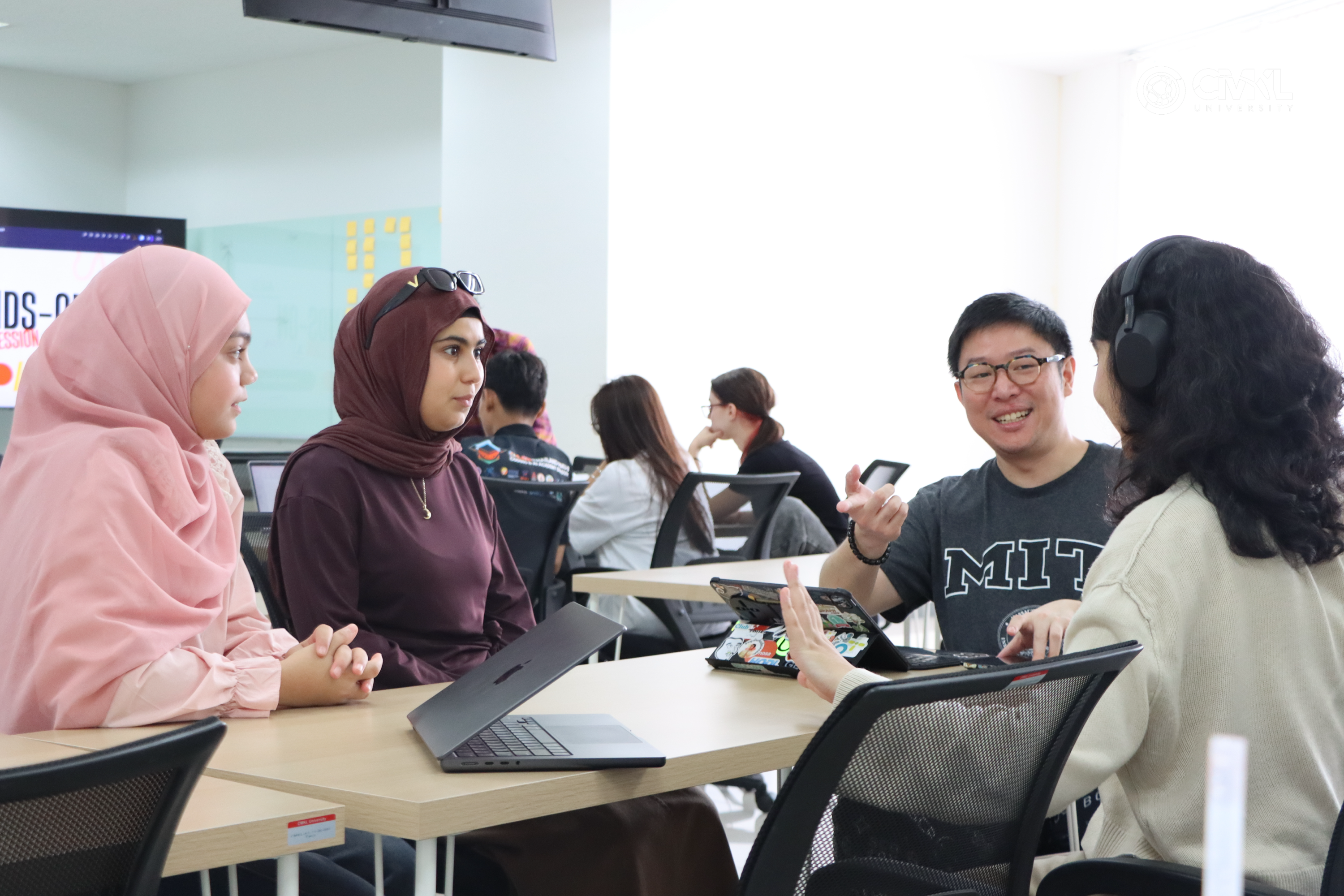
CMKL University supported the AI Kid School StartUp Case Challenge by hosting Workday 1: MVP Day in Room 601 at the university. The workday provided participants with a collaborative space and practical guidance to develop their minimum viable products (MVPs) ahead of the next round.
Read more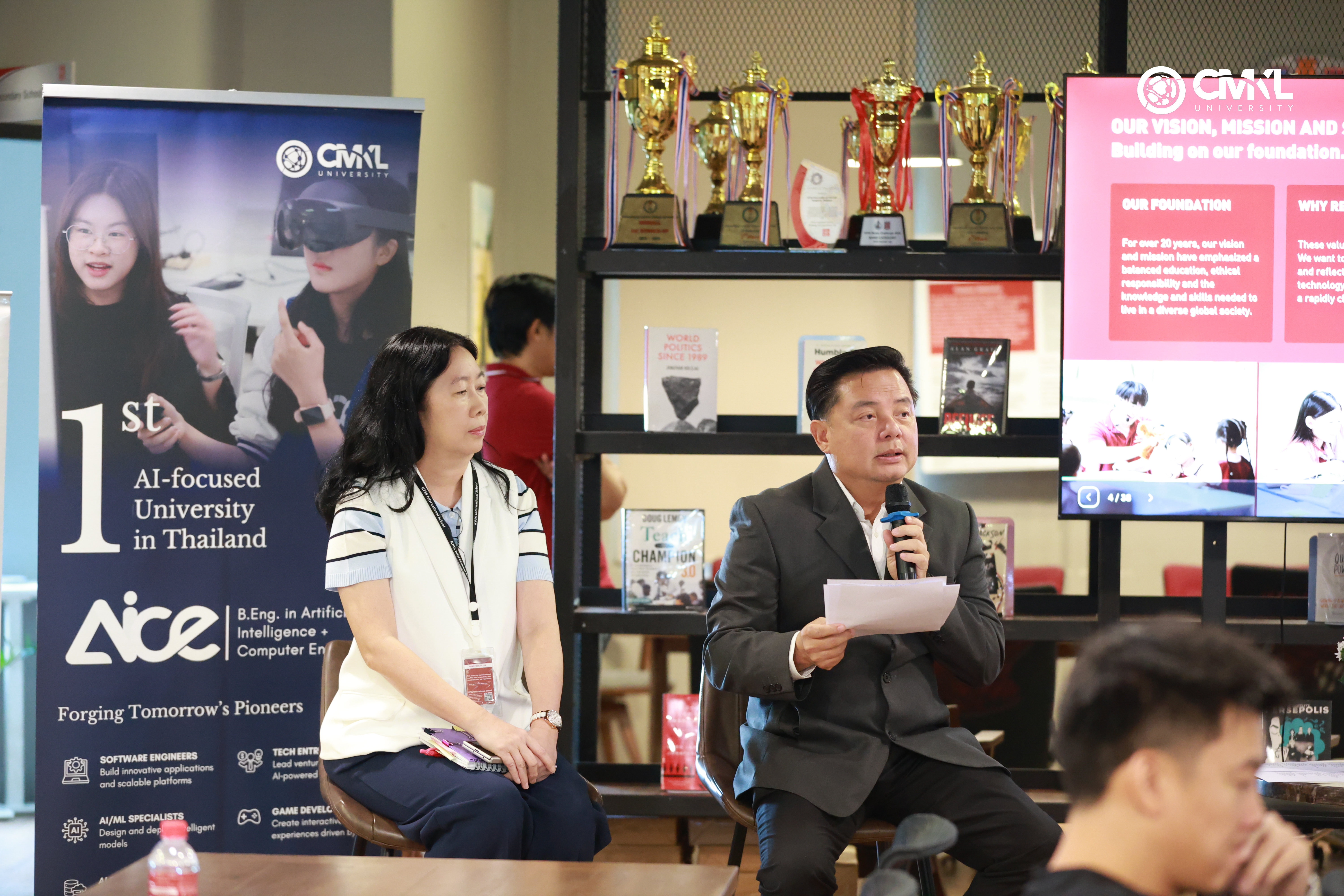
CMKL University joined KPIS Coffee Meet: More for Every Student at KPIS International School, bringing together parents, school leaders, and education partners to exchange perspectives on preparing students for a rapidly changing world and creating more meaningful learning opportunities.
Read more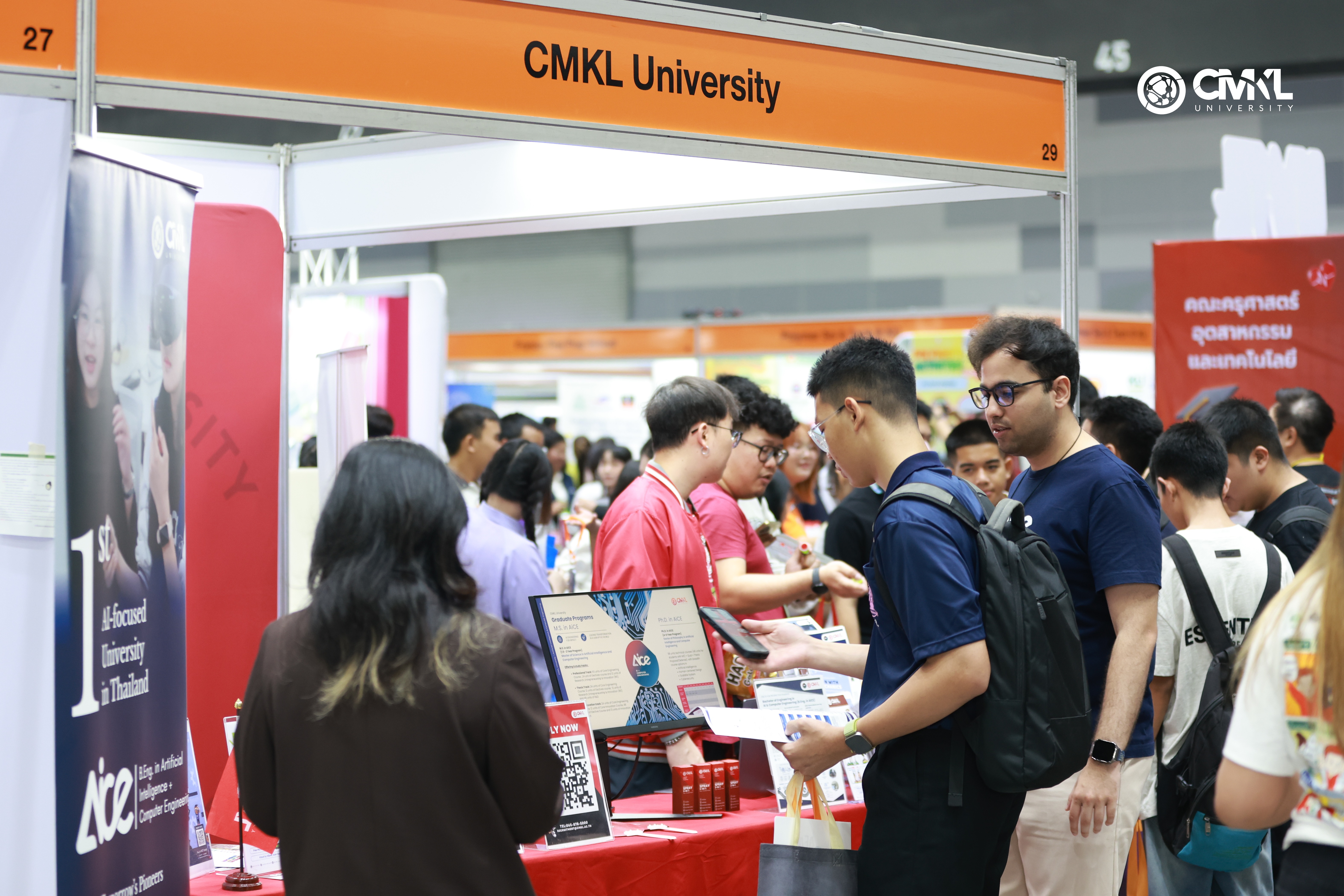
CMKL University participated in Dek-D’s TCAS FAIR, welcoming prospective students and parents who came to explore university programs, admission pathways, and future opportunities in technology and innovation.
Read more