
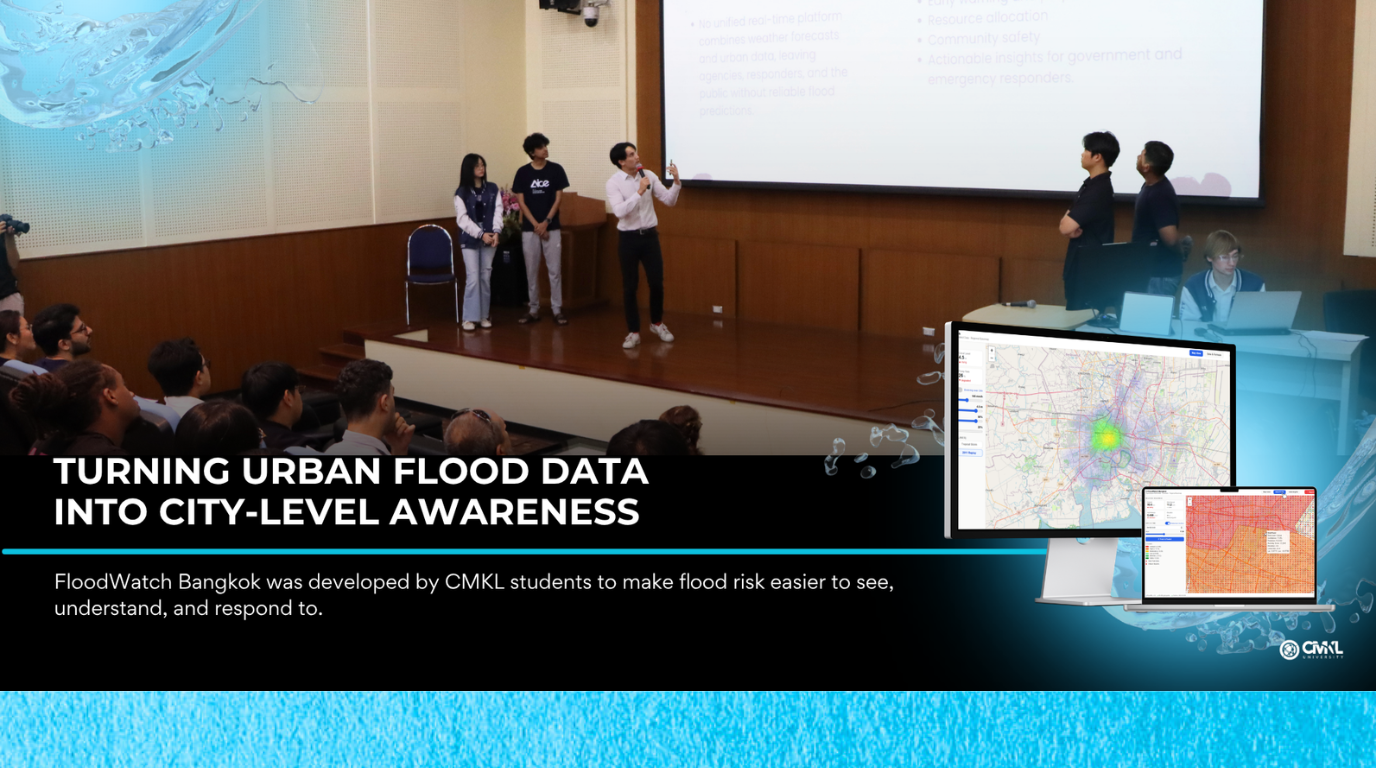
FloodWatch Bangkok: Mapping Street-Level Flood Risk with Open Data
Flooding is a recurring challenge in Bangkok, affecting mobility, safety, business operations, and daily life. Flood risk is shaped by many factors at once: rainfall, terrain, drainage systems, canal proximity, road conditions, and local reports from people on the ground.
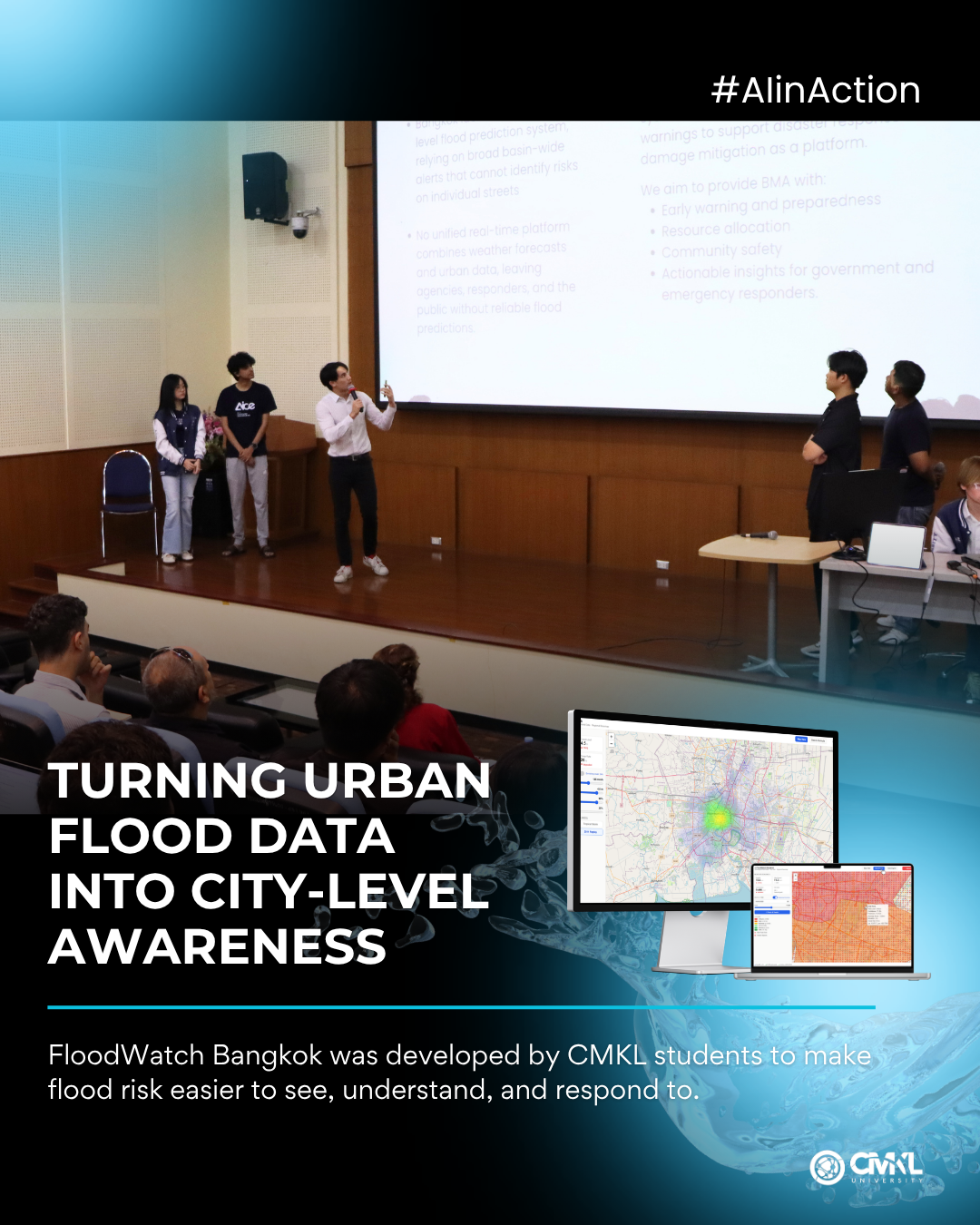
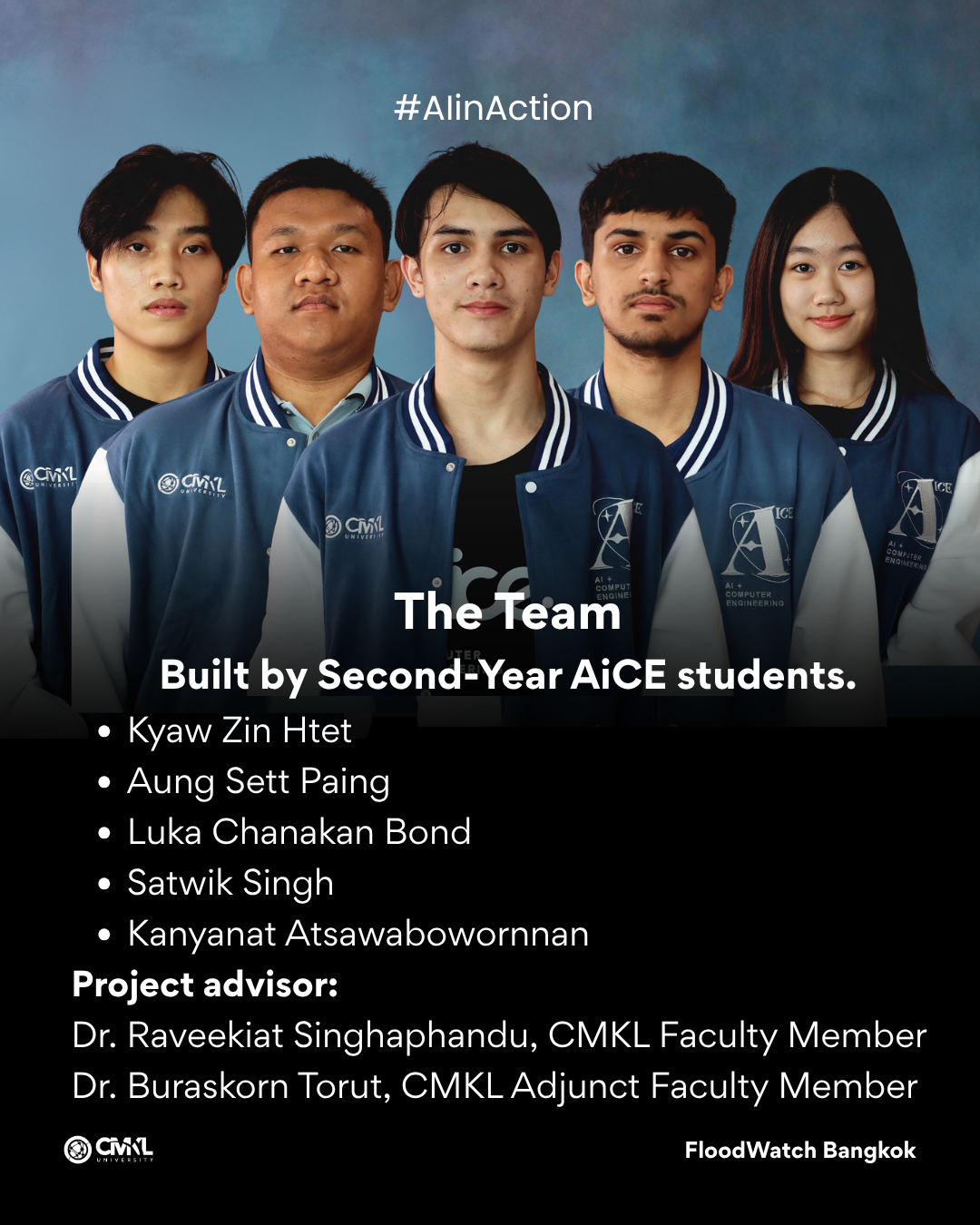
FloodWatch Bangkok was developed by AiCE sophomore students Kyaw Zin Htet, Aung Sett Paing, Luka Chanakan Bond, Satwik Singh, and Kanyanat Atsawabowornnan, under the guidance of Dr. Raveekiat Singhaphandu and Dr. Buraskorn Torut. The project uses open data and visualization to help identify and communicate flood risk across Bangkok.
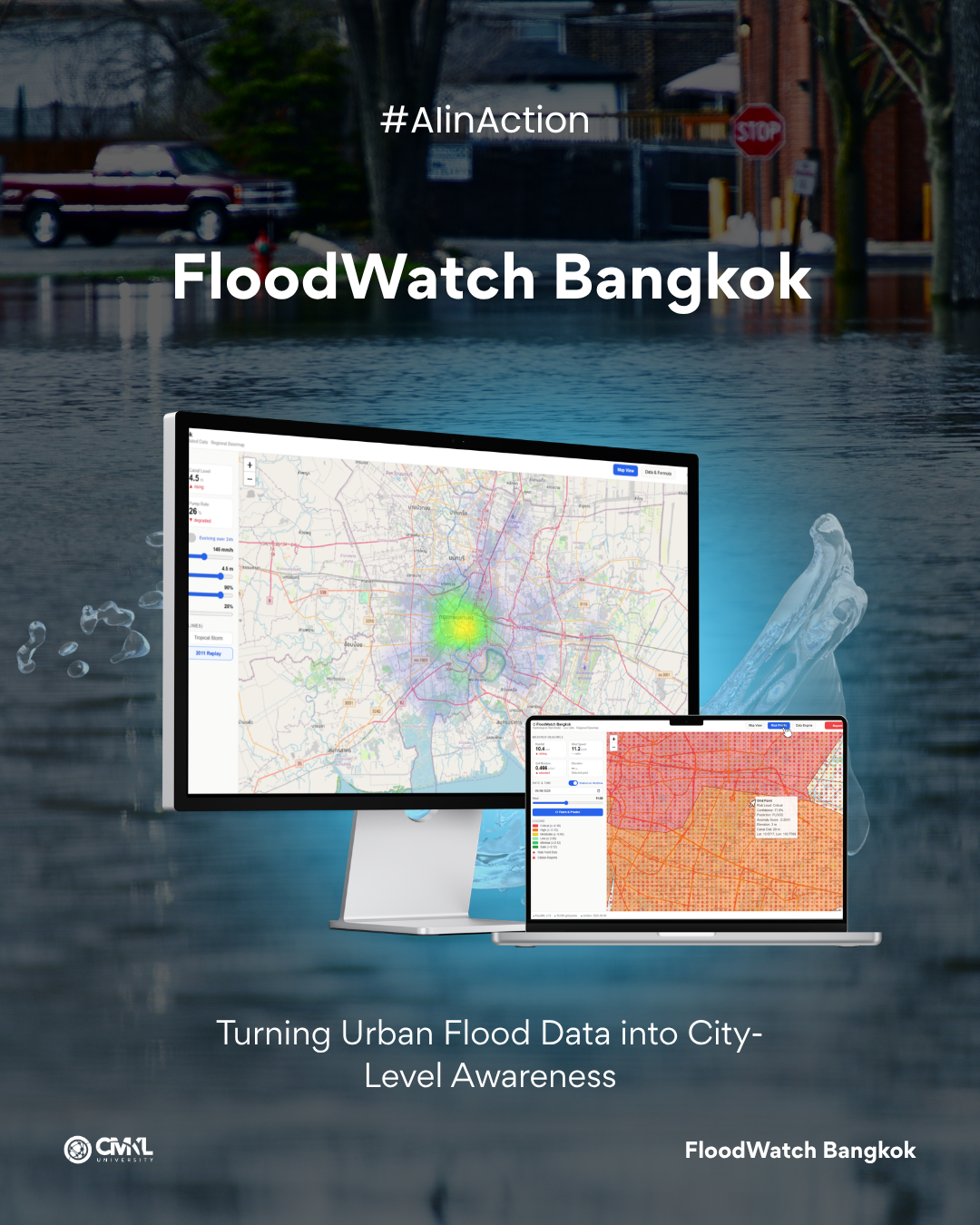
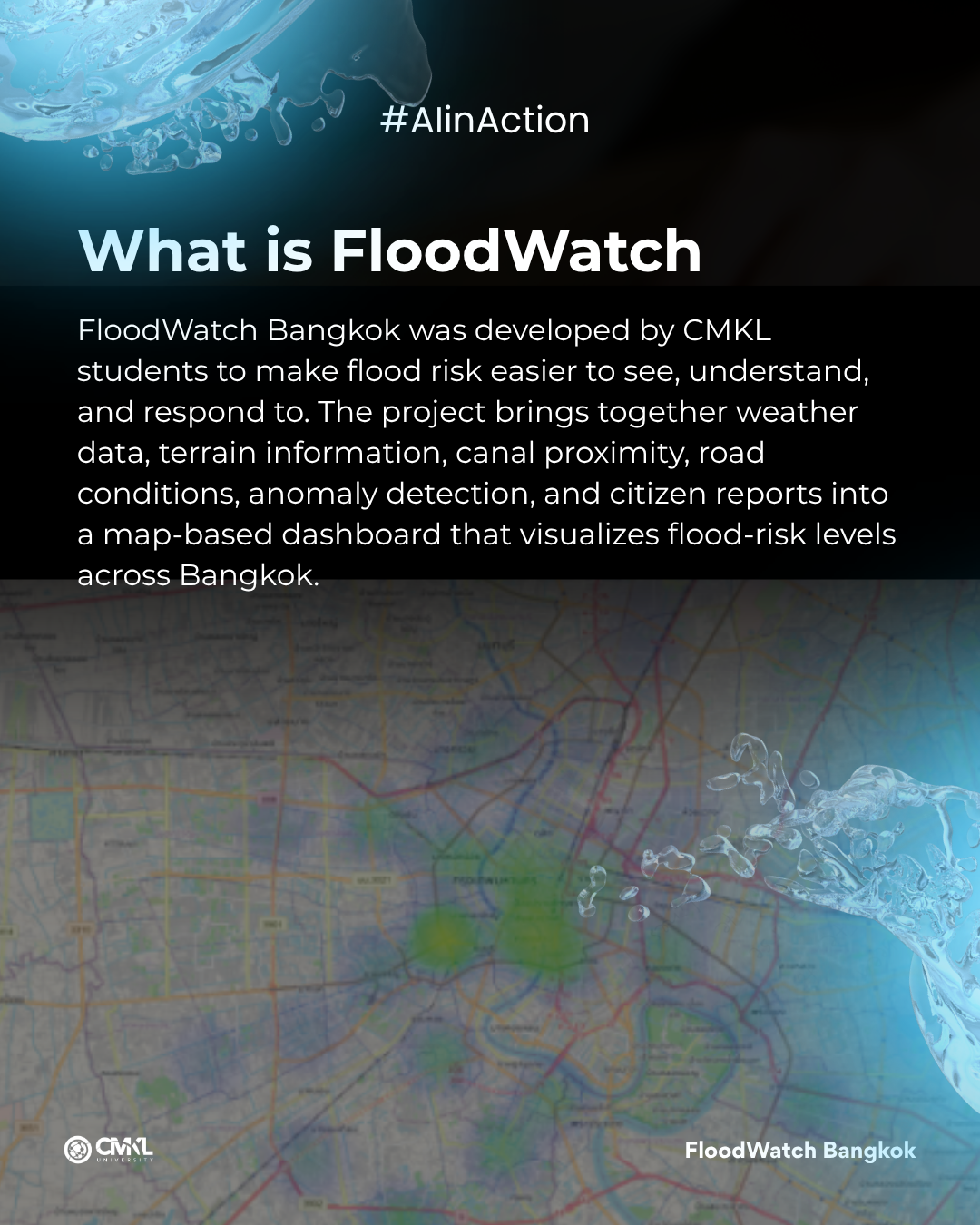
The team built a map-based dashboard that displays flood-risk levels in different areas of the city. The platform integrates weather data, terrain features, canal proximity, road information, anomaly detection, and citizen reports. It also includes administrative functions for managing and reviewing information.
From a technical perspective, the project combines geospatial data processing, open-data pipelines, anomaly detection, and dashboard design. The system aims to turn scattered data sources into a more usable view of urban flood risk.
A major value of the project is localization. Flooding is often experienced at street level, where small changes in drainage, elevation, or rainfall intensity can affect whether an area becomes difficult to travel through. A map-based interface allows users and administrators to see risk spatially rather than only through general weather warnings.
FloodWatch Bangkok also highlights the role of citizen reporting. Local observations can help complement official data sources, especially during fast-changing weather events. By combining structured datasets with reports from the ground, the system moves toward a more responsive model of urban monitoring.
The project reflects CMKL students’ ability to apply AI and data systems to smart-city challenges. It also shows how student research can connect to public-sector needs, especially in areas such as urban resilience, disaster preparedness, and data-driven decision support.
Project Members: Kyaw Zin Htet, Aung Sett Paing, Luka Chanakan Bond, Satwik Singh, Kanyanat Atsawabowornnan
Advisors: Raveekiat Singhaphandu, Buraskorn Torut
Domain: Smart City, Flood Risk, Geospatial Data, Open Data, Urban Resilience


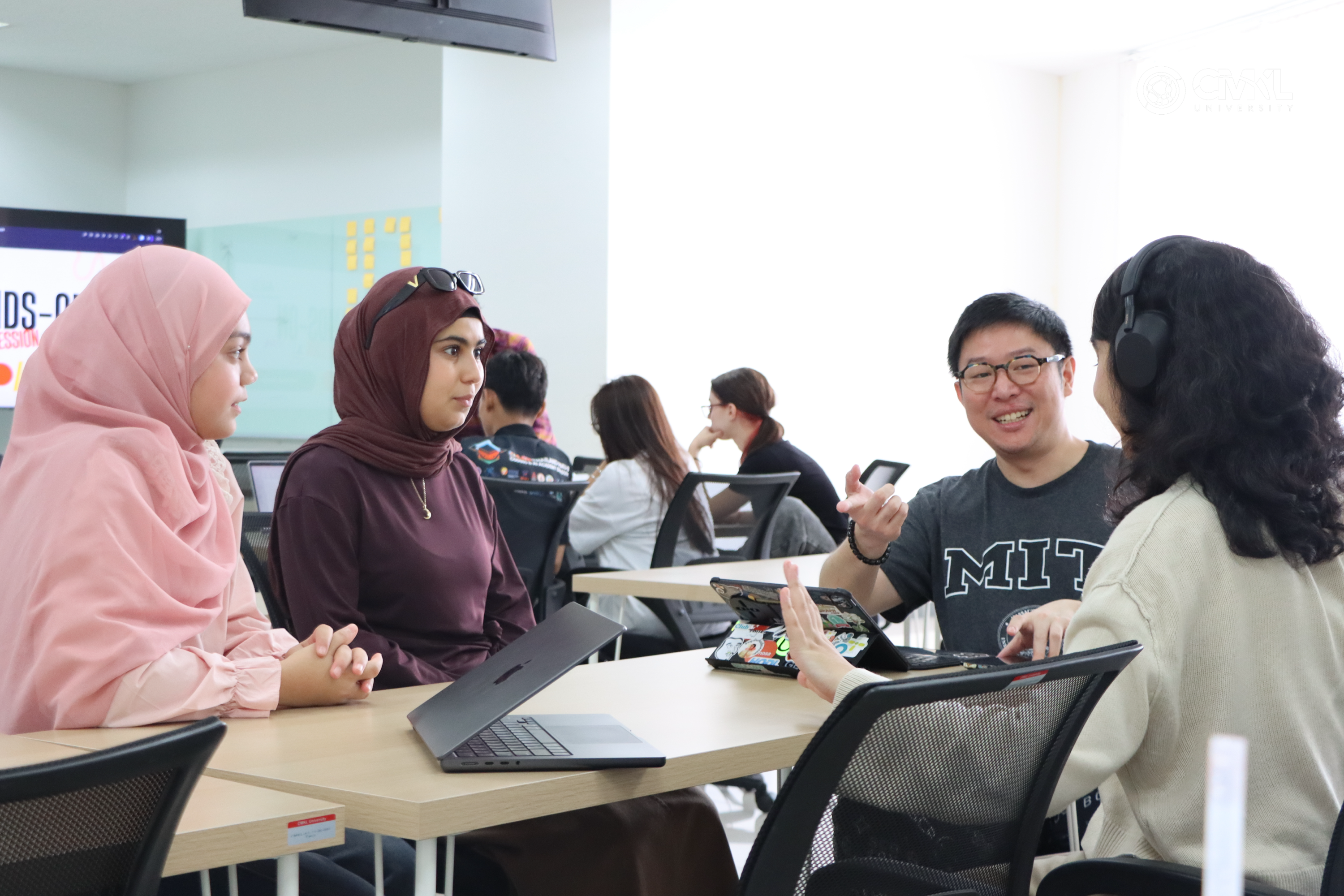
CMKL University supported the AI Kid School StartUp Case Challenge by hosting Workday 1: MVP Day in Room 601 at the university. The workday provided participants with a collaborative space and practical guidance to develop their minimum viable products (MVPs) ahead of the next round.
Read more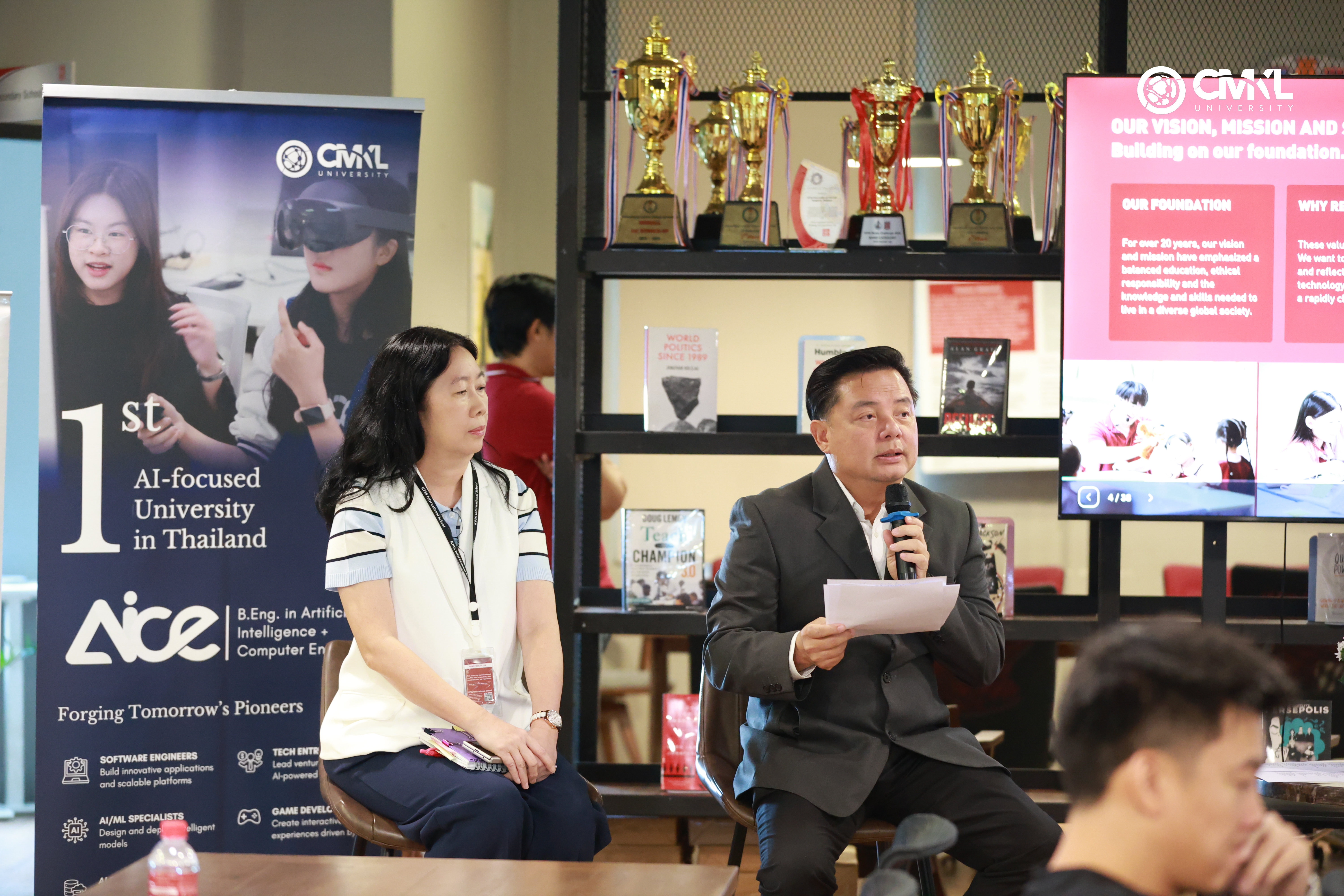
CMKL University joined KPIS Coffee Meet: More for Every Student at KPIS International School, bringing together parents, school leaders, and education partners to exchange perspectives on preparing students for a rapidly changing world and creating more meaningful learning opportunities.
Read more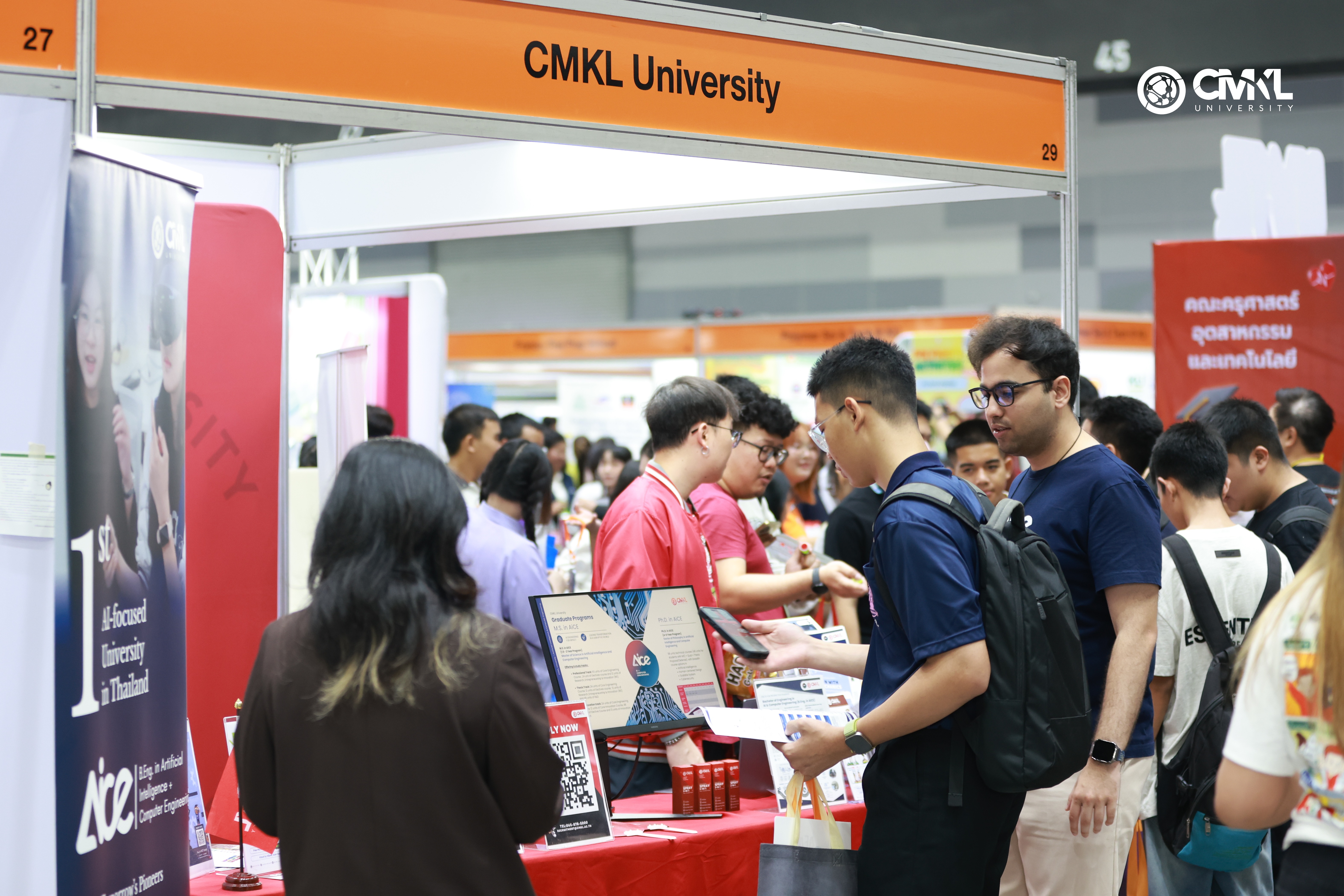
CMKL University participated in Dek-D’s TCAS FAIR, welcoming prospective students and parents who came to explore university programs, admission pathways, and future opportunities in technology and innovation.
Read more